ORIGINAL ARTICLE
BREASTFEEDING: MOTHERS' EXPERIENCES OF PREMATURE HOSPITALIZED IN NEONATAL CARE UNITS
LACTANCIA MATERNA: EXPERIENCIAS DE MADRES DE PREMATUROS HOSPITALIZADOS EN UNIDADES DE CUIDADOS NEONATALES
ALEITAMENTO MATERNO: EXPERIÊNCIAS DAS MÃES DE PREMATUROS HOSPITALIZADOS EM UNIDADES DE CUIDADOS NEONATAIS
https://doi.org/10.31011/reaid-2026-v.100-n.2-art.2591
Lavínia Lopes da Silva
Universidade Federal de Pelotas (UFPel). Pelotas – Rio Grande do Sul, Brazil. Orcid: https://orcid.org/0000-0003-3382-2484
Ruth Irmgard Bärtschi Gabatz
Universidade Federal de Pelotas (UFPel). Pelotas – Rio Grande do Sul, Brazil. Orcid: https://orcid.org/0000-0001-6075-8516
Viviane Marten Milbrath
Universidade Federal do Rio Grande do Sul (UFRGS). Porto Alegre, Rio Grande do Sul, Brazil. Orcid: https://orcid.org/0000-0001-5523-3803
Crislaine Curtinaz Carvalho
Universidade Federal de Pelotas (UFPel). Pelotas, Rio Grande do Sul, Brazil. Orcid: https://orcid.org/0009-0005-4042-0979
Thaline Jaques Rodrigues
Universidade Federal de Pelotas (UFPel). Pelotas, Rio Grande do Sul, Brazil. Orcid: https://orcid.org/0000-0002-6324-0509
Corresponding Author
Crislaine Curtinaz Carvalho
Rua Voluntários da Pátria, Pelotas – Brazil. 96015-730. Phine: +55 (51)998906187 - E-mail: criscc2016@gmail.com
Submission: 02-06-2025
Approval: 19-10-2025
ABSTRACT
Introduction: Hospitalization in neonatal units can pose significant barriers to breastfeeding, such as the physical separation between mothers and babies, medical interventions that hinder breastfeeding, and the lack of adequate support for mothers during a challenging time. Objective: To describe the breastfeeding process of premature newborns hospitalized in Neonatal Intensive and Semi-Intensive Care Units. Method: Qualitative research was conducted with 11 mothers of premature newborns admitted to the Neonatal Intensive Care Unit and the Neonatal Intermediate Care Unit of a teaching hospital in southern Brazil. Data was collected between May and July 2022 through semi-structured interviews, which were recorded, fully transcribed with double-checking, and validated by the participants. Subsequently, the data were entered into the webQDA software and analyzed using Thematic Analysis. Results: The results indicated that the mothers expressed a desire to breastfeed, recognizing the benefits of breast milk for their children’s recovery. However, they faced challenges such as the need for milk expression, feelings of distress, and physical and mental exhaustion. Conclusion: It is worth noting that the search for information, the support network, and the understanding of the importance of breast milk for the health of premature infants are factors that strengthened the breastfeeding experience and should be encouraged by the healthcare team.
Keywords: Intensive Care Units Neonatal; Mother-Infant Relationships; Breastfeeding; Preterm Newborn.
Resumen
Introducción: La hospitalización en unidades neonatales puede imponer barreras significativas a la lactancia materna, como la separación física entre madres y bebés, intervenciones médicas que dificultan la lactancia y la falta de apoyo adecuado para las madres en un momento desafiante. Objetivo: Describir el proceso de lactancia materna de recién nacidos prematuros hospitalizados en Unidades de Cuidados Intensivos y Semiintensivos Neonatales. Metodologia: Investigación cualitativa realizada con 11 madres de recién nacidos prematuros internados en la Unidad de Terapia Intensiva Neonatal y en la Unidad de Cuidados Intermedios Neonatales, de un Hospital Escuela del Sur de Brasil. Los datos fueron recolectados entre mayo y julio de 2022 mediante entrevistas semiestructuradas, grabadas y transcritas íntegramente con doble verificación y validadas por las participantes. Posteriormente, fueron ingresados en el software webQDA y analizados mediante el Análisis Temático. Resultados: Los resultados indicaron que las madres demostraron el deseo de amamantar, reconociendo los beneficios de la leche materna para la recuperación de sus hijos. Sin embargo, enfrentaron desafíos como la necesidad de extracción manual, sentimientos de angustia, además de agotamiento físico y mental. Conclusiones: Se destaca que la búsqueda de información, la red de apoyo y la comprensión de la importancia de la leche materna para la salud de los prematuros constituyen factores que fortalecen la experiencia de la lactancia, y deben ser fomentados por el equipo de salud.
Palabras clave: Unidades de Cuidados Intensivos Neonatales; Relaciones Madre-Hijo; Lactancia Materna; Recién Nacido Prematuro.
RESUMO
Introdução: A hospitalização em unidades neonatais pode impor barreiras significativas à amamentação, como a separação física entre mães e bebês, intervenções médicas que dificultam o aleitamento materno e a falta de suporte adequado para as mães em um momento desafiador. Objetivo: Descrever o processo de aleitamento materno de recém-nascidos prematuros hospitalizados em Unidades Intensivas e Semi-Intensivas Neonatais. Método: Pesquisa qualitativa realizada com 11 mães de recém-nascidos prematuros internados na Unidade de Terapia Intensiva Neonatal e na Unidade de Cuidados Intermediários Neonatais, de um Hospital Escola do Sul do Brasil. Os dados foram coletados entre maio e julho de 2022 por meio de entrevistas semiestruturadas, gravadas e transcritas na íntegra com dupla checagem e validadas pelas participantes. Posteriormente, foram inseridas no software webQDA e analisadas por meio da Análise Temática. Resultados: Os resultados indicaram que as mães demonstraram desejo de amamentar, reconhecendo os benefícios do leite materno para a recuperação de seus filhos. Contudo, enfrentaram desafios como a necessidade de ordenha, sentimentos de angústia, além de exaustão física e mental. Conclusão: Destaca-se que a busca por informações, a rede de apoio e o entendimento da importância do leite materno para a saúde dos prematuros constituem fatores que fortaleceram a experiência da amamentação, devendo ser fomentados pela equipe de saúde.
Palavras-chave: Unidades de Terapia Intensiva Neonatal; Relações Mãe-Filho; Aleitamento Materno; Recém-Nascido Prematuro.
INTRODUCTION
Exclusive breastfeeding is recommended by the World Health Organization (WHO) for up to six months, given that breast milk possesses all the necessary nutrients for the development of babies in that period1. Additionally, breastfeeding (BF) strengthens the affection bond between mother and child and reduces childhood morbidity and mortality. Breast milk contains essential nutrients for the growth of newborns, decreasing the risk of bacterial and respiratory infections, allergies, obesity, and diarrhea2. For mothers, breastfeeding also has advantages, including support in postpartum recovery and economy, as it avoids the high costs of baby formulas3.
However, preterm birth can be challenging to the BF process. Preterm birth is defined as a delivery that occurs before 37 complete weeks of pregnancy and is classified based on the gestational age in three categories: extreme preterm (from 22 to less than 28 weeks), very preterm (from 28 to less than 32 weeks), and moderately to late preterm (from 32 to less than 37 weeks). In 2020, approximately 13.4 million preterm babies were born worldwide, representing over 10% of all births. Several factors influence preterm births, including genetic, sociodemographic, environmental, and gestational aspects. The main ones include unfavorable socioeconomic conditions, inadequate prenatal care, pregnancy in younger or older women, history of multiple births, short intervals between pregnancies, maternal malnutrition, smoking, and infections4.
In Brazil, between the years 2012 and 2022, a total of 31,351,324 births has been recorded, of which 3,530,568 were preterm. In that period, there was a considerable fluctuation in the prevalence of preterm births in Brazil, with the highest rates recorded in 2012 (11.8%) and 2022 (11.8%). A slight reduction was verified between 2015 and 2018, followed by an increase starting in 2020, possibly influenced by the COVID-19 pandemic, which affected the access to and the quality of healthcare. Preterm birth is one of the main risk factors for childhood mortality and contributes to the emergence of health issues in newborns4.
To the preterm newborn, the benefits of BF are even more crucial; however, the preterm birth adds challenges like physiological immaturity and difficulties with sucking, swallowing, and breathing, which compromise proper breastfeeding5. Additionally, hospitalization in Neonatal Intensive Care Units (NICU) adds barriers, such as physical separation and maternal stress, which can negatively affect BF6-7.
The NICU is targeted at newborns (NB) who need continuous and complex care, such as preterm and underweight newborns. These units offer specialized services, multidisciplinary teams, and high technology for safe and effective care. However, prolonged hospitalizations expose babies to risks and incidents due to frequent manipulation, intensive screening, and multiple procedures being done8.
Moreover, due to the clinical condition of Preterm Newborn (PTNB), the start of breastfeeding is sometimes delayed, and parenteral nutrition must be administered, and sometimes nasogastric or orogastric probes can be used. That way, mothers need to express their milk to provide for their children, but the lack of support and the children’s hospitalization in that ward generate negative feelings, like fear, angst, and stress. The impact of having a hospitalized child may directly influence milk production and impair the mother from providing it9.
Therefore, the objective of this study is to describe the breastfeeding process of preterm newborns hospitalized in Neonatal Intensive and Semi-Intensive Care Units.
METHODS
Descriptive qualitative study of the breastfeeding process in hospitalized preterm newborns. The Consolidated Criteria for Reporting Qualitative Research (COREQ) checklist standards were used to guide and report this qualitative research, ensuring methodological rigor and transparency of all steps, from data collection to analysis and presentation of results10.
The study was conducted at the Neonatal Intensive Care Unit (NICU) and the Neonatal Intermediate Care Unit of a teaching hospital in a city in southern Rio Grande do Sul State. The hospital is a staple in neonatal intensive care and serves 22 municipalities in the region through the National Health System (SUS)11.
The ethical principles set forth by Resolutions N. 466/12 and N. 510/16 were followed. To ensure the anonymity of participants, they were identified in the results by the letter M (mother) followed by sequential numbers according to the order of interviews12-13.
The study included mothers of PTNB with a gestational age of less than 37 weeks, hospitalized in the NICU. The exclusion criteria were mothers of babies with medical conditions that were incompatible with life or under palliative care; however, no participant was excluded based on this criterion. During data collection, one mother was excluded for being under 18 years old, and two others were excluded due to the medical conditions of their newborns, who presented formal contraindications to breastfeeding.
The mothers were invited to participate in the study while in the rest room designed for parents at the hospital, and they were informed of the study’s objectives, risks, benefits, and recording needs for record keeping and data analysis. The interviews lasted 9-25 minutes and were conducted by the researcher, who was in the last year of the Nursing course and had more experience in conducting semistructured interviews. Data collection occurred from May to July 2022, in the waiting room reserved for parents, and the team ensured the room was vacant at the time of collection. All the interviews were recorded using a mobile phone voice recorder and manually transcribed in full into a Microsoft Word 2019 document, with double-checking to ensure data accuracy and integrity. Then, the transcriptions were sent for participant validation.
After the manual transcription of interviews, double-checked to ensure precision, the material was inserted into the Qualitative Data Analysis Software (webQDA) for data organization. Later, a thematic data analysis was conducted, following the six steps proposed by Braun14.
The software enabled the creation of a word cloud with the 50 most frequent words that emerged from the interviews and are presented below:
Figure 1 - Word cloud showing the 50 most frequent words from the interviews. WebQDA, 2022.
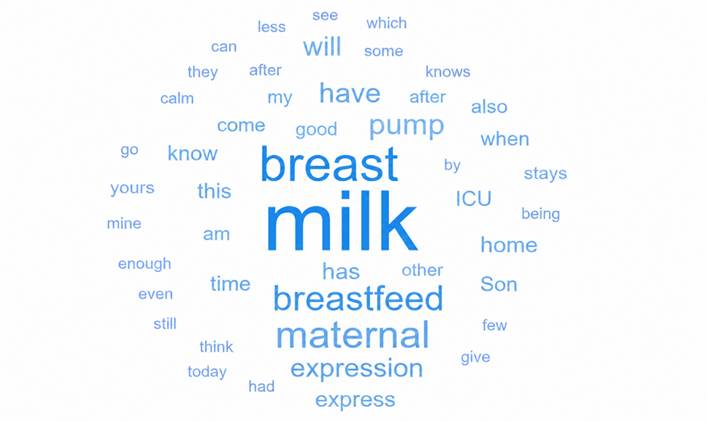
Based on the word cloud (Figure 1), the initial codes that guided data analysis were generated, using the thematic approach in six sequential steps. Firstly, the researchers got familiarized with the data by reading and rereading the collected material. The second step consisted of creating the codes. Next, relevant themes were leveraged, and the fourth step involved a review of the themes. The fifth step included the definition of themes, finally culminating in the report production15.
Two thematic categories were created from the analysis: Benefits of breastfeeding for preterm newborns, and Ease and difficulties experienced by mothers in breastfeeding preterm newborns.
This research has been approved by the Research Ethics Committee, submission for ethical review number: 57506122,7,0000.5316 and Consolidated opinion N. 5,371,217.
RESULTS AND DISCUSSION
A total of 11 mothers of PTNB hospitalized in the Neonatal Intensive Care Unit and/or Neonatal Intermediate Care Unit from May to July 2022 participated in the study. The participants’ ages ranged from 22 to 36 years. The participants had different education levels, ranging from incomplete elementary school to in-progress undergraduate studies. Eight were single, two were married, and one lived in a stable union. Regarding occupation, five were homemakers, and the others worked in different activities, like agriculture, autonomous, public worker, office assistants, or general services workers. The family income varied from less than a minimum wage (≤R$ 1,212.00) to a monthly wage of R$ 4,848.00.
The participants reported distinct reasons for the delivery, such as preterm birth, restricted intrauterine growth, gestational diabetes, hypertensive disorder of pregnancy, pre-eclampsia, and premature placental abruption. Six women had vaginal delivery, and five had a C-section, and the gestational age ranged from 23 to 36 weeks. Four women were in their first pregnancy, and seven had previous pregnancies.
Benefits of breastfeeding for preterm newborns
Breastfeeding is widely acknowledged by its nutritional, immunological, and emotional advantages, representing a fundamental bond between mother and child and an essential support to childhood development2. When asking participants about the importance of breastfeeding, they were all observed to be capable of describing at least one of the many benefits that breast milk offers to the baby’s health:
The vitamins, the calories, all they need are in breast milk [...] formula is like beans that only have iron. That’s what they [healthcare professionals] explained to me [...] and breast milk is not [...] quickly digested [...] it has a thousand and one advantages to the [child’s] body. (M1)
They [healthcare professionals] were giving him formulas, but I am more willing to breastfeed [...] knowing they [newborns] feel stronger. There’s a lot of stuff in breast milk that is lacking in formula. (M10)
They [healthcare professionals] told me it has benefits, that natural breastfeeding is better, even for the intestines, gases, cramps [...] like the ICU doctor said: breast milk is like medicine to them. (M11)
The participants acknowledged that breast milk is an essential food for babies, due to its unique composition and irreplaceable benefits. One study demonstrates that breast milk has immunological and digestive properties essential to the health and development of infants, reducing the incidence of infections and strengthening the immune system16. The participants highlighted the nutritional and therapeutic value of breast milk, describing it as a whole sustenance, capable of catering to all the baby’s needs. These maternal perceptions are corroborated by the literature, which positions breast milk as the main nutritional choice for preterm NB16.
The healthy development of babies is due to several factors, with feeding being a key factor in that equation. Therefore, the benefits of breast milk are numerous, including protection against some allergic and digestive diseases, obesity, morbidity reduction in preterm babies, and help with baby’s psychomotor development. However, the mother needs to be advised on breastfeeding benefits and techniques, in addition to having a proper place that supports this practice3.
The M10 and M11 testimonies also reflect the motivation of mothers to breastfeed, even after formula has been used in Neonatal Intensive Care Units. This persistence demonstrates their understanding of the value of breast milk and the goal of providing the best for the physical and emotional development of their children. This emotional aspect is widely discussed in the literature, highlighting that the act of breastfeeding transcends nutrition and promotes psychological and bonding benefits. The neurocognitive development is intimately connected to breastfeeding. There is a positive relationship between breastfeeding and the intelligence quotient of children, verbal abilities, and non-verbal intelligence. Prolonged breastfeeding, that is, until the baby is two years old, has been substantially shown as beneficial to children in pre-school and school, between ages five and nine17.
Based on the reports, it is noticeable how mothers have a significant understanding of the importance of breastfeeding, in addition to acknowledging the importance of breastfeeding to promote the health of their children and prevent diseases:
They asked me to pump [express milk], to give to her, and increase her weight. (M3)
They said it’s very good for her and that it [breast milk] has many Nutrients. [...] since she was born very prematurely and skinny, it would help her a lot to grow and develop. (M7)
My firstborn was breastfed until he was one and 10 months old and has “iron-strong health”. We basically never see him get sick. He rarely gets an infection, a headache, anything. And I believe it’s because of that [...] so we get that feeling that it was breast milk that helped with his immunity. (M11)
The mothers’ testimonies underscore the importance of breast milk as a source of nutrients, especially for PTNB and low-weight babies. To mothers of preterm babies, like M3 and M7, we recommend expressing and providing breast milk to favor the PTNB’s health. The milk expression process also brings emotional benefits to mothers, who report feeling like they have an active role in the treatment of their children. This coparticipation strengthens the maternal bond and promotes satisfaction by offering babies an essential nourishment to their recovery and development18.
Some NBs are temporarily unable to suck on the breast during this period. Milk expression, which is seen as a method to empty the breasts, is fundamental to help the infant receive breast milk. Breast milk can be extracted through hand expression or using pumps (either manual or electric). In hand expression, mothers use their hands to stimulate the mammary gland and direct the milk. With the manual pump, suction is created by pumping a lever, while with the electric pump, a motor performs the extraction, leaving their hands free. The expression must be done several times during the day, with the objective of maintaining breast milk production19.
Currently, breastfeeding is acknowledged as an essential strategy to promote bonding, protection, and nutrition of children, being considered the main intervention for reducing childhood morbidity and mortality. The benefits of breast milk are many, including protection against allergic diseases, malnutrition, digestive diseases, obesity, cavities, and reducing the morbidity of preterm children. Additionally, it contributes to maturing the gastrointestinal system and to children’s psychomotor development. The Ministry of Health also reinforces that breastfeeding promotes a better quality of life for families, since children are less often sick, resulting in fewer trips to the hospital services and decreased use of medication, which favors good family relations and reduces costs20.
The benefits of breast milk have demonstrated an increase in antibodies against H. influenzae and type B, poliomyelitis, and diphtheria toxoid viruses in breastfed newborns. The components found in human milk have anti-infectious properties in the colostrum and mature milk. These components are solvable and cellular21.
In addition to benefits to NBs, breastfeeding, along with the kangaroo method, not only contributes to the development of NBs but also favors the creation of affection bonds:
I am loving this experience of being a first-time mom, breastfeeding, feeling her in my lap [...] it’s wonderful! It’s wonderful: the maternal experience. Breastfeeding, putting her in the kangaroo position after breastfeeding, because she feels like she’s still in the womb. (M8)
M8’s report reveals the emotional and affectionate experience of maternity, especially when describing the pleasure and bond generated by the breastfeeding practice and close contact with the baby. The mother highlights not only the nutritional benefits of BF but also the positive impact of physical touch and the kangaroo position, which illustrates a profound and enriching connection with the NB. The feeling of “still being in the womb”, mentioned by M8, reflects the continuity of this affectionate bond and the feeling of safety that the baby experiences when being close to the mother. This moment also promotes physical and emotional well-being to the PTNB, since it is due to the touch that babies receive stimuli that help them develop, such as heat exchange, perception of heartbeats, temperature, breathing, and mother’s scent22-23.
Thus, the kangaroo position, in which the baby is in touch with the parents’ skin, has more than physical benefits to the NB, positively influencing emotional and behavioral aspects. This method strengthens the emotional bond, increases maternal confidence in breastfeeding and care, and reduces the incidence of postpartum depression. Physical touch and the heartbeat replicate the sensations of the womb, promoting emotional development and significant improvements to the baby’s health24.
Moreover, the kangaroo position stimulates milk descent, favoring its ejection due to the mother’s emotional state, in addition to promoting the reflex of seeking the breast and increasing the frequency of breastfeeding sessions, promoting BF. It also works as a non-pharmacological support to pain relief, promoting NB physiological and neuropsychomotor development, which contributes to a faster clinical recovery and reduced hospitalization time25.
Ease and difficulties experienced by mothers in breastfeeding preterm newborns
BF is a challenge in neonatal units, since in cases with no constant stimulation, milk production is compromised26. Healthcare professionals play a key role in helping mothers throughout the breastfeeding process. Consequently, after receiving orientation, the participants reported adherence and autonomy in practicing hand expression, including at home, to ensure the provision of breast milk to their children and stimulate lactation:
They [healthcare professionals] asked me to continue stimulating every three hours, so it [the milk] didn’t stop coming down. Since I still don’t have [son’s name]’s stimulus, I must do it at home too, not only pump it [express] here with them. (M5)
I received help in the beginning [to express], but now I’m doing it myself. (M9)
The guidance is that we stimulate at home too, then I can do it at home [...]. I can do it super well. These days, I pumped 20ml of milk by myself, and even I was amazed, because I had just started doing it. (M11)
The mothers’ reports underscore the importance of regular stimulation, proper guidance, and support offered by the healthcare team regarding milk expression and BF. These testimonies reinforce the relevance of continuous support and training of mothers, so they feel confident and competent to perform milk expression, and later, breastfeeding. A positive relationship between the healthcare team and mothers is fundamental to strengthening maternal competence, the bond with the babies, and early breastfeeding. Therefore, it is necessary to invest in the permanent education of professionals, especially in their communication skills and guidance regarding breastfeeding. In the NICU, the ability to listen, be empathetic, and provide practical support is essential. A study in Jordan highlighted that divergences within the team and a lack of institutional support impair the unification of approaches, improvements to infrastructure, and actions that encourage the desire to breastfeed27.
In healthcare services, there is a common discourse related to breastfeeding, with emphasis only on the nutritional and immunological value of breast milk, without considering the motivation of women to breastfeed and the emotional aspect that the practice involves for both children and women28. Thus, healthcare professionals must guide mothers to perform milk expression as early as possible, even in cases where newborns are not receiving milk. The human milk extraction room is a place where NB mothers can stimulate their breasts and express milk that will later be provided to their babies26.
However, the presence of families in the NICU is usually seen negatively by professionals, who believe this increases their workload. However, excluding the family can harm the bond with the preterm baby, something key to promoting BF. Therefore, professionals must acknowledge the importance of maternal participation and social support, since these factors help mitigate negative feelings, such as fear and sadness, promoting more humanized and integral care. Furthermore, the active presence of mothers during hospitalization in the NICU strengthens the mother-child bond, in addition to making mothers participate in the care of their children, contributing to BF29.
With that, the effort to maintain breastfeeding, motivated by motherly love, reflects the goal of providing the best quality nourishment as an expression of love from mother to child. By their testimonies, it is clear that motherly love has the power to prioritize the needs of their children, even if the task of providing their own milk is not easy for the nursing mother:
I know the good it [receiving mother’s milk] will do to her [...] we do it [express] because we love them. (M2)
I want him to be well as soon as possible, and I know how important breastfeeding is [...] especially for a preterm baby. [...] also because I myself was preterm. [...] so I’m “bending over backwards”. (M10)
M2 and M10’s reports reflect maternal love and dedication that motivate expression practice, especially in preterm birth cases. M2 highlights the sacrifice made on behalf of the child’s well-being, while M10, with her personal experience of being born preterm, shows the effort to ensure the benefits of breast milk to the baby, even in the face of physical and emotional challenges. This effort reflects mothers’ commitment to promoting a healthy beginning of life for their children.
Given the clinical condition of NB, breastfeeding is often delayed, with parenteral nutrition being needed and, in some cases, the use of a nasogastric probe with expressed milk from the mother. Despite the viability of expression, the lack of support and orientation may lead to early weaning, since the hospital environment may affect milk production. It is up to the nurse to promote support and guidance to ensure the continuity of breastfeeding, including after discharge. Hospitalization may generate negative feelings in mothers, like sadness and guilt, but when overcoming challenges, many have reported feeling joy when breastfeeding. A common difficulty is the fear that expression causes pain or damage, which discourages the practice. The separation of mother and baby can also cause feelings of maternal inadequacy30-31.
However, in a study conducted in a neonatal unit of a University Hospital located in the Southern region of Brazil, regular expression is only adopted by mothers after the second week of the PTNB being hospitalized, possibly due to a concern with the child’s health and the adaptation to the hospital environment. The hospital infrastructure, strict rules, and fixed hours may cause anxiety, impairing the start of breastfeeding32. Thus, the emotions experienced during hospitalization may affect the production of breast milk. Successful breastfeeding promotes in mothers a feeling of fulfillment, in addition to satisfaction for providing an essential nourishment to the child’s health33.
However, the mothers involved in the present study face significant challenges, such as the frequent need to perform milk expression. In their reports, they describe this technique as painful, exhaustive, and uncomfortable, in addition to causing feelings of fear and embarrassment, as they perceive it as something unnatural.
In the first days, I couldn’t [express it] because I was scared [...] it hurts a little. It is quite uncomfortable in the beginning. (M5)
I would rather give them my breast straight away [...] like that is a little hard [...] to have to be pumping. The breast hurts [...] I have to pump at home also and discard, because I can’t bring it to her [...]. (M9)
I would love to breastfeed, so much so that I am here, going through all this trouble [...] in the expression, that I didn’t even know existed [...] I feel like an animal, but it’s ok. It’s funny, though [...] the things we do for our children, right?! (M10)
The participants reveal the emotional and physical challenges faced during breastfeeding and milk expression. These experiences reflect the tensions between the practice of expression, social expectations, and the desire to provide the best for their babies. Similarly, one study identified milk expression as the cause of pain, discomfort, and angst34.
From that perspective, mothers expressed negative feelings towards breastfeeding. Despite being aware that those feelings could harm breast milk production and ejection, the participants clearly had no control over the situation. In some moments, the negative feelings ended up decreasing milk production.
I get nervous, and the milk gets stuck. The milk stops, and nothing makes it come down. (M1)
[...] you gotta be very calm, or the milk won’t come down. You gotta be patient [...]. (M2)
Sure, that with all this running around we end up getting a little stressed [...] and I believe production decreased a little because of that [...]. And the speech therapist asked if I was too anxious and stressed, because that might have influenced it. (M11)
The child’s hospitalization in neonatal units generates a physical detachment between mother and child, causing this maternal stress, the feeling of guilt for the preterm delivery, insecurity, fear, and anxiety, negatively impacting breastfeeding35. The stress cycle, as reported by M1 and M2, may lead to frustration and insecurity, intensifying the difficulties in the breastfeeding process. M11’s speech, which mentions the speech therapist’s questions about the impact of anxiety, reinforces the need to early identify emotional factors that may interfere with lactation, enabling opportune and effective interventions.
Most postpartum mothers initiate breastfeeding after delivery, but depressive symptoms may hinder BF, increasing the risk of early interruption. On the other hand, early interruption due to other reasons may also cause depressive feelings in women. The difficulty or inability to breastfeed causes maternal suffering that could lead to postpartum depression36.
Difficulty breastfeeding and milk production interruption, mentioned by the participants, illustrate an important aspect of maternal experience: the impact of emotions, especially stress and anxiety, on breastfeeding. In a study conducted in a NICU of a medium-sized hospital, located in a municipality in the Center-South region of Paraná, the participants, mothers of preterm babies, reported that the emotions experienced during hospitalization have a significant impact on breastfeeding. Stress and anxiety were observed to directly affect milk production, frequently resulting in its reduction or even interruption33.
The so-called ‘baby blues’ affects up to 80% of postpartum women, and is characterized by sadness, irritability, and mood changes, caused by hormonal and emotional adjustments. The impossibility of breastfeeding is a risk factor, since breastfeeding liberates oxytocin and prolactin, hormones that reduce stress and depressive symptoms. The physical, hormonal, and social changes of the postpartum period also influence maternal mental health, increasing their vulnerability to anxiety and depression disorders, which affect mother and child37.
Having a child hospitalized in a neonatal intensive or intermediate care unit causes mental exhaustion in mothers, which is exacerbated by the physical separation between family members due to the distance. Additionally, the experience of having a hospitalized child is described as a moment of social isolation by these mothers:
I think it’s mainly the psychological state. And sometimes the lack of support [...]. Not from the [healthcare professionals] team [...] but our isolation [...]. Not being able to be close to family [...]. I, for instance, am away from my mother, and you saw how welcoming she is, how motherly she is. I miss that so much. (M10)
The mother’s psychological state, as mentioned by M10, is impacted not only by the lack of family support but also by the difficulty in managing the situation of having a hospitalized baby, which could lead to feelings of guilt, anxiety, and uncertainty. Therefore, the lack of emotional support from the family, as highlighted, shows the urgent need for more integral support during hospitalization. In one of the consulted studies, the authors also found reflections on the importance of having a support network, mainly represented by family members closer to the mother38.
Distance from family and lack of emotional support worsen the challenges faced by mothers, who, in addition to dealing with their baby’s health, must manage social isolation. The support network plays a fundamental role, not only helping in childcare, but, mostly, supporting the mother, tending to their care needs, appreciation, and guidance37.
Furthermore, the mothers’ routine during a preterm child’s hospitalization reveals significant changes in diverse aspects, including financial, emotional, and social. The expenses related to going back and forth to the hospital, often for lengthy periods with no end date in sight, may cause financial difficulties for the family. Moreover, being away from family and the need to pass important tasks to other people generate additional concerns.
I have a certain barrier that is the fact that I must get out of my home to come here [...] because I have to leave my two daughters [...] with someone else. [...] so much so that I’m here but thinking that I should be there. (M1)
The problem is I’m only able to come twice a week to pump [milk] [...], because I don’t live here [in the city]. (M3)
Calm, I never am, because of the bus hours [...] I spend the day here because I can’t be going back and forth [...] it’s an expense, everything is an expense. And the bus hours are also tricky. (M6)
I don’t always have who to leave my eldest [son] with, so to me that’s the greatest difficulty. (M11)
The reports highlight the need for integral support and minimization of obstacles in this delicate period. Being away from the family circle, especially when the woman lives in a different city from where the newborn is hospitalized, generates fear, concern, loneliness, and a feeling of having no control over the situation39-40. Mothers of babies hospitalized in NICUs face difficulties balancing care for their children and familial and professional responsibilities. The birth of a preterm baby, along with the fact of their hospitalization, causes negative feelings in women, mainly when they are discharged, and the preterm baby remains hospitalized33.
FINAL CONSIDERATIONS
This study enabled understanding the breastfeeding experiences of PTNB mothers, highlighting the complex emotions and challenges faced by them in a time of great vulnerability. Although all the participants have expressed the desire to breastfeed and acknowledged the benefits of maternal milk to their children’s recovery, they also faced significant difficulties, such as the need for constant milk expression and physical and emotional tiredness. This scenario caused ambivalent feelings: the desire to provide the best for their children and the challenges of the process.
It is essential to highlight that, even in the face of difficulties, the support from the multiprofessional team and families is crucial to the continuity of breastfeeding. Mothers who received informative, emotional, and practical support showed more confidence and security. The trust established with healthcare professionals was key to the mothers’ satisfaction and successful breastfeeding, revealing the importance of an empathetic, respectful, and collaborative approach in neonatal units.
One of the study’s limitations is the impossibility of conducting interviews with mothers whose children were hospitalized at the Kangaroo Intermediate Care Unit, since they spent 24 hours with the babies and had no other people who could take charge of caring for the newborn during the necessary time for data collection in a private environment. Therefore, we suggest that further studies explore adherence to breastfeeding after hospital discharge, with a focus on the experiences of mothers continuing the process of breastfeeding outside the hospital environment. The assessment of the impact of information and guidance received during hospitalization is essential to understand how they can prevent early weaning, in addition to promoting continuity of the emotional support needed for successful breastfeeding.
With that, it is essential that neonatal care protocols are expanded to include broader practices that promote active participation of parents in care, not only aiming at successful breastfeeding, but also at strengthening mothers’ family ties and emotional well-being. Promoting a holistic and empathetic approach to neonatal care is a need that must be integrated even more into the training of healthcare professionals, positively impacting the experience of mothers in the development of their babies.
REFERENCES
1. Ministério da Saúde (BR). Saúde da criança: nutrição infantil: aleitamento materno e alimentação complementar. 2. ed. Brasília-DF: Ministério da Saúde; 2015. Disponível em: https://bvsms.saude.gov.br/bvs/publicacoes/saude_crianca_nutricao_aleitamento_alimentacao.pdf.
2. Teixeira AS, Uchôa JMG, Menezes MIL, Morais SKM, Ribeiro RRG, Rocha LM, et al. Aleitamento materno: benefícios para a saúde infantil e desenvolvimento. Braz J Implantol Health Sci [Internet] 2024 [citado 2025 Dez. 29]; 6(8):1792–801. Disponível em: https://doi.org/10.36557/2674-8169.2024v6n8p1792-1801.
3. Ribeiro AKF dos S, Marinho LO, Santos RM de MS, Fontoura IG, Serra MAAO, Pascoal LM, et al. Aleitamento materno exclusivo: conhecimentos de puérperas na atenção básica. Rev Enferm Atual In Derme [Internet]. 2022 maio 9 [citado 2025 Dez. 29]; 96(38):e-021244. Disponível em: https://doi.org/10.31011/reaid-2022-v.96-n.38-art.1359.
4. Ministério da Saúde (BR). Boletim Epidemiológico: volume 55, nº 13. Brasília-DF: Ministério da Saúde; 2024. Disponível em: https://www.gov.br/saude/pt-br/centrais-de-conteudo/publicacoes/boletins/epidemiologicos/edicoes/2024/boletim-epidemiologico-volume-55-no-13.pdf.
5. Moraes MEA, Moura VCE, Freitas M da G. A importância do cuidado de enfermagem ao recém-nascido prematuro acolhido no método canguru. Rev JRG [Internet]. 23 de junho de 2023 [citado 2025 Nov. 02];6(13):998-1009. Disponível em: https://doi.org/10.5281/zenodo.8075848.
6. Cardoso VT, Toni CG de S. Narrativas de mulheres mães: vivências e ressignificações diante da prematuridade extrema. Rev Psi Divers Saúde [Internet]. 7º de março de 2023 [citado 2024 Out. 30]. Disponível em: https://doi.org/10.17267/2317-3394rpds.2023.e4659.
7. Leonardo-Pereira de Freitas AL, Lazzarini ER, Fleury Seidl EM. Um Olhar Psicanalítico sobre a Amamentação de Bebês Prematuros na UTI Neonatal. PSSA [Internet]. 28º de setembro de 2021 [citado 2024 Nov. 01]. Disponível em: https://doi.org/10.20435/pssa.v13i2.1194.
8. Costa LD, Dalmuth KH, Vieira MTF, Girardi E, Fachinello G, Silva ÂM da, et al. Análise do desenvolvimento de crianças egressas da Unidade Terapia Intensiva Neonatal na visão dos pais. Rev Bras Enferm [Internet]. 2023 [citado 2025 Dez. 29]. Disponível em: https://doi.org/10.1590/0034-7167-2022-0717.
9. Oliveira CG. Fatores associados ao aleitamento materno em recém-nascidos prematuros em unidade neonatal. 2021. 124 f. Dissertação (Mestrado em Ciências Fonoaudiológicas) – Faculdade de Medicina da Universidade Federal de Minas Gerais, Belo Horizonte [Internet] 2021. [citado 2025 Dez. 29]. Disponível em: http://hdl.handle.net/1843/43302.
10. Souza VRS, Marziale MHP, Silva GTR, Nascimento PL. Translation and validation into Brazilian Portuguese and assessment of the COREQ checklist. Acta Paul Enferm. Disponível em: https://doi.org/10.37689/acta-ape/2021AO02631.
11. Hospital Escola da Universidade Federal de Pelotas (HE/UFPEL). Carta de serviços aos usuários do Hospital Escola UFPEL EBSERH. Pelotas: HE/UFPEL; 2022. Disponível em: https://www.gov.br/ebserh/pt-br/hospitais-universitarios/regiao-sul/he-ufpel/acesso-a-informacao/acoes-e-programas/carta-de-servicos_he-ufpel_2021_v1.pdf.
12. Conselho Nacional de Saúde (BR). Resolução n° 466, de 12 de dezembro de 2012. Aprova as diretrizes e normas regulamentadoras de pesquisas envolvendo seres humanos. Diário Oficial da União. Brasília-DF; 2013 jun 13. Disponível em: https://conselho.saude.gov.br/resolucoes/2012/Reso466.pdf.
13. Conselho Nacional de Saúde (BR). Resolução nº 510, de 7 de abril de 2016. Dispõe sobre as normas aplicáveis a pesquisas em Ciências Humanas e Sociais e de sua regulamentação ética. Diário Oficial da União. Brasília-DF; 2016 maio 24. Disponível em: https://conselho.saude.gov.br/resolucoes/2016/Reso510.pdf.
14. Braun V, Clarke V, Hayfield N, Terry G. Thematic analysis. In: Liamputtong P, editor. Handbook of Research Methods in Health Social Sciences. Singapore: Springer; 2019. p. 843–860.
15. Moura TS, Kumpel DA, Hartmann V, Luft N. Aleitamento materno exclusivo e estado nutricional de prematuros em Unidade de Terapia Intensiva Neonatal. Rev Baiana Saúde Pública [Internet] 2021 [citado 2025 Dez. 29]; 45(2):103–15. Disponível em: https://doi.org/10.22278/2318-2660.2021.v45.n2.a3379.
16. Bery BG, Bayer BS, Macedo CR. Influência do aleitamento materno no desenvolvimento cognitivo da criança: uma revisão integrativa. Rev Foco [Internet] 2024 [citado 2025 Dez. 29]; 17(11):e7043. Disponível em: https://doi.org/10.54751/revistafoco.v17n11-251.
17. Fonseca SA, Santos TQ, Andrade RR de, Machado EC, Araújo KM, Silva LTS e, et al. Dificuldades da equipe multiprofissional no manejo dos fatores que interferem na amamentação. Rev Eletr Acervo Saúde [Internet] 2024 [citado 2025 Dez. 29]. Disponível em: https://doi.org/10.25248/reas.e18123.2024.
18. Araujo MC, Rocha AD, da Silva MF, Moreira MEL. Avaliação energética do leite materno em mães de recém-nascidos pré-termo: comparação de métodos de extração por meio da técnica do crematócrito. Rev Bras Pesq Saúde [Internet] 2023 [citado 2025 Dez. 29]. Disponível em: https://doi.org/10.47456/rbps.v25i4.40684.
19. Ribeiro BES, Santos GB dos, Souto EJ, Castricini SD, Almeida LAL de, Teixeira DS, et al. A Importância Do Leite Materno Para O Crescimento E Desenvolvimento Infantil. Braz. J. Implantol. Health Sci [Internet]. 2º de fevereiro de 2024 [citado 2025 Mar. 05]. Disponível em: https://doi.org/10.36557/2674-8169.2024v6n2p213-221.
20. Moraes SR, Souza AS, Silva JSLD, Silva AS, Gomes ENF, Ricci AQ. Os benefícios do aleitamento materno em Unidade de Terapia Intensiva Neonatal: uma revisão de literatura. Rev Pró-UniverSUS [Internet] 2022 Jan/Jun [citado 2025 Dez. 29]. Disponível em: https://doi.org/10.21727/rpu.v13i1.3104.
21. Ministério da Saúde (BR). Secretaria de Atenção Primária à Saúde. Departamento de Promoção da Saúde. Guia alimentar para crianças brasileiras menores de 2 anos. Brasília-DF: Ministério da Saúde; 2019. 264 p.
22. Pereira T, Moura T. Contato pele a pele: benefícios fisiológicos e importância no vínculo mãe-bebê: uma revisão integrativa. Saúde Mulher Recém-Nascido: Novos Paradigmas [Internet] 2024 [citado 2025 Dez. 29]. Disponível em: https://doi.org/10.37885/240717045.
23. De Souza AYP, dos Santos RS, de Sousa DT. Os benefícios do método canguru na promoção do desenvolvimento neonatal e vínculo familiar: revisão integrativa. Rev Multidiscip Pey Këyo Científico [Internet] 2024 [citado 2025 Dez. 29]; 10(2). Disponível em: https://estacio.periodicoscientificos.com.br/index.php/pkcroraima/article/view/3091
24. Oliveira MP de, Rodrigues AC, Corrêa BS de S, Dias CT dos S, Bomfim VVBS, Mascarenhas BB, et al. Fatores que dificultam o aleitamento materno na Unidade de Terapia Intensiva Neonatal. Res Soc Dev [Internet] 2021 [citado 2025 Nov. 26]. Disponível em: http://dx.doi.org/10.33448/rsd-v10i8.17190.
25. Luiz JEP, Gomes ALM, Machado MED, Santos LM, Rodrigues EC, Christoffel MM. Perspectivas dos profissionais de saúde sobre fatores que facilitam e dificultam o aleitamento materno de prematuros em unidade neonatal. Rev Eletr Enferm [Internet] 2023 [citado 2024 Dez. 28]. Disponível em: https://doi.org/10.5216/ree.v25.73940.
26. Mello NDC, Góes FGB, Pereira-Ávila FMV, Moraes JRMMD, Silva LFD, Silva MDA. Construção e validação de cartilha educativa para dispositivos móveis sobre aleitamento materno. Texto Contexto Enferm [Internet] 2020 [citado 2024 Dez. 26]. Disponível em: https://doi.org/10.1590/1980-265X-TCE-2018-0492.
27. Santos FL da S, Castelo AC da C, Prudêncio L de S, Nemer CRB, Andrade RF de, Mata N DS da. Principais causas de internação na unidade de terapia intensiva neonatal em uma maternidade pública ao norte do Brasil. Rev Eletr Acervo Saúde [Internet] 2024 [citado 2025 Nov.27]. Disponível em: https://doi.org/10.25248/reas.e16617.2024.
28. Figueiredo ACB, Nascimento MHM, Santos VRC dos, Soares VHM, Moraes PM de O, Chermont AG. Breastfeeding of premature infants: integrative review from 2015 to 2020. RSD [Internet]. 2022 Jan.23 [citado 2025 Nov.27]. Disponível em: http://dx.doi.org/10.33448/rsd-v11i2.25301.
29. Leal IO, Ribeiro JFNS, Costa AJ da, Galvão VTLS, Souza VR de, Valente GSC, et al. Breast engorgement in puerperal women with newborns in the neonatal ICU: contributions to Nursing. RSD [Internet]. 2022Mar.20 [citado 2025 Dez. 29]. Disponível em: http://dx.doi.org/10.33448/rsd-v11i4.27489.
30. Aires LC dos P, Galhardo VG, Pegoraro LG de O, Schultz LF, Rossetto EG, Zani AV, et al. O processo de amamentação do bebê pré-termo: perspectiva dos registros maternos no “diário do bebê. Semin. Cienc. Biol. Saude [Internet]. 7º de julho de 2020 [citado 2025 Maio 20];41(2):217-28. Disponível em: https://doi.org/10.5433/1679-0367.2020v41n2p217.
31. Santos MV dos, Abreu IS, Rossa R, Takemoto AY, Birolim MM. Desafios da prematuridade: importância da rede de apoio social na percepção de mães de neonatos. Arquivos de Ciências da Saúde da UNIPAR [Internet] 2024 [citado 2025 Dez. 29]. Disponível em: https://doi.org/10.25110/arqsaude.v28i1.2024-10432.
32. Verissimo SB. Experiência da extração manual de leite para mães de recém-nascidos pré-termo em uma Unidade Neonatal [Monografia]. Florianópolis: Universidade Federal de Santa Catarina, Centro de Ciências da Saúde; 2020. 61 f.
33. Moraes SR, Souza AS, Silva JSLD, Silva AS, Gomes ENF, Ricci AQ. Os benefícios do aleitamento materno em Unidade de Terapia Intensiva Neonatal: uma revisão de literatura. Rev Pró-UniverSUS.[Internet] 2022 [citado 2025 Out. 30]. Disponível em: https://doi.org/10.21727/rpu.v13i1.3104.
34. Silva CS, Colasso REP da S, Silveira AR da, Covre ER, Neves IF, Ferracioli PLRV. Compreensão do impacto da depressão pós-parto na interação mãe e filho na perspectiva materna. Rev Eletr Acervo Saúde. [Internet] 2024 [citado 2025 Dez. 29]; 24(11):e15993. Disponível em: https://doi.org/10.25248/reas.e15993.2024.
35. Cani THD, Torres MEG, Antunes G, Aguiar C. As vivências da ansiedade materna no ciclo gravídico-puerperal. Monumenta Rev Cient Multidisciplinar. [Internet] 2024 [citado 2024 dez. 29]. Disponível em: https://doi.org/10.57077/monumenta.v8i8.205.
36. Martins MC, Boeckmann LMM, Melo MC, Moura AS, Morais RCM, Mazoni SR, et al. Percepções de mães nutrizes ao vivenciarem a prematuridade na Unidade de Terapia Intensiva Neonatal. Cogitare Enferm. [Internet] 2022 [citado 2024 out. 30]. Disponível em: https://doi.org/10.5380/ce.v27i0.80125.
37. Santos LM, Oliveira VM, Santana RCB, Fonseca MCC, Neves ES, Santos MCS. Vivências maternas na Unidade de Terapia Intensiva Pediátrica. Rev Pesqui Cuid Fundam Online [Internet]. 2013 [citado 2024 dez. 29]. Disponível em: 10.9789/2175-5361.2013v5n1p3432.
38. Lima LG, Smeha LN. A experiência da maternidade diante da internação do bebê na UTI: uma montanha russa de sentimentos. Psicol Estud [Internet]. 2019 [citado 2024 dez. 29] Disponível em: https://doi.org/10.4025/psicolestud.v24i0.38179.
Funding and Acknowledgments:
Approved by the Research Ethics Committee of the Nursing Faculty of the Federal University of Pelotas, opinion no. 5.867.132/2019, Certificate of Presentation for Ethical Review 66528423.2.0000.5317.
This research did not receive funding.
Data Availability Statement
No databases were generated in this study. The information presented is described in the body of the article.
Conflict of Interest Statement
Nothing to declare.
Authorship Criteria (Author Contributions)
Study Conception and/or Planning: Silva LL, Gabatz RIB.
Data Analysis and Interpretation: Silva LL, Gabatz RIB.
Editing and/or critical review: Silva LL, Gabatz RIB, Milbrath VM, Carvalho CC, Rodrigues TJ.
Final approval of the published version: Silva LL, Gabatz RIB, Milbrath VM, Carvalho CC, Rodrigues TJ.
Scientific Editor: Ítalo Arão Pereira Ribeiro. Orcid: https://orcid.org/0000-0003-0778-1447
Rev Enferm Atual In Derme 2026;100(2): e026054