LITERATURE REVIEW
IDENTIFICATION AND CARE OF WOMEN IN SITUATIONS OF VIOLENCE: BARRIERS AND STRATEGIES IN PRIMARY HEALTH CARE
IDENTIFICACIÓN Y CUIDADO DE MUJERES EN SITUACIÓN DE VIOLENCIA: BARRERAS Y ESTRATEGIAS EM LA ATENCIÓN PRIMARIA
IDENTIFICAÇÃO E CUIDADO DE MULHERES EM SITUAÇÃO DE VIOLÊNCIA: BARREIRAS E ESTRATÉGIAS NA ATENÇÃO PRIMÁRIA
https://doi.org/10.31011/reaid-2026-v.100-n.1-art.2640
1Brenda Anieli de Quadros
2Teresinha Heck Weiller
3Carla Mario Brites
4Dedabrio Marques Gama
5Marcelo Nunes da Silva Fernandes
1Universidade Federal de Santa Maria, Santa Maria, Brazil. Orcid: https://orcid.org/0009-0001-2519-8848
2Universidade Federal de Santa Maria, Santa Maria, Brazil. Orcid: https://orcid.org/0000-0003-2531-0155
3Universidade Federal de Santa Maria, Santa Maria, Brazil Orcid: https://orcid.org/0000-0001-8046-2413
4Universidade Federal de Santa Maria, Santa Maria, Brasil. Orcid: https://orcid.org/0000-0002-0459-9749
5Universidade Federal de Santa Maria, Santa Maria, Brasil. Orcid: https://orcid.org/0000-0003-0566-0174
Corresponding Author
Brenda Anieli de Quadros
Av. Roraima nº 1000, Cidade Universitária, Bairro - Camobi, Santa Maria - RS, Brazil. CEP 97105-900, +55(51) 995698927, E-mail: brendaanieli@gmail.com
Submission: 05-09-2025
Approval: 13-01-2026
ABSTRACT
Objective: To identify scientific evidence regarding the barriers and strategies that influence the work of Primary Health Care professionals in identifying and caring for women experiencing violence. Methods: An integrative literature review was conducted in May 2025 in the Latin American and Caribbean Literature in Health Sciences, the National Library of Medicine, and the Nursing Database databases, using indexed descriptors. Full-text articles published between 2006 and 2024 in Portuguese, English, or Spanish were included. Duplicate studies, those that did not answer the research question, and those not appropriate for the topic were excluded. Results: Twenty-two studies were included. Barriers were categorized as personal, structural, institutional, and related to women's relationships. The main barriers were lack of professional training, weak support networks, the perception of violence as an intimate matter, and the predominance of the biomedical model, which focuses solely on physical injuries. The main strategies were welcoming, active listening, building bonds, and the involvement of community health workers. Conclusion: We suggest overcoming barriers and leveraging strategies as pillars for identifying and caring for women experiencing violence.
Keywords: Violence against Women; Domestic Violence; Primary Health Care; Humanized Care.
RESUMEN
Objetivo: Identificar evidencia científica sobre las barreras y estrategias que influyen en el trabajo de los profesionales de Atención Primaria de Salud en la identificación y atención a mujeres en situación de violencia. Métodos: Se realizó una revisión bibliográfica integradora en mayo de 2025 en las bases de datos de Literatura Latinoamericana y del Caribe en Ciencias de la Salud, la Biblioteca Nacional de Medicina y la Nursing Database, utilizando descriptores indexados. Se incluyeron artículos de texto completo publicados entre 2006 y 2024 en portugués, inglés o español. Se excluyeron los estudios duplicados, los que no respondieron a la pregunta de investigación y los que no eran apropiados para el tema. Resultados: Se incluyeron veintidós estudios. Las barreras se categorizaron como personales, estructurales, institucionales y relacionadas con las relaciones de las mujeres. Las principales barreras fueron la falta de formación profesional, las redes de apoyo débiles, la percepción de la violencia como un asunto íntimo y el predominio del modelo biomédico, que se centra únicamente en las lesiones físicas. Las principales estrategias fueron la acogida, la escucha activa, la construcción de vínculos y la participación de los trabajadores de salud comunitarios. Conclusión: Sugerimos superar las barreras y aprovechar las estrategias como pilares para la identificación y atención de las mujeres en situación de violencia.
Palabras clave: Violencia Contra La Mujer; Violencia Doméstica; Atención Primaria de Salud; Recepción.
RESUMO
Objetivo: Identificar as evidências científicas acerca das barreiras e estratégias que influenciam na atuação dos profissionais da Atenção Primária à Saúde na identificação e no cuidado de mulheres em situação de violência. Métodos: Revisão integrativa de literatura, realizada em maio de 2025 nas bases de dados Literatura Latino-Americana e do Caribe em Ciências da Saúde, a National Library of Medicine e a Base de Dados da Enfermagem, utilizando-se descritores indexados. Foram incluídos artigos na íntegra, de 2006 a 2024, nos idiomas português, inglês ou espanhol. Excluíram-se estudos duplicados, que não respondiam à pergunta de pesquisa e não eram adequados à temática. Resultados: Foram incluídos 22 estudos. As barreiras foram categorizadas em barreiras pessoais, estruturais, institucionais e na vinculação das mulheres. As principais barreiras foram a falta de capacitação profissional, as fragilidades da rede de apoio, a percepção da violência como assunto íntimo e a predominância do modelo biomédico com foco restrito em agravos físicos. As principais estratégias foram o acolhimento, a escuta ativa, a criação de vínculos e a atuação do agente comunitário de saúde. Conclusão: sugere-se a superação das barreiras e a potencialização das estratégias como pilares para a identificação e o cuidado de mulheres em situação de violência.
Palavras-chave: Violência Contra a Mulher; Violência doméstica; Atenção Primária à Saúde; Acolhimento.
INTRODUCTION
Violence against women is rooted in a culture that historically subordinates women to men, placing them in a hierarchically inferior position in society(1). This persistent view manifests itself from discrimination to physical aggression. Poor and black women are the most affected by violence, although it affects women of any race, color, and social class(2). This subordination not only marginalized them from society, the economy, and politics, but denied them rights, opportunities, and shaped the fundamental structures of the world we know(3). Only in the last five decades has violence against women taken on global repercussions, driven by feminist movements and the struggles and mobilizations organized by women(4).
Thus, in this new scenario, the attempt to break the culture that normalizes violence against women has spurred discussions on how to define it. Therefore, in 1993, the United Nations (UN) Declaration on the Elimination of Violence against Women defined violence against women as gender-based actions that cause or are likely to cause physical, sexual, or psychological harm or suffering, including through threats, coercion, or deprivation of liberty, whether public or private. Shortly after, in 1997, the World Health Organization (WHO) incorporated the issue of violence into its agendas as one of the world's major public health problems (5).
In 2006, in Brazil, the Maria da Penha Law (LMP), No. 11.340/06, was created, establishing mechanisms to curb and punish domestic and family violence against women, to make the environment safer and discourage aggressors (6). The LMP defines violence against women as actions that cause death, injury, physical, sexual or psychological suffering, and moral or patrimonial damage, based on gender. Recognizing it as a violation of women's rights, with historical and cultural roots in power relations and gender inequality, constituting a major social problem with several determinants(7).
In Brazil, violence against women has been increasing, accompanied by a rise in femicide. According to the 2023 Violence Atlas, more than 49,000 women were murdered between 2011 and 2021, attributing this increase to budget cuts for coping policies, political radicalism, and the COVID-19 pandemic(8). The 18th Brazilian Yearbook of Public Security documents the seriousness of the situation, where in 2023 there were 41,371 sexual harassment incidents, 77,083 stalking incidents, 8,135 sexual assaults, 38,507 cases of psychological violence, and a rape was registered every 6 minutes, totaling 83,988 cases, with 88.2% of the victims being female. Also recorded were 258,941 domestic violence assaults, 8,372 attempted homicides, and 1,467 femicides. Furthermore, calls to 190 totaled 848,036 to report episodes of domestic violence and 778,921 to report threats. In addition, 540,255 protective measures were granted in 2023, reinforcing the urgency of the problem (9).
Violence against women is a growing public health problem, with individual, family, and community repercussions (10). The psychological and physical consequences of this violence are profound, affecting women's body image, self-esteem, and social interaction (11). In this context, Primary Health Care (PHC) is a fundamental entry point for the prevention, identification, notification, and care of women in situations of violence (12). However, addressing this problem through this service is challenging due to a lack of qualified professionals, insufficient resources, failures in management and network interaction, resulting in fragmented care for women in vulnerable situations (13).
It is also worth noting that primary health care services already deal with many cases of domestic violence, but many are not always identified as such, or are often not resolved satisfactorily (14). Therefore, this study aims to identify the scientific evidence regarding the barriers and potential strategies that influence the performance of primary health care professionals in identifying and caring for women in situations of violence.
METHODS
This is an integrative literature review that sought to synthesize knowledge about the identification and care of women experiencing violence in primary health care, following the six steps proposed by Mendes, Silveira and Galvão (2008)(15). These steps constitute the identification of the theme and research question; criteria for inclusion and exclusion; information to be extracted from the selected studies; evaluation of the studies included in the integrative review; interpretation of the results; and presentation of the review and synthesis.
The review question was structured using the PCC (Population, Concept and Context) strategy (16). The population was primary health care professionals; the concept was the barriers and strategies in identifying and caring for women experiencing violence; and the context was primary health care. Thus, the following research question was chosen: What is the scientific evidence regarding the barriers and strategies that influence the performance of primary health care professionals in identifying and caring for women experiencing violence?
Studies published between 2006 and 2024 were included, as this is the period after the implementation of the LMP (Law on Popular Mobilization), in Portuguese, English, or Spanish. Studies that did not answer the research question and those not suitable for the theme were excluded, including case reports, reflections, manuals, and recommendations. Duplicate studies across databases were considered only once.
The bibliographic search was conducted in the Latin American and Caribbean Health Sciences Literature (LILACS), Nursing Database (BDENF), and Medical Literature Analysis and Retrieval System Online (MEDLINE) databases, accessed via the Virtual Health Library (VHL) platform. Controlled and uncontrolled descriptors were used, combined with Boolean operators "AND" and "OR" (Table 1). The studies found were exported to the Rayyan platform (Qatar Computing Research Institute - QCRI) for study selection.
Chart 1 - Search strategy for original articles. Santa Maria/RS, 2025.
|
Vocabulary |
Controlled |
Non-controlled |
|
|
DECS |
“Violência Contra a Mulher”, “Violencia contra la Mujer” |
“violência contra as mulheres”, “crimes against women” |
|
|
“Atenção Primária à Saúde”, “Atención Primaria de Salud” |
“atenção básica”, “atenção básica de saúde”, “atendimento básico”, “atenção básica à saúde”, “cuidados primários”, “primeiro nível de assistência”, “primeiro nível de atenção”, assistência primária”, “assistência primária de salud”, “atención básica”, “primer nivel de atención” |
||
|
“atenção à saúde”, “atención a la Salud” |
“assistência à saúde”, “assistência em saúde”, “práticas de saúde”, “prestação de assistência à saúde”, “cuidados de saúde”, “prestación de atención de salud”, “atención de la salud”, “atención de salud” |
||
|
MESH |
“Violence Against Women”, “Primary Health Care”, “delivery of Health care” |
“health care”, “health practices”, “health care delivery” |
|
|
Search strategy |
|||
|
((violência contra a mulher) OR (violencia contra la mujer) OR (violence against women) OR (violência contra as mulheres) OR (crimes against women)) AND ((atenção à saúde) OR (atención a la Salud) OR (delivery of Health care) OR (assistência à saúde) OR (assistência em saúde) OR (práticas de saúde) OR (prestação de assistência à saúde) OR (cuidados de saúde) OR (health care) OR (health practices) OR (health care delivery) OR (prestación de atención de salud) OR (atención de la salud) OR (atención de salud)) AND ((atenção primária à saúde) OR (atenció primaria de salud) OR (primary health care) OR (atenção básica) OR (atenção básica de saúde) OR (atendimento básico) OR (atenção básica à saúde) OR (cuidados primarios) OR (primeiro nível de assistência) OR (primeiro nível de atenção) OR (assistencia primaria) OR (assistencia primaria de salud) OR (atención básica) OR (primer nivel de atención)) |
|||
Source: authors, 2025.
The article search and selection phase was conducted independently by a pair of reviewers in May 2025. Exhaustive reading of titles and abstracts was performed to ensure that studies met the inclusion and exclusion criteria. In case of doubt regarding the selection, inclusion was decided after reading the full content. Any doubts at the end of the selection process were discussed and resolved by a third reviewer with methodological experience to reach a consensus. Data analysis was descriptive, using a synoptic table (Table 2) containing: article code, reference, objective, type of research, sample, and location, to summarize the studies into two main themes: "barriers in assisting women in situations of violence" and "strategies in assisting women in situations of violence," with the barriers categorized into four subtopics. Finally, the last stage consisted of presenting a synthesis of the research results.
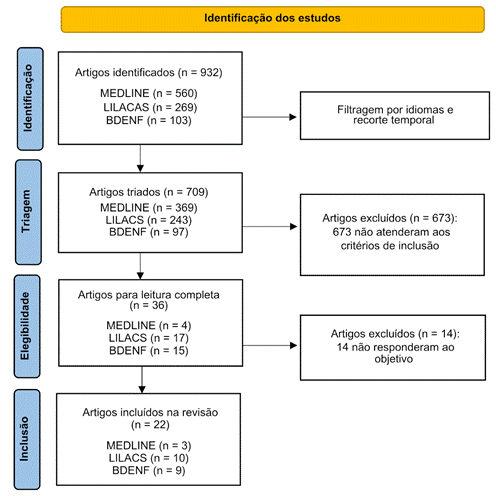
For the selection of studies, an adaptation of the Preferred Reporting Items for Systematic Reviews and Meta-Analyses recommendation (17) was carried out, as shown in Figure 1. The level of evidence of the studies was identified as follows: I for systematic reviews and meta-analyses of randomized clinical trials; II for randomized clinical trials; III for non-randomized controlled trials; IV for case-control or cohort studies; V for systematic reviews of qualitative or descriptive studies; VI for qualitative or descriptive studies; and VII for expert opinions and/or reports from expert committees. Levels I and II are classified as strong; levels III to V as moderate; and levels VI to VII as weak (18). The study respected the ethical standards of authorship and research integrity.
RESULTS
The initial search in the databases resulted in 932 articles, distributed as follows: 560 linked to MEDLINE, 269 to LILACS, and 103 to BDENF. After applying filters for time frame and language, the number was reduced to 709 articles, which were exported to the Rayyan platform for selection. In the analysis of titles and abstracts, 673 articles were excluded for not meeting the inclusion criteria, leaving 36 articles for full-text reading. After this reading, 14 articles were excluded for not answering the research question. Thus, the final corpus consisted of 22 articles. The selection process is detailed in Figure 1.
Figure 1 - Flowchart of study selection based on the PRISMA Model. Santa Maria/RS, 2025.
Source: adapted from Page, et al. 2021.
Chart 2 - Characterization of the selected studies. Santa Maria/RS, 2025.
|
Tiltle |
Objective |
Search type |
Sample |
Location/year/level of evidence |
|
Violência doméstica contra mulheres: experiências de profissionais de atenção primária à saúde.19 |
To analyze how primary healthcare professionals experience domestic violence against women. |
Qualitative |
10 nurses and10 community health agents. |
São Paulo, Brazil, 2024
VI
|
|
A construção do cuidado no auxílio a mulheres em situações de violência doméstica.20 |
To understand the care practices for this population, developed by workers in the Family Health Strategy (ESF) and the Expanded Family Health Center. |
Qualitative |
1 dental assistant, 1 psychologist, 1 social worker, 1 physiotherapist, 2 dentists, 4 nurses, and 6 community health agents. |
Salvador, Bahia, Brazil, 2024
VI |
|
Family doctors’ perception of violence against women.21 |
To assess family doctors' perceptions of violence against women. |
Cross-sectional DescriptiveQuantitative |
158 doctors |
Teresina, Piauí, Brazil, 2022
VI |
|
Condições que interferem no cuidado às mulheres em situação de violência conjugal.22 |
Understanding the conditions that interfere with the care of women experiencing domestic violence. |
Qualitative |
2 social workers, 3 psychologists, 4 dentists, 5 doctors and 17 nurses |
Região nordeste, Brazil, 2021
VI |
|
Análise quali-quantitativa do conhecimento dos cirurgiões-dentistas acerca da temática violência contra a mulher.23 |
To investigate the knowledge of dentists working in Primary Health Care Units (USAB) in Ribeirão Preto/SP regarding topics related to the theme of "violence against women". |
Observational, descriptive section transversal, quantitative |
33 surgeon dentists |
Ribeirão Preto, São Paulo, 2021
VI |
|
Violência contra as mulheres na prática de enfermeiras da atenção primária à saúde.24 |
To understand how nurses working in Primary Health Care identify violence against women and to describe the nursing care provided to these women. |
Qualitative |
10 nurses |
Minas gerais, Brazil, 2020
VI
|
|
Violence against women in Primary Health Care: Potentialities and limitations to identification. Atención Primaria.25 |
To determine the potential and limitations of primary healthcare professionals in identifying situations of violence against women. |
Qualitative |
3 doctors, 5 nurses, 6 nursing technicians and 7 community health agents.
|
Rio Grande do Sul, Braz il, 2020
VI |
|
Desafios no atendimento aos casos de violência doméstica contra a mulher em um município mato-grossense.26 |
Identify the main challenges in addressing cases of domestic violence against women in a municipality in Mato Grosso.
|
Qualitative |
1 dcotor and 7 nurses
|
Mato Grosso, Brazil, 2019
VI |
|
Violência contra as mulheres: atuação da enfermeira na atenção primária à saúde.27 |
Understanding the role of nurses in Family Health Strategies in addressing violence against women |
Qualitative |
11 nurses |
Rio Grande do Sul, Brazil, 2019
VI |
|
Violência contra a mulher: como os profissionais na atenção primária à saúde estão enfrentando esta realidade?28 |
To identify the forms of assistance provided by primary care professionals to women victims of violence in the municipality of Buíque (PE). |
Qualitative |
11 nurses |
Buíque, Pernambuco, Brazil, 2018
VI
|
|
Violência doméstica contra mulheres rurais: práticas de cuidado desenvolvidas por agentes comunitários de saúde.29 |
To understand the care practices developed by community health workers in providing care to women experiencing domestic violence who live in rural areas. |
Qualitative |
13 community health agents. |
Rio Grande do Sul, Brazil, 2018
VI |
|
Violência Doméstica Contra a Mulher Perpetrada por Parceiro Íntimo: Representações Sociais de Profissionais da Atenção Primária à Saúde.30 |
Understanding the social representations of primary health care professionals regarding violence against women perpetrated by intimate partners. |
Qualitative |
1 psychologist, 2 dentists, 3 doctors, 5 dental assistants, 7 nursing assistants, 10 nurses, 12 nursing technicians, and 13 community health agents. |
Minas Gerais, Brazil, 2018
VI |
|
Atuação dos enfermeiros da atenção básica a mulheres em situação de violência31 |
To identify how primary care nurses act in cases of violence against women,in a municipality in Pará |
Qualitative |
10 nurses |
Pará, Brazil, 2017
VI |
|
Women’s primary care nursing in situations of gender violence.32 |
To identify the actions taken by primary healthcare nurses for women experiencing domestic violence. |
Qualitative |
17 nurses |
Rio Grande do Sul, Brazil, 2015
VI |
|
O objeto, a finalidade e os instrumentos do processo de trabalho em saúde na atenção à violência de gênero em um serviço de atenção básica.33 |
To analyze professional practices in healthcare for women experiencing violence, identifying the elements of the work process and its relationship to emancipation from gender oppression. |
Qualitative |
1 doctor, 1 nurse, 1 nursing technician, 1 dentist, 1 receptionist, 1 dental assistant, and 7 community health agents. |
João Pessoa, Paraíba, Brazil, 2014
VI |
|
Como os profissionais de saúde atendem mulheres em situação de violência? Uma análise triangulada de dados.34 |
To analyze the knowledge of medical and nursing professionals regarding some characteristics of violence against women, and the actions and referrals they take within the public healthcare network of the municipality of Ribeirão Preto. |
Qualitative |
170 doctors and 51 nurses |
Ribeirão Preto, São Paulo, Brazil, 2014
VI
|
|
Conhecimento de enfermeiras em unidades de saúde sobre a assistência à mulher vítima da violência.35 |
To describe the assistance provided to women victims of violence in health units in the municipality of Vitória da Conquista and in the work context of the coordinators of these units. |
Exploratory, descriptive, quantitative |
20 coordinating nurses from Primary Health Care Units (PHCUs) |
Vitória da Conquista, Bahia, Brazil, 2014
VI |
|
Violência doméstica contra mulheres e a atuação profissional na atenção primária à saúde: um estudo etnográfico em Matinhos, Paraná, Brasil.36 |
To analyze how healthcare professionals attend to these women, problematizing the notion of welcoming in healthcare. |
Qualitative |
15 participants (community health workers, nurses, physiotherapists, and victims of violence) |
Matinhos, Pará, Brazil, 2013
VI |
|
Violência contra a mulher: limites e potencialidades da prática assistencial.37 |
To analyze the limiting and empowering situations in the care provided by Family Health teams to women experiencing violence. |
Qualitative |
30 professionals from the Family Health Strategy (ESF) |
Rio Grande do Sul, Brazil, 2013
VI |
|
Limites e possibilidades avaliativas da estratégia de saúde da família para a violência de gênero.38 |
Understanding the limits and evaluative possibilities of the Family Health Strategy (ESF) regarding the recognition and addressing of the health needs of women experiencing gender-based violence. |
Qualitative |
22 professionals and 13 women who experienced situations of gender-based violence. |
São Paulo, São Paulo, Brazil, 2013
VI |
|
The meaning of professional training for the care of women victims of domestic violence.39 |
To understand the meanings attributed by professionals working in the family health strategy regarding professional training for the care of women in situations of domestic violence. |
Qualitative |
12 doctors, 13 nurses and 17 nursing technicians (first group); 5 health unit coordinators (second group) |
Santa Catarina, Brazil, 2013
VI |
|
Violência contra a mulher: percepção dos médicos das unidades básicas de saúde da cidade de Ribeirão Preto, São Paulo.40 |
To verify the perception of physicians at primary healthcare units in Ribeirão Preto, SP, regarding violence against women perpetrated by intimate partners. |
Qualitative |
14 gynecologists-obstetricians and general practitioners |
Ribeirão Preto, São Paulo, Brazil, 2009
VI |
Caption: ASB (dental assistant); ACS (community health agent).
Source: authors, 2025.
Of the 22 selected articles, 19 employed a qualitative approach, one a mixed-methods approach (qualitative and quantitative), and two a quantitative approach. The highest concentration of studies was from 2017 to 2024, with 14 studies. The year with the most publications was 2013 with four studies, followed by 2014 and 2018 with three studies each. The oldest study is from 2009, followed by 2013, and after that, only 2016 and 2023 did not have any selected studies.
All studies are Brazilian, with 7 geographically distributed in the Southeast region, six in the Northeast, six in the South, two in the North, and one in the Central-West. Regarding the sample, 12 addressed multiple health professions, and 10 focused on a single professional category: six were conducted with nurses, two with physicians, one with community health agents (ACS), and one with dentists.
DISCUSSION
BARRIERS TO ASSISTANCE FOR WOMEN EXPERIENCING VIOLENCE IN PRIMARY HEALTH CARE
Studies have identified feelings as personal barriers, as they affect professional practice by hindering its performance. Among the feelings cited, the most predominant is the feeling of powerlessness in the face of the complexity of the cases and the difficulty in guaranteeing the safety of the victims (19,20,24,29,31-33,40). Other relevant feelings found are sadness, tension, and frustration, which arise from empathy with women in situations of violence (35), highlighting the emotional impact on professionals. Furthermore, the fear of coercion and reprisals (20,24,26,28,32,35,36) is a significant concern. Exposure to threats causes professionals to hesitate in offering comprehensive assistance, as the insecurity and sense of power of the aggressor generate fear in both victims and professionals (31).
Additionally, the feeling of unpreparedness (22,24,26,27,29,33,40) emerges as a personal barrier, as it is directly linked to the skills, knowledge, and attitudes of the individuals providing care. This problem can culminate in the transfer of responsibilities due to a lack of feeling qualified to provide such care (23,25,29,32,34,35). In view of this, professionals do not identify women as victims because they do not feel qualified to address the issue (2). Furthermore, professionals also find it difficult to recognize violence as a possible cause for various symptoms they deal with daily, being unaware of violence as a health problem (26,40). Epidemiological ignorance can also lead to difficulties in reflecting on the problem of violence (34).
Institutional barriers are highlighted in the studies by the logic of productivity (22), pre-determined consultation time (22,38), work overload (30,32,34,40) and scarcity of professionals (22,31,40), which compromise the quality of care and listening. Furthermore, limiting the time frame can prevent the establishment of a bond and trust, necessary for in-depth interaction with women, hindering effective intervention, especially given the imminent risk of femicide(37).
Moreover, the difficulty in identifying women in situations of violence is linked to the persistence of a biomedical model by health services(19). Studies demonstrate practices limited by biomedical logic(29,32,34,35,38,40), with actions that direct attention exclusively to physical harm(25,27,29,30,32,34,35,38,40,41). This model neglects nonspecific complaints and the non-verbalization of the situation, contributing to the medicalization of violence(34). Psychological violence, for example, is rarely perceived by primary health care professionals because it does not present physical marks, however, it compromises women's mental health(27). This reinforces the need for curricular reform that addresses the complexity of violence against women in a cross-cutting manner(34). It is therefore necessary for health professionals to overcome their prejudices and have adequate knowledge to understand the colonial and sexist society in which we are embedded, which requires changes in the organization of work, in the training and in the performance of health professionals. The presence of gender debate in undergraduate courses in different health programs is understood as necessary, as an important social determinant for health, in order to promote the confrontation of inequalities in the daily practice of care(42). Furthermore, the lack of literacy(20,23,25,27,28,30,31,35,39,40) also emerges as an institutional barrier, as it may be linked to the lack of training programs or their inadequacy.
Another point raised by the studies was the weaknesses in the flawed and bureaucratic referral flows (22,23), difficulties in coordination (19,24,26,29,31,33,34,39), difficulties in referring and receiving counter-referrals (23,27,29), lack of resolution and fragmentation of the network (26,31,38). These impasses become obstacles in addressing violence against women, as they hinder decision-making by professionals and subject women to an exhausting “path from service to service” (22).
Comprehensive care for women in situations of violence should occur through integrated networks involving different sectors, especially social assistance, justice, public security and health. However, difficulties in communication between services and a great disbelief in the effectiveness of referrals to other areas reinforce the pilgrimage of women to have their demands met (43).
Among the structural and sociocultural barriers, studies highlight discourses that blame women (19,21,30,32,33,38), contributing to the invisibility of violence (25,26,29,32,35,40,41). This social construction hinders the separation of moral judgments (20) and results in a limited conceptualization of violence (21), impacting the difficulty of identifying and caring for women in situations of violence.
Furthermore, the view of violence as an intimate and conjugal matter (21,27-29,30,32,33) not only naturalizes it but also inhibits professional intervention. This perspective is reinforced by patriarchal conceptions that blame women for the violence suffered, attributing to them responsibility for remaining in the relationship due to financial, emotional, or child-related dependencies. Additionally, primary health care professionals face difficulties in providing comprehensive care without prejudice and gender stereotypes (33). This reiterates the need to restructure techniques and knowledge so that violence is recognized from its social and cultural roots (33).
Among the barriers to women's engagement with primary health care services, there is the difficulty women experiencing violence face in remaining in follow-up care, which in itself constitutes a barrier to the coping process. Many women do not return to the service, retreat from the coping process, or even leave the area, motivated by fear of the abuser or shame (20). This vulnerability is aggravated by behaviors and contexts that hinder the identification of the violence itself, such as social isolation (24,27), driven by sadness, shame, fear, low self-esteem, and financial dependence (29). Women, feeling fear and shame about reporting, often resist notifying the violence (25-27,34) and prefer to remain silent (20,31,40,41), making it difficult to gather information.
Based on this premise, the social stigma, rooted in a sexist culture, makes women feel ashamed of being recognized as victims of violence (44). This shame, coupled with fear of judgment, financial and emotional dependence, concern for children and lack of recognition of their role in society, contributes to the non-reporting of the aggressor, which may limit the performance of primary health care(19). This naturalization of power dynamics creates invisible barriers, making it difficult to recognize situations of oppression and break the cycle of violence.
STRATEGIES FOR ASSISTING WOMEN EXPERIENCING VIOLENCE IN PRIMARY HEALTH CARE
Welcoming, active listening, and building relationships (19,20,24-27,29-31,36,40,41) are reported as powerful strategies for identifying and caring for women experiencing violence. Welcoming is fundamental in primary health care professional practice, as it recognizes that health processes are dynamic, emphasizing the affections that permeate the relationship between the professional and the user. This creates a space for effective exchanges and knowledge, implying the production of health care (45).
Subsequently, home visits (22,24,27,38,40,41) proved to be a valuable resource for understanding the social context and identifying situations of violence, through the creation of relationships and trust(29). Another resource, identified as a potential gateway for identifying violence, is the opportune moments of contact and dialogue with women in primary health care. Among them, prenatal consultation(19,38,40), anamnesis and physical examination(24), vaccine administration(22,38) and routine procedures(22,24,30,31,40) can be allies in initiating a conversation on the subject. Although challenging, spontaneous demand(28) also emerges as an opportune moment for identifying situations of violence. In addition, behavioral observation(25) can also assist in identification.
From this perspective, the Family Health Strategy (FHS), by acting through the registration of families by team, favors the continuity of care by primary health care professionals, promoting the creation of bonds(46). Thus, the work of the Community Health Agent(19,20,24-26,29,35) and the Nurse(29) proved to be strategic, given the capillarity of their actions and the capacity for expanded observation, which goes beyond the main complaint. The Community Health Agent (ACS), by working with a limited number of users, can easily get closer to the reality of the population, facilitating the development of actions to address violence against women, including the early identification of cases(47).
In this context, the bond established between the primary health care professional and women in situations of violence, provided by longitudinal care that develops over time, allows the user to have a close relationship with the health unit, facilitating the identification and management of violence. This makes primary health care stand out in the reception and confrontation of violence related to women(14).
FINAL CONSIDERATIONS
This study sought to identify the scientific evidence regarding the barriers and strategies that influence the performance of primary health care (PHC) professionals in identifying and caring for women experiencing violence. PHC faces multiple obstacles, notably insufficient professional training, the perception of violence as an intimate issue, weaknesses in the intersectoral support network, and the persistence of a predominantly biomedical model focused on physical harm. On the other hand, strategies such as welcoming practices, strengthening bonds, active listening, dialogue incorporated into routine procedures, and the proactive role of community health agents (CHAs) were highlighted. The urgent need for future research and public policies that prioritize the development, validation, and dissemination of innovative and effective strategies capable of promoting more assertive, sensitive, and protective care for women experiencing violence is reinforced. It is hoped that this study can support actions aimed at improving care and strengthening the performance of PHC health professionals to ensure that women do not feel helpless in their search for safety and dignity.
REFERENCES
1. Mafioletti TM, Peres AM, Larocca LM, Fontoura MP. Violence against women: historical trajectory of a care program (Curitiba - 1997-2014). Rev Bras Enferm 2018;71:2907–15. https://doi.org/10.1590/0034-7167-2017-0583.
2. Gomes NP, Erdmann AL, Gomes NR, Monteiro DS, Santos RM dos, Couto TM. Apoio social à mulher em situação de violência conjugal. Revista de Salud Pública 2015;17:823–35. https://doi.org/10.15446/rsap.v17n6.36022.
3. Baseggio JK, Silva LFM da. As condições femininas no brasil colonial. Maiêutica - História 2015;3. Disponível em: https://publicacao.uniasselvi.com.br/index.php/HID_EaD/article/view/1379.
4. Guimarães MC, Pedroza RLS. Violência contra a mulher: problematizando definições teóricas, filosóficas e jurídicas. Psicol Soc 2015;27:256–66. https://doi.org/10.1590/1807-03102015v27n2p256.
5. Minayo MCDS, Souza ERD. É possível prevenir a violência? Reflexões a partir do campo da saúde pública. Ciênc Saúde Coletiva 1999;4:7–23. https://doi.org/10.1590/S1413-81231999000100002..
6. Brasil. Lei nº 11.340, de 7 de agosto de 2006. Cria mecanismos para coibir a violência doméstica e familiar contra a mulher Brasília: Diário Oficial da União, 2006.
7. Bigliardi AM, Antunes MC, Wanderbroocke ACNS. O impacto das políticas públicas no enfrentamento à violência contra a mulher: implicações para a Psicologia Social Comunitária. Boletim - Academia Paulista de Psicologia 2016;36:262–85.
8. Cerqueira DRC, Lima RS de, Alves PP, Marques D, Lins G de OA, et al. Atlas da violência 2023. https://www.ipea.gov.br 2023.
9. Fóum brasileiro de segurança pública. 18° Anuário Brasileiro de Segurança Pública; 2024. Disponível em: https://publicacoes.forumseguranca.org.br/handle/123456789/253.
10. Lima LADA, Oliveira JCD, Cavalcante FA, Santos WSV, Silva Júnior FJGD, Monteiro CFDS. Nursing care for women victims of domestic violence / Assistência de enfermagem às mulheres vítimas de violência doméstica / Los cuidados de enfermería para las mujeres víctimas de la violencia doméstica. Rev Enferm UFPI 2017;6:65. https://doi.org/10.26694/reufpi.v6i2.5783.
11. Mota SR, Silva OPPD. Violência doméstica e suas consequências psicoemocionais. Rev Eletrônica Casa Makunaima 2019;2:104–13. https://doi.org/10.24979/makunaima.v2i3.387.
12. Mendonça CS, Machado DF, Almeida MASD, Castanheira ERL. Violência na Atenção Primária em Saúde no Brasil: uma revisão integrativa da literatura. Ciênc Saúde Coletiva 2020;25:2247–57. https://doi.org/10.1590/1413-81232020256.19332018.
13. Serafim VVD, Callou RCM, Dos Santos Moreira FTL, Albuquerque GA. Violência contra a mulher e enfrentamento na percepção dos profissionais de saúde da atenção básica. Salud Soc 2019;10:130–44. https://doi.org/10.22199/issn.0718-7475-2019-02-009.
14. d’Oliveira AFPL, Schraiber LB, Hanada H, Durand J. Atenção integral à saúde de mulheres em situação de violência de gênero: uma alternativa para a atenção primária em saúde. Ciênc Saúde Coletiva 2009;14:1037–50. https://doi.org/10.1590/S1413-81232009000400011.
15. Mendes KDS, Silveira RCCP, Galvão CM. Revisão integrativa: método de pesquisa para a incorporação de evidências na saúde e na enfermagem. Texto contexto – enferm. 2008;17:758–64. https://doi.org/10.1590/S0104-07072008000400018.
16. Brun CN, Zuge SS. Revisão sistemática da literatura: desenvolvimento e contribuição para uma prática baseada em evidências na Enfermagem. Metodologias da pesquisa para a enfermagem e saúde. Porto Alegre: Moriá; 2015. p. 77- 98.
17. Haddaway NR, Page MJ, Pritchard CC, McGuinness LA. PRISMA2020: An R package and Shiny app for producing PRISMA 2020‐compliant flow diagrams, with interactivity for optimised digital transparency and Open Synthesis. Campbell Systematic Reviews 2022;18:e1230. https://doi.org/10.1002/cl2.1230.
18. Melnyk BM, Fineout-overholt E. Evidence-based practice in nursing & healthcare. A guide to best practice. 3rd. ed. Philadelphia (US): Wolters Kluwer/Lippincott Williams & Wilkins; 2011.
19. Rodrigues PS, Araujo LF, Vernasque JRDS, Souza APD, Alarcon MFS, Higa EDFR, et al. Violência doméstica contra as mulheres: vivências dos profissionais da atenção primária a saúde. Texto Contexto - Enferm 2024;33:e20230403. https://doi.org/10.1590/1980-265x-tce-2023-0403pt.
20. Andrade LM, Bustamante V. A construção do cuidado na assistência às mulheres em situação de violência doméstica: perspectivas de trabalhadores e trabalhadoras da Estratégia Saúde da Família. Physis 2024;34:e34020. https://doi.org/10.1590/s0103-7331202434020pt.
21. Silva JJMD, Mesquita EM, Campelo V. Family doctors’ perception of violence against women. Rev Enferm UFPI 2022;11. https://doi.org/10.26694/reufpi.v11i1.946.
22. Carneiro JB, Gomes NP, De Almeida LCG, Romano CMC, Silva AFD, Webler N, et al. Condições que interferem no cuidado às mulheres em situação de violência conjugal. Esc Anna Nery 2021;25:e20210020. https://doi.org/10.1590/2177-9465-ean-2021-0020.
23. Mélo AM. Análise quali-quantitativa do conhecimento dos cirurgiões-dentistas acerca da temática violência contra a mulher. Rbol 2021;8:02–19. https://doi.org/10.21117/rbol-v8n32021-372.
24. Silva VGD, Ribeiro PM. Violência contra as mulheres na prática de enfermeiras da atenção primária à saúde. Esc Anna Nery 2020;24:e20190371. https://doi.org/10.1590/2177-9465-ean-2019-0371.
25. Arboit J, Padoin SMDM, Vieira LB. Violence against women in Primary Health Care: Potentialities and limitations to identification. Atención Primaria 2020;52:14–21. https://doi.org/10.1016/j.aprim.2018.09.008.
26. Ferreira Do Nascimento V, Fortunato De Lima Rosa T, Pereira Terças AC, Yuri Hattori T, Ferreira Do Nascimento V. Desafios no atendimento aos casos de violência doméstica contra a mulher em um município matogrossense. Arq Ciênc Saúde Unipar 2019;23. https://doi.org/10.25110/arqsaude.v23i1.2019.6625.
27. Sehnem GD, Lopes EB, Tier CG, Ribeiro AC, Maciel VDQS, Castilhos L. Violência contra as mulheres: atuação da enfermeira na atenção primária à saúde. Rev Enferm UFSM 2019;9:e62. https://doi.org/10.5902/2179769235061.
28. Santos SCD, Barros PDA, Delgado RFDA, Silva LVDL, Carvalho VPDS, Alexandre ACS. Violência contra a mulher: como os profissionais na Atenção Primária à Saúde estão enfrentando esta realidade? SaudPesq 2018;11:359. https://doi.org/10.17765/1983-1870.2018v11n2p359-368.
29. Arboit J, Costa MCD, Silva EBD, Colomé ICDS, Prestes M. Violência doméstica contra mulheres rurais: práticas de cuidado desenvolvidas por agentes comunitários de saúde. Saude Soc 2018;27:506–17. https://doi.org/10.1590/s0104-12902018169293.
30. Santos WJD, Oliveira PPD, Viegas SMDF, Ramos TM, Policarpo AG, Silveira EAAD. Domestic Violence Against Women Perpetrated by Intimate Partner: Professionals’ Social Representations in Primary Health Care / Violência Doméstica Contra a Mulher Perpetrada por Parceiro Íntimo: Representações Sociais de Profissionais da Atenção Primária à Saúde. R Pesq Cuid Fundam Online 2018;10:770–7. https://doi.org/10.9789/2175-5361.2018.v10i3.770-777.
31. Silva NNF, Leal SMC, Trentin D, Vargas MADO, Vargas CP, Vieira LB. Atuação dos enfermeiros da atenção básica a mulheres em situação de violência. Revenf 2017;8. https://doi.org/10.21675/2357-707X.2017.v8.n3.1290.
32. Visentin F, Becker Vieira L, Trevisan I, et al. Women’s primary care nursing in situations of gender violence. Invest Educ Enferm 2015;33. https://doi.org/10.17533/udea.iee.v33n3a20.
33. Almeida LRD, Silva ATMCD, Machado LDS. O objeto, a finalidade e os instrumentos do processo de trabalho em saúde na atenção à violência de gênero em um serviço de atenção básica. Interface (Botucatu) 2014;18:47–60. https://doi.org/10.1590/1807-57622014.0560.
34. Hasse M, Vieira EM. Como os profissionais de saúde atendem mulheres em situação de violência? Uma análise triangulada de dados. Saúde Em Debate 2014;38. https://doi.org/10.5935/0103-1104.20140045.
35. Santos J, Andrade RL de, Reis LA dos, Duarte SFP. Conhecimento de enfermeiras em unidades de saúde sobre a assistência à mulher vítima da violência. Revista Baiana de Enfermagem 2014;28. https://doi.org/10.18471/rbe.v28i3.9255.
36. Signorelli MC, Auad D, Pereira PPG. Violência doméstica contra mulheres e a atuação profissional na atenção primária à saúde: um estudo etnográfico em Matinhos, Paraná, Brasil. Cad Saúde Pública 2013;29:1230–40. https://doi.org/10.1590/S0102-311X2013000600019.
37. Silva EBD, Padoin SMDM, Vianna LAC. Violência contra a mulher: limites e potencialidades da prática assistencial. Acta Paul Enferm 2013;26:608–13. https://doi.org/10.1590/S0103-21002013000600016.
38. Guedes RN, Fonseca RMGSD, Egry EY. Limites e possibilidades avaliativas da estratégia saúde da família para a violência de gênero. Rev Esc Enferm USP 2013;47:304–11. https://doi.org/10.1590/S0080-62342013000200005.
39. Gomes NP, Erdmann AL, Bettinelli LA, Higashi GDC, Carneiro JB, Diniz NMF. The meaning of professional training for the care of women victims of domestic violence. Escola Anna Nery - Revista de Enfermagem 2013;17. https://doi.org/10.5935/1414-8145.20130012.
40. De Ferrante FG, Santos MAD, Vieira EM. Violência contra a mulher: percepção dos médicos das unidades básicas de saúde da cidade de Ribeirão Preto, São Paulo. Interface (Botucatu) 2009;13:287–99. https://doi.org/10.1590/S1414-32832009000400005.
41. Walton LM, Aerts F, Burkhart H, Terry T. Intimate Partner Violence Screening and Implications for Health Care Providers. OJHE 2015;11. https://doi.org/10.18785/ojhe.1101.05.
42. Lima ACSD, Alves MJH, Pereira EV, Pereira AP, Albuquerque GA, Belém JM. Gênero e sexualidade na formação de enfermeiros no ensino superior público brasileiro: estudo documental. Revista de Enfermagem do Centro-Oeste Mineiro 2021;11. https://doi.org/10.19175/recom.v11i0.3877.
43. Clemente AJ, Brites CM. Profissionais da Linha de Frente no Combate à Violência contra as Mulheres : o caso da Rede de Atendimento de Santa Maria (RS). Revista do Serviço Público 2022;73:287–314.
44. Moreira V, Boris GDJB, Venâncio N. O estigma da violência sofrida por mulheres na relação com seus parceiros íntimos. Psicol Soc 2011;23:398–406. https://doi.org/10.1590/S0102-71822011000200021.
45. Castanha L, Lima MRTD, Pecoraro T. Acolhimento de mulheres vítimas de violência na Atenção Básica em Saúde. Nupem 2021;14:248–62. https://doi.org/10.33871/nupem.2022.14.31.248-262.
46. Vieira EM, Hasse M. Percepções dos profissionais de uma rede intersetorial sobre o atendimento a mulheres em situação de violência. Interface (Botucatu) 2016;21:52–62. https://doi.org/10.1590/1807-57622015.0357.
47. Bezerra YRDN, Feitosa MZDS. A afetividade do agente comunitário de saúde no território: um estudo com os mapas afetivos. Ciênc Saúde Coletiva 2018;23:813–22. https://doi.org/10.1590/1413-81232018233.00292016.
Funding and Acknowledgments:
This research received no funding.
Conflict of Interest Statement:
Nothing to declare.
Author Contributions
Brenda Anieli de Quadros: contributed substantially to the conception and/or planning of the study.
Teresinha Heck Weiller: contributed substantially to the writing and/or critical review and final approval of the published version.
Carla Mario Brites: contributed substantially to the acquisition, analysis, and/or interpretation of the data.
Dedabrio Marques Gama: contributed substantially to the acquisition, analysis, and/or interpretation of the data.
Marcelo Nunes da Silva Fernandes: contributed substantially to the writing and/or critical review and final approval of the published version.
Scientific Editor: Ítalo Arão Pereira Ribeiro. Orcid: https://orcid.org/0000-0003-0778-1447
Rev Enferm Atual In Derme 2026;100(1): e026016
 Atribuição
CCBY
Atribuição
CCBY