SCOPE REVIEW
NEUROLOGICAL SYMPTOMS PRESENTED BY PEOPLE WITH LONG COVID: SCOPING REVIEW
SINTOMAS NEUROLÓGICOS APRESENTADOS POR PESSOAS COM COVID-19 LONGA: REVISÃO DE ESCOPO
SÍNTOMAS NEUROLÓGICOS PRESENTADOS POR PERSONAS CON COVID-19 PROLONGADA: REVISIÓN DE ALCANCE
https://doi.org/10.31011/reaid-2026-v.100-n.3-art.2701
1Bianca Cristina Galatti
2Gustavo Diego Magno
3Silvia Carla da Silva André Uehara
1Universidade Federal de São Carlos (UFSCar), São Carlos, Brazil. ORCID: https://orcid.org/0009-0008-4030-243X
2Universidade Federal de São Carlos (UFSCar), São Carlos, Brazil. ORCID: https://orcid.org/0000-0003-3656-9170
3Universidade Federal de São Carlos (UFSCar), São Carlos, Brazil. ORCID: https://orcid.org/0000-0002-0236-5025
Corresponding Author
Gustavo Diego Magno
Rodovia Washington Luís s/n, km 235 - São Carlos – SP – Brazil. CEP: 13565-905, contact: +55(16) 3351-8334, E-mail: gusmagno@gmail.com.
Submission: 01-12-2025
Approval: 16-04-2026
ABSTRACT
Objective: To analyze the neurological symptoms developed by people with long COVID. Methods: This is a scoping review conducted in the Web of Science, MEDLINE, LILACS, SCOPUS, SCIELO, Google Scholar, and LitCovid databases. For inclusion, articles addressing the influence of age, sex, presence of comorbidities, and vaccination status were considered. Results: Nine studies were selected, showing that the most common neurological symptoms in long COVID are headache, sleep disorders, fatigue, and cognitive impairment. These symptoms were reported across different age groups, being more prevalent in older adults and individuals with comorbidities. Some studies indicated a higher prevalence in women, while others did not identify significant differences. Vaccination status was scarcely explored, with no consistent associations with neurological outcomes. Conclusion: Long COVID with neurological manifestations remains a public health challenge with a significant impact on quality of life. Gaps persist regarding the role of sex and vaccination, highlighting the need for more robust research to guide prevention and care strategies.
Keywords: Post-Acute COVID-19 Syndrome; Neurological Manifestations; COVID-19; Signs and Symptoms.
RESUMO
Objetivo: analisar os sintomas neurológicos desenvolvidos por pessoas com COVID-19 longa. Métodos: trata-se de uma revisão de escopo realizada nas bases de dados Web of Science, MEDLINE, LILACS, SCOPUS, SCIELO, Google Scholar e LitCovid. Para a inclusão, considerou-se artigos que abordaram: influência da idade, sexo, presença de comorbidades e situação vacinal. Resultados: foram selecionados nove estudos, que mostram os sintomas neurológicos mais comuns na COVID-19 longa como cefaleia, distúrbios do sono, fadiga e déficit cognitivo. Esses sintomas foram descritos em diferentes faixas etárias, sendo mais prevalentes em pessoas idosas e com comorbidades. Alguns estudos apontando maior prevalência em mulheres, enquanto outros não identificaram diferenças significativas. Já a situação vacinal foi pouco explorada, sem associações consistentes com desfechos neurológicos. Conclusão: a COVID-19 longa com manifestações neurológicos permanece um desafio em saúde pública, com impacto relevante na qualidade de vida. Persistem lacunas sobre o papel do sexo e da vacinação, evidenciando a necessidade de pesquisas mais robustas que orientem estratégias de prevenção e cuidado.
Palavras-chave: Síndrome de Pós-COVID-19 Aguda; Manifestações Neurológicas; COVID-19; Sinais e Sintomas.
RESUMEN
Objetivo: Analizar los síntomas neurológicos desarrollados por personas con COVID-19 prolongada. Métodos: Se trata de una revisión de alcance realizada en las bases de datos Web of Science, MEDLINE, LILACS, SCOPUS, SCIELO, Google Scholar y LitCovid. Para la inclusión, se consideraron artículos que abordaran la influencia de la edad, el sexo, la presencia de comorbilidades y la situación vacunal. Resultados: Se seleccionaron nueve estudios que muestran que los síntomas neurológicos más comunes en la COVID-19 prolongada son cefalea, trastornos del sueño, fatiga y deterioro cognitivo. Estos síntomas se describieron en diferentes grupos de edad, siendo más prevalentes en personas mayores y con comorbilidades. Algunos estudios señalaron una mayor prevalencia en mujeres, mientras que otros no identificaron diferencias significativas. La situación vacunal fue poco explorada, sin asociaciones coherentes con los desenlaces neurológicos. Conclusión: La COVID-19 prolongada con manifestaciones neurológicas sigue siendo un reto para la salud pública, con un impacto relevante en la calidad de vida. Persisten lagunas sobre el papel del sexo y de la vacunación, lo que evidencia la necesidad de investigaciones más sólidas que orienten estrategias de prevención y atención.
Palabras clave: Síndrome Post Agudo de COVID-19; Manifestaciones Neurológicas; COVID-19; Signos y Síntomas.
INTRODUCTION
The pandemic caused by Severe Acute Respiratory Syndrome Coronavirus 2 (SARS-CoV-2) represented a global challenge for health systems. Initially, coronavirus disease 2019 (COVID-19) was understood as an acute respiratory illness, but it quickly became evident that its clinical manifestations could be multisystemic and persist beyond the acute phase of infection(1). In November 2020, analyses already showed long-term consequences of the disease and that dysfunctions and complications could persist in some discharged patients for at least 6 months. These post-acute illness clinical manifestations came to be called long COVID-19, characterized by the persistence, development, or fluctuation of symptoms months after the initial episode of the disease, even in cases that did not require hospitalization(2).
The World Health Organization, in October 2021, defined post-COVID-19 conditions as the occurrence of new or recurrent symptoms that generally manifest three months after the onset of acute COVID-19, persist for at least two months, and cannot be explained by an alternative diagnosis (3). In Brazil, in December 2023, the Ministry of Health defined post-COVID conditions as the presence of signs and symptoms after a SARS-CoV-2 infection that continue or develop four weeks or more after the initial infection and cannot be justified by an alternative diagnosis (4).
Patients with long COVID-19 often report a persistent clinical picture that can affect multiple body systems. The most common symptoms include intense fatigue, dyspnea, changes in smell and taste, as well as cognitive difficulties, chest pain, persistent cough, and sleep disturbances. Psychiatric symptoms such as anxiety and depression are also described, in addition to musculoskeletal manifestations such as joint and muscle pain. These symptoms can appear soon after the acute phase or later, fluctuating over time, and their persistence significantly interferes with quality of life (1-2).
Among the various persistent clinical manifestations, neurological symptoms stand out due to their significant impact on the quality of life, functionality, and occupational reintegration of affected individuals. Manifestations such as persistent headache, disabling fatigue, and sleep disorders are commonly described in the literature as central components of long COVID (5-6).
However, the understanding of which factors can modulate the risk for the development or persistence of these neurological symptoms is still incipient and fragmented. Variables such as age, sex, presence of comorbidities, and vaccination status at the time of acute infection have been studied in isolation as potential modifiers of the clinical picture; however, the results of the studies are heterogeneous and sometimes contradictory (7-8). This inconsistency makes it difficult to identify risk groups and develop strategies for early diagnosis and appropriate clinical management.
Given this scenario, it becomes imperative to synthesize the existing evidence to elucidate the current panorama of knowledge. To this end, a scoping review was chosen, seeking to contribute to identifying gaps in knowledge on this topic. For this study, the term "long COVID" was adopted because it is a well-established term in the initial literature on the subject, widely recognized by the scientific community, and adequately encompasses the phenomenon investigated, facilitating the retrieval of relevant studies published during the period of consolidation of the concept (1-3,5-8). Therefore, this study aims to analyze the neurological symptoms developed by people with long COVID-19.
METHODS
Study Type
This is a scoping review, following the nine methodological steps described by the JBI(9): (1) identification of the study area; (2) identification of the research question; (3) development of the scoping review protocol; (4) identification of relevant studies; (5) selection of studies to be included in the review; (6) data extraction; (7) presentation of results; (8) seeking feedback; and (9) sharing results.
Definition of the research question
Using the acronym PCC (Population: People with post-COVID condition; Concept: neurological manifestations; and Context: COVID-19), the following research question was structured: “What are the neurological symptoms identified in people with long COVID, according to sex, age, presence of comorbidities and vaccination status?”.
Search strategy and inclusion and exclusion criteria
The search strategies were developed using controlled vocabularies corresponding to the subjects of the PCC mnemonic, available in the Health Sciences Descriptor (DeCS) and Medical Subject Headings (MeSH), as shown in Figure 1.
Figure 1 - Search strategies used in the databases. São Carlos, SP, Brazil, 2025.
|
DATABASE |
Search Strategy |
|
“(long covid) AND (neurological manifestations) AND (COVID-19) AND (symptoms)” |
|
|
Web of Science |
“(long covid) AND (neurological manifestations) AND (COVID-19) AND (symptoms)” |
|
SCOPUS |
“(long covid) AND (neurological manifestations) AND (COVID-19) AND (symptoms)” |
|
Google Scholar |
“(covid longa) AND (manifestações neurológicas) AND (COVID-19) AND (sintomas)” |
|
LILACS |
“(covid longa) AND (manifestações neurológicas) AND (COVID-19) AND (sintomas)”; “(long covid) AND (neurological manifestations) AND (covid-19) AND (symptoms)” |
|
LitCovid |
“(long covid) AND (neurological manifestations) AND (COVID-19) AND (symptoms)” |
|
SciELO |
“(covid longa) AND (manifestações neurológicas) AND (COVID-19) AND (sintomas)”; “(long covid) AND (neurological manifestations) AND (covid-19) AND (symptoms)” |
|
|
|
Primary empirical studies addressing the neurological symptoms of the post-COVID condition were included, considering the three elements of the PCC mnemonic; studies published in Portuguese, English, and Spanish, and between January 2021 and December 2024. Publications whose titles and abstracts did not apply to the research objective, as well as opinion articles, editorials, and reviews, were excluded. Reviews, protocols, institutional documents, or manuals were not included, since the focus was on mapping the production of original knowledge on the subject.
Extraction and Selection of Studies
After selecting the descriptors, the search strategies were applied on December 10, 2024, in the databases Medical Literature Analysis and Retrieval System Online (MEDLINE), Web of Science (WoS), SCOPUS, Google Scholar, Latin American and Caribbean Literature in Health Sciences (LILACS), LitCovid, and Scientific Electronic Library Online (SciELO), accessed through the Periodicals Portal of the Coordination for the Improvement of Higher Education Personnel (CAPES), using identification through the Federated Academic Community (CAFe), as a way to standardize data collection in these databases.
The study selection process took place between April and June 2025, based on previously defined criteria. The publications found were imported into the State of the Art through Systematic Review (StArt) software (10), which allowed blinding in the collaboration between the two reviewers, where duplicates were removed and screening was carried out by reading the titles and abstracts, identifying those that were relevant and the divergences were discussed with a third researcher and resolved by consensus. The sample was obtained based on reading the materials in full. Finally, a snowball technique was also used, through manual searching (reverse citation) in the reference lists of the included studies, with the aim of locating relevant publications not identified in the database search.
Data Analysis and Treatment
The selection of studies is presented in a flowchart, and the main results are presented in a table, in descriptive format, highlighting bibliometric aspects that address the central question that guided this scoping review. The methodological quality of the included studies was not evaluated, as it was not part of the inclusion criteria, being considered optional in scoping reviews.
For the reporting of this review, the recommendations of the Preferred Reporting Items for Systematic Reviews and Meta-Analyses (PRISMA)(11) were used.
Ethical aspects
Since this is a scoping review based on publicly available secondary data, the study does not require review by the Research Ethics Committee.
RESULTS
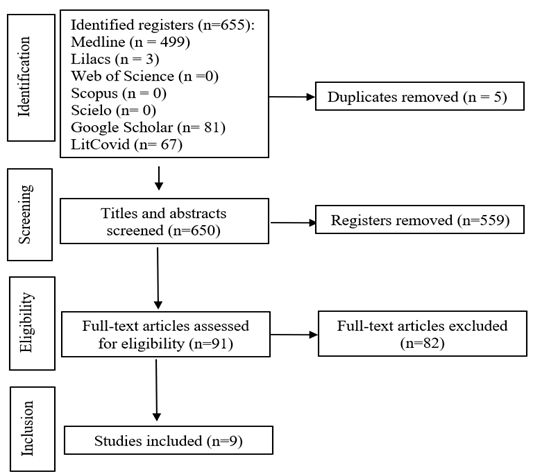
A total of 655 articles were identified in the databases, of which 5 were excluded due to duplication and 559 studies were excluded because they were opinion articles, editorials, and abstracts that did not address the research objective. 91 articles were selected for full-text reading; subsequently, 82 studies were excluded because they were reviews, not primary studies, or did not answer the research question, leaving 9 studies included (Figure 2).
Figure 2 - Flowchart of article selection according to PRISMA recommendations. São Carlos, SP, Brazil, 2025.
The 9 selected studies were published in English, with 3 (33.3%) published in the United States, 2 (22.2%) in Italy, and 1 (11.1%) study in each of the following countries: United Kingdom, Egypt, Germany, and Hungary. Regarding the study type, 5 (55.5%) were cohort studies, 3 (33.3%) were case-control studies, and 1 (11.1%) was a cross-sectional study (Figure 3).
Figure 3 - Description of included articles by study design, sample, comorbidities, vaccination status, and long-term COVID-19 symptoms. São Carlos, SP, Brazil, 2025.
|
Author year |
Study Design |
Sample description |
Comorbities and Situação Vacinal |
Neurological symptoms of long-term COVID-19 |
|
Frontera et al 2021(12) |
Cohort study |
606 patients (248 male); mean age 65 years |
Diabetes mellitus, obesity, and chronic lung diseases. Vaccination status not reported. |
Cognitive deficits, functional limitations, anxiety, depression, and sleep disorders are more persistent in people with comorbidities. Female sex was associated with headache and cognitive changes, and advanced age with functional disability. |
|
Sun et al 2021(13) |
Case-control study |
36 participants, 24 in the case group and 12 in the control group; 22 participants were female; average age was 52 years. |
Systemic arterial hypertension and diabetes mellitus. Vaccination status not reported. |
Headache and cognitive difficulties in patients with persistent neurological manifestations were associated with a higher prevalence of hypertension and diabetes. Advanced age increased the risk of neurological sequelae. No significant differences were observed between sexes. |
|
Graham et al 2021(14) |
Case-control study |
100 patients (30 female and 70 male); aged between 11 and 43 years. |
Comorbidities not reported. Most participants had complete vaccination status, with no interference in the symptoms presented. |
Among non-hospitalized patients, long COVID-19 symptoms included brain fog, headache, paresthesia, dysgeusia, and anosmia. Prevalence was higher in individuals with depression or autoimmune diseases. No significant differences were found by sex, age, or vaccination status. |
|
Cristillo et al 2021(15) |
Cohort study |
168 patients: 56 male and 112 female, aged between 12 and 67 years. |
Comorbidities and vaccination status not reported. |
68% presented persistent neurological symptoms, such as headache and anosmia. In addition, 22% developed serious neurological complications, including encephalopathy and stroke. The average age of the participants was 63 years, with no association with sex. |
|
Alghamdi et al 2022(16) |
Cross-sectional study |
2218 individuals (1358 women and 860 men); age range from 12 to 70 years. |
Comorbidities and vaccination status not reported. |
Loss of smell/taste, cognitive dysfunction, depression, sleep disorders, mood changes, and tinnitus, with the latter two persisting for more than six months. Higher occurrence in females. Advanced age was associated with higher risks of complications. |
|
Magdy et al 2022(17) |
Case-control study |
204 participants in the case group: 163 females and 41 males, aged between 15 and 43 years. 204 in the control group: 151 females and 53 males, aged between 30 and 42 years. |
Migraine (case group). Vaccination status not reported. |
Patients in the control group presented neurological symptoms, the most common being headache and anosmia. Those in the case group, however, developed serious neurological complications such as encephalopathy and stroke. Advanced age was identified as a significant risk factor. There was no association with sex or comorbidities of the participants. |
|
Sedat et al 2023(18) |
Case-control study |
102 cases and 111 controls: 120 women and 93 men, average age of 22 years. |
Systemic arterial hypertension and diabetes mellitus. Vaccination status not reported. |
In the case group, long COVID manifested as persistent mental fatigue and reduced cognitive flexibility, associated with infection severity and comorbidities. Women showed a lower risk of mental fatigue compared to men. |
|
Pilotto et al 2024(19) |
Cohort study |
208 patients (50 female and 158 male); aged between 12 and 65 years. |
Comorbidities not described and vaccination status not reported. |
Six months after hospitalization, one-third of survivors reported difficulties with memory, attention, and sleep disorders. Advanced age, comorbidities, and greater severity of infection were predictors of these manifestations, with no association with sex. |
|
Hosp et al 2024(20) |
Cohort study
|
89 patients: 34 male and 55 female, with an average age of 49 years. |
Comorbidities not described and vaccination status not reported. |
Detectou-se alterações microestruturais cerebrais, além de déficits cognitivos, perda de olfato e fadiga. Não houve análise ou associação desses achados com idade, sexo, comorbidades e situação vacinal. |
Studies have shown a prevalence of symptoms such as headache, sleep disorders, and cognitive deficits in age ranges varying between 11 and 70 years (12-18). In general, fatigue, anosmia, dysgeusia, cognitive deficit, and brain fog were the most described symptoms, in some cases persisting for more than six months (13,15-16,18). Furthermore, advanced age was associated with a higher prevalence and severity of persistent neurological manifestations (12-13,15-19).
Regarding people with comorbidities, an association was noted between greater infection severity and the presence of pre-existing conditions, such as migraine, being related to worse neurological outcomes, lower cognitive performance, and higher rates of complications, including encephalopathy and stroke (17). Furthermore, some studies have shown that people with Systemic Arterial Hypertension and Diabetes Mellitus have a higher chance of developing long COVID-19 (12-13,18-19).
The association between sex and neurological manifestations of long COVID-19 presents divergent results, i.e., some studies did not identify a significant association, suggesting that men and women presented a similar prevalence of these symptoms (13-14,17,19-20). On the other hand, a significant association was found with the female sex, especially in symptoms related to fatigue, headache, cognitive changes and mood changes (12,16). However, one specific study showed that the female sex can be considered a protective factor, presenting a lower risk of persistent mental fatigue compared to men (18).
In addition, regarding vaccination status, most studies did not perform analyses on this association (12-13,16-19). Only one study analyzed vaccination status; However, it found no association with long-term neurological symptoms of COVID-19(14).
DISCUSSION
Scientific knowledge about neurological symptoms in long COVID has advanced significantly, revealing a diversity of clinical manifestations affecting aspects of the nervous system. The main neurological symptoms associated with long COVID were cognitive dysfunction, headache, insomnia, and motor and sensory alterations (15-17,19-20). These neurological manifestations have a direct impact on individuals' quality of life, affecting both daily functionality and occupational performance, with headache being particularly noteworthy (21).
In addition to headache, cognitive dysfunction is another important factor, resulting in mental confusion, memory deficits, and reduced attention span. These symptoms may derive from pathological mechanisms, including persistent neuroinflammation and/or endothelial injury caused by COVID-19 infection, which explains the persistent symptoms. Such alterations can compromise the integrity of neuronal connections and synaptic function, directly affecting cognitive processing. This dysfunction can persist for months or even years after the initial infection, significantly impacting the quality of life and functional capacity of affected individuals (22).
It is worth noting that insomnia diagnosed after COVID-19 infection also remains present even months after recovery from the acute phase of the disease. In addition to its high prevalence, insomnia is commonly associated with anxiety disorders, depression, and chronic fatigue; thus, long-term COVID-19 insomnia is not an isolated symptom, but a multifactorial manifestation, influenced by neuropsychological and inflammatory changes triggered by the virus (23).
From a pathophysiological point of view, it is known that post-COVID insomnia is related to neuroinflammatory changes triggered by SARS-CoV-2 infection, affecting brain regions such as the hypothalamus, responsible for sleep regulation, and the limbic system, involved in the emotional response. The prolonged presence of inflammatory cytokines such as IL-6, IL-1β, and TNF-α has been associated with dysfunction of the hypothalamic-pituitary-adrenal axis, contributing to dysregulation of the sleep-wake cycle. Neuroimaging studies also indicate alterations in the functional connectivity of brain areas involved in sleep control in post-COVID patients, reinforcing the hypothesis of persistent neurobiological impairment (24-25). Regarding the origin of this symptom, although insomnia was already widely prevalent in the global population before the pandemic, in the context of long COVID-19, it may have been both potentiated in predisposed individuals and triggered as a new symptom in people with no prior history of sleep disorders (26).
Furthermore, neuroimaging exams performed on post-COVID-19 patients also showed significant alterations in brain areas related to memory, attention, and executive functions, suggesting an association between the reported clinical symptoms and possible structural or functional damage to the brain (27).
Knowing this, age is an important factor to consider, as the neurological effects of long-term COVID-19 affect different age groups in distinct ways, both in terms of frequency and severity of symptoms. Among children and adolescents aged 6 to 17 years, persistent symptoms such as headache, sleep disorders, paresthesia, and memory difficulties can be diagnosed months after infection, even in mild or asymptomatic cases (28). Among young and middle-aged adults, neurological symptoms of long-term COVID-19 such as cognitive dysfunction, headache, sleep disorders, among others, appear to be more frequent and debilitating (29). It is worth highlighting that non-hospitalized patients aged 15 to 30 years presented a high frequency of complaints of chronic fatigue, brain fog, persistent headache, sleep disorders, and cognitive deficits in attention, memory, and executive function (14).
Among older people, although acute neurological symptoms of COVID-19, such as delirium and mental confusion, are more common, the persistence of long-term neurological symptoms is relatively less frequent when compared to younger age groups. However, patients aged 65 or older have a higher risk of developing mild cognitive impairment after infection, which may represent a risk factor for accelerated cognitive decline or even dementia(30).
Thus, it is possible to identify that emotional, social, and hormonal factors seem to modulate the clinical expression of long-term COVID-19 according to age group and patient's previous profile (31). In children, the school and emotional impact is an aggravating factor; in adults, the consequences affect productive capacity and quality of life; and, in the elderly, concerns focus on the risks of neurodegenerative decline (32).
Regarding sex, knowing the mechanisms that trigger the neurological symptoms of long-term COVID-19, it is plausible to consider that biological sex may influence these manifestations. Although some literature points to a higher frequency of symptoms such as chronic fatigue, headache, insomnia, anxiety, and cognitive changes in women (33), other studies have not identified significant differences between the sexes; on the other hand, there is evidence suggesting a protective effect of the female sex in relation to persistent mental fatigue (34). These discrepancies may be related to hormonal, immunological, and methodological differences between studies, since women generally present a more intense immune response, which, although it may reduce the risk of severe acute infection, is also associated with greater susceptibility to autoimmune and persistent inflammatory processes (35).
Furthermore, people with comorbidities, especially diabetes, hypertension, and cardiovascular diseases, have an increased risk for the development and severity of long COVID-19 symptoms (36-37). The impact of comorbidities may be related to exacerbated inflammatory mechanisms and immunological dysfunctions that potentiate the persistence of the virus or the dysregulated immune response, contributing to the maintenance of symptoms (1). In addition, the interaction between the individual's pre-existing health status and the aggressiveness of the viral response can directly influence the clinical course and recovery (29). In this sense, such conditions may increase vulnerability to neurological manifestations, such as headache, cognitive impairment, fatigue, and sleep disorders, possibly by favoring neuroinflammatory processes and vascular changes that compromise brain function (38).
Furthermore, in this review, none of the selected studies discussed the association of vaccination with a reduction in neurological symptoms related to long COVID-19; however, it is known that some analyses indicate that the COVID-19 vaccine reduces the risk of persistent symptoms of the disease (39). In this scenario, there is evidence that vaccinated individuals are less likely to develop long COVID symptoms such as headache, sleep disorders, and loss of smell/taste compared to unvaccinated people. The probability of developing general long COVID symptoms decreases after vaccination, with sustained improvement after the second dose of the vaccine, with the first dose of the vaccine being associated with an initial 12.8% reduction in the chance of developing these manifestations. After administration of the second dose of the vaccine, the chance of a person presenting long COVID-19 symptoms was 8.8%, suggesting a sustained improvement after the second dose of the immunobiological agent (40).
This study identified limitations, highlighting the predominance of observational data, the methodological heterogeneity of the research, and the lack of consistent longitudinal follow-up. Future prospective and controlled studies are essential to deepen the understanding of the mechanisms, duration, and risk factors for the development of neurological symptoms of long COVID-19.
FINAL CONSIDERATIONS
The neurological symptoms of long COVID-19 represent a complex and multifaceted challenge, affecting individuals of different age groups. Furthermore, gaps remain regarding the association with sex and vaccination. The diversity of symptoms and pathophysiological mechanisms reinforces the need for individualized and multidisciplinary clinical approaches.
This review identified significant gaps in the more comprehensive understanding of the neurological symptoms of long COVID-19, including the characterization of pathophysiological mechanisms, the definition of standardized diagnostic criteria, the assessment of long-term functional impacts, and the effectiveness of therapeutic interventions.
REFERENCES
1. Nalbandian A, Sehgal K, Gupta A, Madhavan MV, McGroder C, Stevens JS, et al. Post-acute COVID-19 syndrome. Nat Med. 2021;27(4):601-15. doi: https://doi.org/10.1038/s41591-021-01283-z
2. The Lancet. Facing up to long COVID. Lancet. 2020;396(10266):1861. doi: https://doi.org/10.1016/S0140-6736(20)32662-3
3. World Health Organization. A clinical case definition of post COVID-19 condition by a Delphi consensus. Geneve: WHO; 6 Oct 2021 [Internet]. 2021 [cited Sep 25, 2025]. Available from: https://iris.who.int/server/api/core/bitstreams/53c01712-a322-446e-ad9f-4e078b757267/content
4. Ministério da Saúde (BR). Nota Técnica nº 57/2023 – DGIP/SE/MS. Atualizações acerca das "condições pós-covid" no âmbito do Ministério da Saúde [Internet]. Brasília-DF: Ministério da Saúde; 2023 [cited 2025 Aug 14]. Available from: https://bvsms.saude.gov.br/bvs/publicacoes/nota_tecnica_n57_atualizacoes_condicoes_poscovid.pdf
5. Prediger KM, Ribeiro AC, Uehara SCDSA. Prevalent symptoms and characteristics of the Long COVID-19 population: a scoping review. Rev Latino-Am Enfermagem. 2025;33:e4479. doi: https://doi.org/10.1590/1518-8345.7353.4479
6. Marchi M, Grenzi P, Serafini V, Capoccia F, Rossi F, Marrino P, et al. Psychiatric symptoms in Long-COVID patients: a systematic review. Front Psychiatry. 2023;14:1138389. doi: https://doi.org/10.3389/fpsyt.2023.1138389
7. Yong SJ. Long COVID or post-COVID-19 syndrome: putative pathophysiology, risk factors, and treatments. Infect Dis (Lond). 2021;53(10):737-54. doi: https://doi.org/10.1080/23744235.2021.1924397
8. Zawilska JB, Kuczyńska K. Psychiatric and neurological complications of long COVID. J Psychiatr Res. 2022;156:349-60. doi: https://doi.org/10.1016/j.jpsychires.2022.10.045
9. Aromataris E, Lockwood C, Porritt K, Pilla B, Jordan Z. JBI manual for evidence synthesis [Internet]. 2024 [cited Aug 13, 2025]. Available from: https://jbi-global-wiki.refined.site/download/attachments/355599504/JBI%20Manual%20for%20Evidence%20Synthesis%202024.pdf
10. Laboratório de Pesquisa em Engenharia de Software (LaPES). StArt – State of the Art through Systematic Review [Internet]. 2020 [cited Sep 24, 2025]. Available from: https://www.lapes.ufscar.br/resources/tools-1/start-1
11. Page MJ, McKenzie JE, Bossuyt PM, Boutron I, Hoffmann TC, Mulrow CD, et al. The PRISMA 2020 statement: an updated guideline for reporting systematic reviews. BMJ. 2021;372:n71. doi: https://doi.org/10.1136/bmj.n71
12. Alghamdi HY, Alrashed AM, Jawhari AM, Abdel-Moneim AS. Neuropsychiatric symptoms in post-COVID-19 long haulers. Acta Neuropsychiatr. 2022;34(6):318-29. doi: https://doi.org/10.1017/neu.2022.13
13. Frontera JA, Yang D, Lewis A, Patel P, Medicherla C, Arena V, et al. A prospective study of long-term outcomes among hospitalized COVID-19 patients with and without neurological complications. J Neurol Sci. 2021;426:117486. doi: https://doi.org/10.1016/j.jns.2021.117486
14. Sun B, Tang N, Peluso MJ, Iyer NS, Torres L, Donatelli JL, et al. Characterization and Biomarker Analyses of Post-COVID-19 Complications and Neurological Manifestations. Cells. 2021;10(2):386. doi: https://doi.org/10.3390/cells10020386
15. Pilotto A, Benussi A, Libri I, Masciocchi S, Poli L, Premi E, et al. COVID-19 severity impacts on long-term neurological manifestation after hospitalisation. medRxiv [preprint]. 2024;2020.12.27.20248903. doi: https://doi.org/10.1007/s10072-021-05586-4
16. Graham EL, Clark JR, Orban ZS, Lim PH, Szymanski AL, Taylor C, et al. Persistent neurologic symptoms and cognitive dysfunction in non-hospitalized Covid-19 "long haulers". Ann Clin Transl Neurol. 2021;8(5):1073-85. doi: https://doi.org/10.1002/acn3.51350
17. Magdy R, Elsayad GF, Selim S, El-Ebiary A, Abd ElMonem A, El‐Tantawy O, et al. Post-COVID-19 neuropsychiatric manifestations among COVID-19 survivors suffering from migraine: a case-control study. J Headache Pain. 2022;23(1):101. doi: https://doi.org/10.1186/s10194-022-01468-y
18. Hosp JA, Reisert M, Dressing A, Götz V, Kellner E, Mast H, et al. Cerebral microstructural alterations in Post-COVID-condition are related to cognitive impairment, olfactory dysfunction and fatigue. Nat Commun. 2024;15(1):4256. doi: https://doi.org/10.1038/s41467-024-48651-0
19. Cristillo V, Pilotto A, Cotti Piccinelli S, Zoppi N, Bonzi G, Gipponi S, et al. Age and subtle cognitive impairment are associated with long-term olfactory dysfunction after COVID-19 infection. J Am Geriatr Soc. 2021;69(10):2778‑80. doi: https://doi.org/10.1111/jgs.17296
20. Sedat Y, Erman A, Yasemin FE. Post-acute sequelae of COVID-19 in young adults: Mental fatigue and decreased cognitive flexibility. Ideggyogy Sz. 2023;76(7-8):261-9. doi: https://doi.org/10.18071/isz.76.0261
21. Kubota T, Kuroda N, Sone D. Neuropsychiatric aspects of long COVID: A comprehensive review. Psychiatry Clin Neurosci. 2023;77(2):84-93. doi: https://doi.org/10.1111/pcn.13508
22. Popa E, Popa AE, Poroch M, Poroch V, Ungureanu MI, Slanina AM, et al. The molecular mechanisms of cognitive dysfunction in long COVID: a narrative review. Int J Mol Sci. 2025;26(11):5102. doi: https://doi.org/10.3390/ijms26115102
23. Kadl A, Davis EM, Oliver SF, Lazoff SA, Popovich J, Atya AAE, et al. Prevalence and associations of insomnia after COVID-19 infection. J Clin Sleep Med. 2025;21(2):383-91. doi: https://doi.org/10.5664/jcsm.11420
24. Deng J, Zhou F, Hou W, Silver Z, Wong CY, Chang O, et al. The prevalence of depression, anxiety, and sleep disturbances in COVID-19 patients: a meta-analysis. Ann N Y Acad Sci. 2021;1486(1):90-111. doi: https://doi.org/10.1111/nyas.14506
25. Miskowiak KW, Fugledalen L, Jespersen AE, Sattler SM, Podlekareva D, Rungby J, et al. Trajectory of cognitive impairments over 1 year after COVID-19 hospitalisation: Pattern, severity, and functional implications. Eur Neuropsychopharmacol. 2022;59:82-92. doi: https://10.1016/j.euroneuro.2022.04.004
26. Schilling C, Nieters A, Schredl M, Peter RS, Rothenbacher D, Brockmann SO, et al. Pre-existing sleep problems as a predictor of post-acute sequelae of COVID-19. J Sleep Res. 2023;33(2):e13949. doi: https://doi.org/10.1111/jsr.13949
27. Chang L, Ryan MC, Liang H, Zhang X, Cunningham E, Wang J, et al. Changes in brain activation patterns during working memory tasks in people with post-COVID condition and persistent neuropsychiatric symptoms. Neurology. 2023;100(23):e2409-23. doi: https://doi.org/10.1212/wnl.0000000000207309
28. Buonsenso D, Pujol FE, Munblit D, Pata D, McFarland S, Simpson FK. Clinical characteristics, activity levels and mental health problems in children with long coronavirus disease: a survey of 510 children. Future Microbiol. 2022;17(8):577-88. doi: https://doi.org/10.2217/fmb-2021-0285
29. Choudhury NA, Mukherjee S, Singer T, Venkatesh A, Perez Giraldo GS, Jimenez M et al. Neurologic Manifestations of Long COVID Disproportionately Affect Young and Middle-Age Adults. Ann Neurol. 2025;97(2):369-83. doi: https://doi.org/10.1002/ana.27128
30. Cintra FCMDC, Cintra MT, Almeida DCB, Martins DM, Simão GRDB, Filipin CS, et al. Prospective cohort of elderly patients after hospitalization due to COVID‐19: preliminary results. Alzheimers Dement. 2022;18(Suppl 8):e065552. doi: https://doi.org/10.1002/alz.065552
31. Li Z, Zhang Z, Zhang Z, Wang Z, Li H. Cognitive impairment after long COVID-19: current evidence and perspectives. Front Neurol. 2023;14:1239182. doi: https://doi.org/10.3389/fneur.2023.1239182
32. Calcaterra V, Zanelli S, Foppiani A, Verduci E, Benatti B, Bollina R, et al. Long COVID in children, adults, and vulnerable populations: a comprehensive overview for an integrated approach. Diseases. 2024;12(5):95. doi: https://doi.org/10.3390/diseases12050095
33. Fernández-de-Las-Peñas C, Martín-Guerrero JD, Pellicer-Valero ÓJ, Navarro-Pardo E, Gómez-Mayordomo V, Cuadrado ML, et al. Female sex is a risk factor associated with long-term post-COVID related-symptoms but not with COVID-19 symptoms: The LONG-COVID-EXP-CM Multicenter Study. J Clin Med. 2022;11(2):413. doi: https://doi.org/10.3390/jcm11020413
34. Gorenshtein A, Liba T, Leibovitch L, Stern S, Stern Y. Intervention modalities for brain fog caused by long-COVID: systematic review of the literature. Neurol Sci. 2024;45(7):2951-68. doi: https://doi.org/10.1007/s10072-024-07566-w
35. Ciarambino T, Para O, Giordano M. Immune system and COVID-19 by sex differences and age. Womens Health (Lond). 2021;17:17455065211022262. doi: https://doi.org/10.1177/17455065211022262
36. Huang C, Huang L, Wang Y, Li X, Ren L, Gu X, et al. 6-month consequences of COVID-19 in patients discharged from hospital: a cohort study. Lancet. 2021;397(10270):220-32. doi: https://doi.org/10.1016/s0140-6736(20)32656-8
37. Sudre CH, Murray B, Varsavsky T, Graham MS, Penfold RS, Bowyer RC, et al. Attributes and predictors of long COVID. Nat Med. 2021;27(4):626‑31. doi: https://doi.org/10.1038/s41591-021-01292-y
38. Greene C, Connolly R, Brennan D, Laffan A, O’Keeffe E, Zaporojan L, et al. Blood–brain barrier disruption and sustained systemic inflammation in individuals with long COVID-associated cognitive impairment. Nat Neurosci. 2024;27:421-32. doi: https://doi.org/10.1038/s41593-024-01576-9
39. Notarte KI, Catahay JA, Velasco JV, Pastrana A, Ver AT, Pangilinan FC, et al. Impact of COVID-19 vaccination on the risk of developing long-COVID and on existing long-COVID symptoms: a systematic review. EClinicalMedicine. 2022;53:101624. doi: https://doi.org/10.1016/j.eclinm.2022.101624
40. Ayoubkhani D, Bermingham C, Pouwels KB, Glickman M, Nafilyan V, Zaccardi F, et al. Trajectory of long covid symptoms after covid-19 vaccination: community based cohort study. BMJ. 2022;377:e069676. doi: https://doi.org/10.1136/bmj-2021-069676
Funding and Acknowledgments:
São Paulo Research Foundation (FAPESP), Brazil, Grant No.: 2023/03629-9. Data availability statement
No datasets were generated in this study.
The information presented is described in the body of the article.
Conflict of interest statement
None to declare.
Authorship criteria (author contributions)
Bianca Cristina Galatti: substantial contribution to the conception and/or planning of the study; and to the acquisition, analysis, and/or interpretation of data.
Gustavo Diego Magno: drafting and/or critical revision and final approval of the published version.
Silvia Carla da Silva André Uehara: substantial contribution to the conception and/or planning of the study; and to the drafting and/or critical revision and final approval of the published version.
Scientific Editor: Ítalo Arão Pereira Ribeiro. ORCID: https://orcid.org/0000-0003-0778-1447
Rev Enferm Atual In Derme 2026;100(3): e026083