LITERATURE REVIEW
VULNERABILITY OF IMMIGRANT AND REFUGEE WOMEN TO OBSTETRIC VIOLENCE: AN INTEGRATIVE LITERATURE REVIEW
VULNERABILIDADE DE MULHERES IMIGRANTES E REFUGIADAS À VIOLÊNCIA OBSTÉTRICA: REVISÃO INTEGRATIVA DA LITERATURA
VULNERABILIDAD DE MUJERES INMIGRANTES Y REFUGIADAS A LA VIOLENCIA OBSTÉTRICA: UNA REVISIÓN INTEGRATIVA DE LA LITERATURA
https://doi.org/10.31011/reaid-2026-v.100-n.4-art.2731
Cícera Maria da Silva Santos¹
Katellin Catarine de Souza Bastos2
Edson Silva do Nascimento3
Rayssa Noah Cardoso Saraiva de Freitas4
Gabriela Mesquita Lopes de Lima5
Lyandra Mara de Almeida Felipe6
Anna Caroline de Sousa Belo7
Ana Maria Martins Pereira8
Cindy Ferreira Lima9
Maria João Jacinto Guerra10
Gustavo Gonçalves dos Santos11
1,2,11Universidade de Ribeirão Preto, Campus Guarujá (UNAERP). Guarujá, São Paulo - SP, Brazil. E-mails: cicera.santos@sou.unaerp.edu.br; katellin.bastos@sou.unaerp.edu.br; ggsantos@unaerp.br. Orcid: https://orcid.org/0009-0008-0426-7294; Orcid: https://orcid.org/0009-0008-2706-6719; Orcid: https://orcid.org/0000-0003-1615-7646
3Faculdade de Medicina da Universidade de São Paulo (FMUSP). São Paulo - SP, Brazil. E-mail: enfedsonnascimento@usp.br. Orcid: https://orcid.org/0000-0001-6343-0401
4,5,6Faculdade de Odontologia, Farmácia e Enfermagem da Universidade Federal do Ceará (UFC). Grupo de Estudos Enfermagem em Saúde Sexual e Reprodutiva (GESSARE). Fortaleza - CE, Brazil. E-mails: rayssanoah@alu.ufc.br; gabrielamesquita35@alu.ufc.br; lyandra.mara2004@gmail.com. Orcid: https://orcid.org/0009-0002-7983-2899; https://orcid.org/0009-0004-1303-7395; https://orcid.org/0009-0001-6352-2442
7Hospital São Domingos, Rede Américas. São Luís, Maranhão - MA, Brazil. E-mail: annacaroline.enfer@gmail.com Orcid: https://orcid.org/0009-0005-9087-8195
8Secretaria de Saúde do Estado do Ceará. Grupo de Estudos Enfermagem em Saúde Sexual e Reprodutiva (GESSARE). Fortaleza - CE, Brazil. E-mail: ana.pereira20181@outlook.com Orcid: https://orcid.org/0000-0003-2885-3075
9Organização Pan-Americana da Saúde (OPAS), Secretaria do Estado de Saúde de Minas Gerais. Minas Gerais - MG, Brazil. E-mail: cindy.lima@alumni.usp.br Orcid: https://orcid.org/0000-0002-4578-2224
10Escola Superior de Enfermagem do Porto (ESEP). Porto, Portugal. E-mail: mjguerra@esenf.pt. Orcid: https://orcid.org/0000-0002-2510-5955
Corresponding Author
Gustavo Gonçalves dos Santos
Avenida Dom Pedro I, nº 3.300 – Enseada, Guarujá, São Paulo - SP, Brazil, 11440-003. E-mail: ggsantos@unaerp.br
Submission: 06-02-2026
Approval: 24-08-2026
ABSTRACT
Introduction: Obstetric violence is an emerging public health challenge, requiring immediate interventions given the high prevalence of cases in the country. Objective: To identify, from existing literature, evidence on the forms of obstetric violence, exposure, and occurrence among immigrant and refugee women. Methods: An integrative literature review was conducted, searching the Cumulative Index to Nursing and Allied Health Literature, Latin American and Caribbean Literature in Health Sciences, PubMed via Medical Literature Analysis and Retrieval System, Scopus, and Web of Science. Data were organized into analytical categories according to Bardin: types of reported obstetric violence, associated factors, barriers to access to services, women's subjective experiences, and institutional responses. The analysis considered gender perspectives, human rights, reproductive health, and public policies, focusing on guidelines for humanized childbirth. Results: Fourteen studies were included, highlighting exclusionary obstetric practices, a lack of effective protocols, and multiple barriers to access, reflecting structural inequalities that cross borders. Conclusions: The findings reinforce that obstetric violence is a systemic phenomenon, with negative impacts on the physical and mental health of women, and that only intersectional, intercultural, and innovative approaches, such as continuous training of professionals, protocols adapted to cultural diversity, linguistic mediation, and the use of information technologies to support pregnant women, can promote dignified and humanized care.
Keywords: Women's Health; Obstetric Violence; Emigrants and Immigrants; Refugees; Health Inequalities.
RESUMO
Introdução: A violência obstétrica configura-se como um desafio emergente de saúde pública, exigindo intervenções imediatas diante da alta prevalência de casos no país. Objetivo: Identificar, a partir da literatura existente, evidências sobre as formas de violência obstétrica, a exposição e ocorrência de mulheres imigrantes e refugiadas. Métodos: Foi realizada uma revisão integrativa da literatura, com busca em Cumulative Index to Nursing and Allied Health Literature, Literatura Latino-Americana e do Caribe em Ciências da Saúde, PubMed via Medical Literature Analysis and Retrieval System, Scopus e Web of Science. Os dados foram organizados em categorias analíticas segundo Bardin: tipos de violência obstétrica relatada, fatores associados, barreiras no acesso aos serviços, experiências subjetivas das mulheres e respostas institucionais. A análise considerou perspectivas de gênero, direitos humanos, saúde reprodutiva e políticas públicas, com foco em diretrizes de parto humanizado. Resultados: Foram incluídos 14 estudos, evidenciando práticas obstétricas excludentes, ausência de protocolos efetivos e múltiplas barreiras no acesso, refletindo desigualdades estruturais que atravessam fronteiras. Conclusões: Os achados reforçam que a violência obstétrica é fenômeno sistêmico, com impactos negativos na saúde física e mental das mulheres, e que somente abordagens interseccionais, interculturais e inovadoras, como capacitação contínua de profissionais, protocolos adaptados à diversidade cultural, mediação linguística e utilização de tecnologias de informação para apoio às gestantes, podem promover cuidado digno e humanizado.
Palavras-chave: Saúde da Mulher; Violência Obstétrica; Emigrantes e Imigrantes; Refugiados; Desigualdades de Saúde.
RESUMEN
Introducción: La violencia obstétrica es un desafío emergente para la salud pública, que requiere intervenciones inmediatas dada la alta prevalencia de casos en el país. Objetivo: Identificar, a partir de la literatura existente, evidencia sobre las formas de violencia obstétrica, exposición y ocurrencia entre mujeres inmigrantes y refugiadas. Métodos: Se realizó una revisión integrativa de la literatura, buscando en el Índice acumulativo de literatura de enfermería y salud afines, Literatura latinoamericana y del Caribe en ciencias de la salud, PubMed vía Medical Literature Analysis and Retrieval System, Scopus y Web of Science. Los datos se organizaron en categorías analíticas según Bardin: tipos de violencia obstétrica reportada, factores asociados, barreras de acceso a los servicios, experiencias subjetivas de las mujeres y respuestas institucionales. El análisis consideró perspectivas de género, derechos humanos, salud reproductiva y políticas públicas, con enfoque en pautas para un parto humanizado. Resultados: Se incluyeron catorce estudios, que destacaron prácticas obstétricas excluyentes, falta de protocolos efectivos y múltiples barreras de acceso, lo que refleja desigualdades estructurales que cruzan fronteras. Conclusiones: Los hallazgos refuerzan que la violencia obstétrica es un fenómeno sistémico con impactos negativos en la salud física y mental de las mujeres, y que solo enfoques interseccionales, interculturales e innovadores, como la formación continua de profesionales, protocolos adaptados a la diversidad cultural, la mediación lingüística y el uso de tecnologías de la información para apoyar a las mujeres embarazadas, pueden promover una atención digna y humanizada.
Palabras clave: Salud de la Mujer; Violencia Obstétrica; Emigrantes e Inmigrantes; Refugiados; Desigualdades en Salud.
INTRODUCTION
Obstetric violence can be defined as actions or omissions during childbirth, postpartum, and abortion care that violate women's human and reproductive rights, including physical, psychological, sexual, or isolated acts perpetrated by dehumanizing institutional structures. Examples include: episiotomy without consent, Kristeller maneuver, intimidation, and disrespect for women's autonomy.1,2 In Brazil, this type of violence gained greater visibility from the 1980s onwards, driven by the demands of social movements and feminist groups, which began to advocate for the humanization of childbirth as a way to combat these practices and promote women's protagonism and freedom of choice during the labor and birth process.3
Obstetric violence is a phenomenon that has been gaining increasing visibility in the public health and human rights arena, especially in the context of childbirth care. It is a set of disrespectful, abusive, or negligent practices committed against pregnant women during the pregnancy-puerperium cycle.4 Forms of obstetric violence are broadly categorized as: physical, verbal, and sexual abuse; discrimination; institutional abandonment or neglect; restriction of rights such as having a companion; and deprivation of information or free consent, revealing a care regime that frequently does not respect the dignity of women.2,5,6
Currently, obstetric violence is an emerging public health challenge, requiring immediate intervention given the high prevalence of cases in the country, ranging from 18.3% to 44.3%, with approximately one in four women reporting having suffered some type of violence during childbirth.4,7
The national survey "Born in Brazil" revealed that 56% of women underwent episiotomy, a rate far exceeding the 10–15% recommended by the World Health Organization (WHO).8 In Brazil, violence is deeply ingrained in routine obstetric practices. A narrative study indicates that such occurrences are facilitated by rigid hierarchical structures, precarious infrastructure, work overload, and inadequate professional training.1,3 These practices are associated with high rates of cesarean sections, reaching up to 85% in the private sector, in contrast to WHO recommendations.1,3
The Policy for Addressing Violence Against Women, established in 2005 and updated in 2011, constitutes a fundamental milestone in the consolidation of national guidelines for combating various forms of gender-based violence, including obstetric violence. This policy recognizes that violence suffered by women in health services represents a violation of human rights and compromises the exercise of citizenship and female autonomy. Although obstetric violence is not yet explicitly addressed in all legal documents, its intersection with other forms of institutional violence has been increasingly discussed within the framework of public policy formulation.2,9
Also noteworthy is the work of the International Network for Reproductive Justice (Alyne Network), named in memory of Alyne da Silva Pimentel, a Black Brazilian woman who died in 2002 after obstetric negligence. The case was brought before the United Nations Committee on the Elimination of Discrimination against Women (CEDAW), which condemned the Brazilian State for failing to guarantee adequate access to maternal health services. The decision represented an international legal milestone, as it was the first time a State was held responsible for maternal death through an international human rights treaty. The Alyne Network works by promoting advocacy, data production, and political influence to denounce obstetric violence as an expression of institutional racism and structural gender inequalities.10
The choice to investigate this topic aligns directly with the United Nations' 2030 Agenda, especially the Sustainable Development Goals (SDGs). This study contributes to SDG 3 – Good Health and Well-being, by highlighting practices that compromise the quality and safety of obstetric care, and to SDG 5 – Gender Equality, by denouncing structural and intersectional inequalities that impact women's experiences in health services. Furthermore, it engages with SDG 10 – Reduced Inequalities, by highlighting the barriers faced by migrant and racialized populations in accessing dignified, respectful, and rights-based care. Thus, this study aimed to identify, based on existing literature, evidence on forms of obstetric violence, its exposure, and its occurrence among immigrant and refugee women.
METHODS
This study is an Integrative Literature Review (ILR), a method that allows for a comprehensive synthesis of available scientific knowledge on a given phenomenon, based on empirical and theoretical studies, enabling the analysis and identification of gaps for future investigations.11 The steps defined for the development and procedures performed for the approach to the object and operationalization of the ILR are documented in Figshare (https://figshare.com/).
The review followed six steps: 1 - Formulation of the guiding question; 2 - Definition of the sample, based on the establishment of criteria for inclusion/exclusion of studies and a search of the scientific literature; 3 - Data collection, with a description of the characteristics of the selected studies; 4 - Analysis of the studies, carried out based on the definition of the level of evidence; 5 - Interpretation of the results; and 6 - Presentation of the review.
The research question was constructed following the PICO strategy (Population, Intervention, Context, and Outcome), adapted to the scope of the review: P (Population): immigrant and refugee women; I (Intervention/phenomenon): obstetric violence; C (Context): childbirth and birth care; O (Outcome): outcomes related to care, experiences of violence, neglect, abuse, or disrespect. Thus, the question was: what evidence is available on the occurrence and forms of obstetric violence among immigrant and refugee women?
The search for studies was conducted in the following information sources: Cumulative Index to Nursing and Allied Health Literature (CINAHL), Latin American and Caribbean Literature in Health Sciences (LILACS), PubMed via Medical Literature Analysis and Retrieval System (MEDLINE), Scopus, and Web of Science. The search strategy was developed using the PICO framework, with controlled descriptors and free terms, as presented in Table 1.
Table 1. PICO structure and categorization of descriptors with Boolean operators.
|
Acronym |
Descriptors |
Search strategy |
|
P – Population |
"Migrant Women", "Refugees", "Displaced Persons", "Immigrant Women", "Undocumented Migrants" |
("Migrant Women" OR "Refugees" OR "Displaced Persons" OR "Immigrant Women" OR "Undocumented Migrants") |
|
I – Intervention |
"Obstetric Violence", "Mistreatment during Childbirth", "Disrespect and Abuse", "Abuse in Maternity Care", "Humanized Childbirth" |
("Obstetric Violence" OR "Mistreatment during Childbirth" OR "Disrespect and Abuse" OR "Abuse in Maternity Care" OR "Humanized Childbirth") |
|
C – Context |
"Maternal Health Services", "Maternity Care", "Obstetric Labor", "Health Care Delivery" |
("Maternal Health Services" OR "Maternity Care" OR "Obstetric Labor" OR "Health Care Delivery") |
|
O – Outcome |
"Patient Experience", "Maternal Outcomes", "Health Inequities", "Human Rights Violations" |
("Patient Experience" OR "Maternal Outcomes" OR "Health Inequities" OR "Human Rights Violations") |
Source:Prepared by the authors, 2025.
The following inclusion and exclusion criteria were adopted: P – Population, inclusion: studies focusing on immigrant, refugee, internally displaced, or undocumented women, and exclusion: studies that addressed women in general, without a migratory focus, or that exclusively analyzed healthcare professionals; I – Intervention/Phenomenon, inclusion: articles that investigate experiences, forms, or perceptions of obstetric violence, disrespect, and abuse during childbirth, and excluded studies unrelated to the experience of care; C – Context, inclusion: studies conducted in healthcare services, especially those addressing childbirth, prenatal care, abortion, or postpartum care in any country, and excluded research outside the context of healthcare (e.g., domestic violence, refugee camps without a focus on obstetric care); and O – Outcome, inclusion: articles that present reports, indicators, perceptions, and narratives about forms of violence, disrespect, or the impact of care, and excluded studies without a description of the results related to the theme of obstetric violence.
After searching each information source, the articles were reviewed using the Rayyan web application, and studies that met the inclusion criteria were selected. Subsequently, the titles and abstracts were read to assess whether they met the eligibility criteria for this study, as shown in Figure 1. In the second stage, two reviewers read the articles independently and blindly, and selected the articles based on their criteria. If there was disagreement between the reviewers, a third reviewer could resolve the disagreement, which was not necessary for this study.
Figure 1. Flowchart of the search and studies included in the review
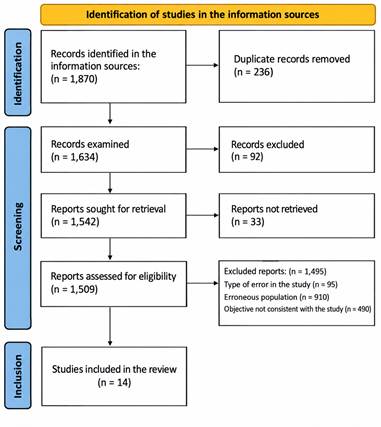
Source: Prepared by the authors, adapted from the Preferred Reporting Items for Systematic Reviews and Meta-Analyses. 2025
The methodological quality of the studies was assessed using a level of evidence, considering the following: Level 1: studies originating from systematic reviews, relevant randomized controlled clinical trials, or clinical guidelines based on systematic reviews of randomized controlled clinical trials; Level 2: randomized controlled clinical trials; Level 3: clinical studies without randomization; Level 4: cohort and case-control studies; Level 5: studies originating from reviews of descriptive and/or qualitative studies; Level 6: descriptive or qualitative studies; Level 7: research originating from expert opinions and reports from expert committees.
The analysis was conducted descriptively and thematically. The studies were organized into analytical categories based on Bardin's approach to content analysis. The categories included: types of obstetric violence reported, associated factors, barriers to accessing services, women's subjective experiences, and institutional response of health systems. The results were presented in a summary table with the main data from the included studies and discussed in a manner articulated with the research objectives.12
Since this is a research study, submission to the Research Ethics Committee was not required, in accordance with the guidelines of the current resolutions of the National Health Council, especially Resolution No. 510/2016.
RESULTS
The studies included in this review systematically identified the types of obstetric violence suffered by immigrant and refugee women, the factors associated with barriers to accessing services, and the available institutional responses. The summary table presents these findings clearly, supporting a comprehensive understanding of the phenomenon and providing a basis for subsequent discussion on implications for clinical practice, public policies, and human rights. Table 2 below summarizes the main data from the included studies, containing: author/year and country, objective, type of study, level of evidence, population, and main findings.
Table 2 -Summary of the main data from the studies included in the review.
|
Author/Year/Country |
Objective |
Study type/level of evidence |
Population |
Key findings |
|
|
Arcilla et al., (2025)13 Several |
To provide an overview of the current state of research on the discriminatory experiences of migrant women. |
Literature review Level 1 |
racialized migrant women |
Racial and cultural discrimination in maternal care, systemic exclusionary practices. |
|
|
Ngarmbatedjimal et al., (2024)14 Chad |
Understanding the experiences of Sudanese refugee women regarding the quality of care during childbirth in maternity wards in two refugee camps in eastern Chad. |
Qualitative study Level 6 |
Refugee women and healthcare professionals |
Fear, insecurity, and a still fragmented perception of person-centered care. |
|
|
Al-Shatanawi et al., (2023)15 Jordan |
To compare obstetric and neonatal characteristics and birth outcomes between Syrian refugees and native women in Jordan. |
Cohort study Level 4 |
Syrian refugee women |
Disparities in obstetric and neonatal outcomes compared to local women |
|
|
Araújo & Ribeiro (2023)16 Brazil |
To analyze whether immigrant women in Brazil suffer obstetric violence during childbirth due to cultural factors, and to identify alternatives to prevent these abuses. |
Qualitative study Level 6 |
Immigrant women |
Several examples of obstetric violence motivated by prejudice and a lack of understanding of the mother's culture of origin or language. |
|
|
Supimpa et al., (2023)17 Several |
To describe the childbirth experience of immigrant women in maternity hospitals in southern Brazil. |
Qualitative study Level 6 |
Immigrant women |
Feelings of vulnerability and unpreparedness during childbirth assistance. |
|
|
Sauvegrain (2021)18 France |
Presenting unfavorable maternal and perinatal health indicators, and the quality of care provided to immigrant women from Sub-Saharan African countries - France |
Qualitative study Level 6 |
Immigrant women from sub-Saharan Africa |
Verbal obstetric violence and cultural disrespect |
|
|
Khalil et al., (2022)19 Eastern Mediterranean region |
This study focused on women's experiences of mistreatment during childbirth to provide an overview of obstetric violence and offer recommendations for improving maternity care. |
Systematic review Level 1 |
Immigrant women from the Eastern region |
Narratives of disrespect and physical abuse during childbirth and undignified care for immigrant women. |
|
|
Molla et al., (2022)20 Ethiopia |
To assess the magnitude of obstetric violence and associated factors among women during childbirth in the Gedeo Zone, Southern Ethiopia. |
Cross-sectional study Level 4 |
Women in labor who lived in the Gedeó area for 6 months. |
Factors associated with obstetric violence and coercive practices include physical abuse, non-confidential and non-consensual care, neglectful care, and sexual violence. |
|
|
Silva et al., (2021)21 Brazil |
Understanding the cultural aspects of pregnancy, childbirth, and the postpartum period from the perspective of Syrian immigrant women. |
Qualitative |
Syrian immigrant women |
Cultural perceptions and experiences of exclusion during pregnancy, childbirth, and the postpartum period. |
|
|
Fair et al., (2020)22 Europe |
To provide systematic and up-to-date evidence on the pregnancy experiences of migrant women, childbirth care, and maternity in the European destination country. |
Systematic review Level 1 |
Migrant women |
Multiple barriers to access and quality of care, lack of humanized protocols. |
|
|
Flores et al., (2019)23 Mexico |
Exploring the social construction of obstetric violence as developed by Tenek and Nahuatl women in Mexico. |
Qualitative study Level 6 |
Tének and Nahuatl women |
Social construction of obstetric violence, experiences of disrespect and abuse. |
|
|
Rossa (2017)24 Brazil |
To analyze how the mobilization of immigrant women in the city of São Paulo contributes to questioning and constructing new knowledge about motherhood, childbirth, and pregnancy, bringing together immigrant and Brazilian women against obstetric violence. |
Qualitative study Level 6 |
Immigrant women |
The mobilization of immigrant women in the city of São Paulo contributes to questioning and constructing knowledge about motherhood, childbirth, and pregnancy. |
|
|
Liu et al., (2019)25 Sweden |
To analyze indicators of perinatal health and healthcare utilization among migrant women from the five main countries of origin of refugees. |
Cohort study Level 4 |
Refugee women and asylum seekers |
Poor perinatal health indicators, barriers to accessing humane care. |
|
|
Reckhow et al., (2024)26 United States of America |
Understanding the barriers to prenatal care at a federally accredited health center with a high volume of immigrant and migrant patients in southeastern Minnesota. |
Qualitative study Level 6 |
Immigrant and migrant women |
Pregnant immigrant and migrant women in southeastern Minnesota face barriers to perinatal care, such as limited availability of services in language-appropriate language, insufficient support, poor transportation, eligibility uncertainties, and financial difficulties. |
|
Source: Prepared by the authors, 2025.
DISCUSSION
The analysis of the 14 selected studies allowed for the identification of five analytical categories, constructed using Bardin's approach to content analysis, which synthesize the findings on obstetric violence among immigrant and refugee women: types of obstetric violence reported, associated factors, barriers to accessing services, women's subjective experiences, and the institutional response of health systems. The structuring of these analytical categories highlighted findings that reinforce the complexity of obstetric violence in migratory contexts and the need to analyze the structural, cultural, and institutional factors that influence women's experiences.
Types of obstetric violence reported
Recurring practices of negligence were identified, including performing procedures without consent, verbal and psychological violence, refusal of analgesia, and/or excessive medicalization. Arcilla et al. (2025) show that migrant women reported racialized discrimination during childbirth, manifested in derogatory comments and unequal treatment compared to local patients.13 Meanwhile, Supimpa et al. (2023) add that the lack of explanations about medical procedures intensifies feelings of powerlessness and helplessness.17 Similarly, Khalil et al. (2022) and Flores et al. (2019) point to the refusal of analgesia and excessive medicalization as recurring practices that violate women's autonomy and dignity.19,23
In the various studies analyzed, multiple forms of obstetric violence practiced against migrant women or women from vulnerable populations were observed. For example, in the study by Molla, Wudneh & Tilahun (2022) in Gedeo Zone, Ethiopia, it was found that 79.7% of the women interviewed experienced some type of obstetric violence during hospital childbirth. The most frequently reported forms were care without consent, care without dignity, culturally inappropriate treatment, as well as verbal abuse and other disrespectful conduct.20 In the study with Syrian refugee women in Jordan, Al-Shatanawi et al. (2023) do not focus their analysis on direct obstetric violence, but identify disparities in perinatal outcomes, low birth weight, stillbirths, and neonatal mortality, which may be associated with inferior care conditions or reduced access, suggesting indirect forms of disrespect or negligence.19
Another national study revealed that women exposed to situations of abuse, disrespect, or mistreatment during childbirth, such as being unable to eat or have a companion of their choice, are significantly common, although not all perceive these situations as violence.27 In Piauí, approximately 19.8% of women reported experiencing at least one situation of disrespect or abuse, highlighting verbal abuse (12.6%) and non-compliance with professional standards (11.6%).28
Factors associated with obstetric violence
Structural racism, xenophobia, overburdened healthcare services, and dehumanizing protocols are factors that exacerbate obstetric violence. The centrality of medical and hospital settings favors dehumanized practices that disregard the subjectivity and cultural needs of migrant women.20 Racial stereotypes are reproduced by healthcare professionals in France, manifesting as prejudices about the intelligence, hygiene, pain tolerance, and behavior of African migrant women.18
Regarding factors associated with obstetric violence and disrespect, the Ethiopian study points out that the woman's educational level, use of prenatal care, prolonged stay in the health institution after childbirth, and complications during labor are significantly associated with the likelihood of experiencing obstetric violence.20 Less educated women, with less access to prenatal care and who face complications during childbirth are at greater risk. In the study by Supimpa et al. (2024) in Brazil, which investigated the childbirth experience of immigrants, previous expectations of childbirth in their countries of origin, surprises in procedures or unexpected results such as cesarean section, as well as effective communication (or lack thereof) with the health team emerge as relevant factors.17 In another review, race/color, migratory status, linguistic and cultural barriers were identified as factors that amplify discrimination in maternal care for racialized migrant women.13
Corroborating these findings, national studies reveal that institutional racism exacerbates obstetric violence experienced by Black women. This violence, such as the appropriation of the female reproductive body by healthcare professionals, is manifested through dehumanizing practices and the abuse of medicalization, intensifying when there is racial bias.21 Qualitative research with Black women in Pernambuco demonstrates that structural racism hinders and denies their reproductive rights, highlighting the intersection of race, class, and gender as a central factor in abuse and invasive and dehumanizing obstetric interventions.7,21
Furthermore, a study shows that Black women face mistreatment during prenatal care, childbirth, and postpartum periods due to structural racism, associating these experiences with unequal access, insensitive training of professionals, and low Black representation in health services.29 In an international context, a study with Indigenous women in Colombia shows that, in addition to general forms of obstetric violence, they are especially victimized by a lack of respect for their culture and ancestral knowledge, revealing microaggressions derived from persistent colonialism in medical practices.30
Barriers to accessing services
Barriers to accessing services manifest themselves in different ways. In the Ethiopian study, although the research focuses on women from the local population (not specifically migrants), it is evident that insufficient use of prenatal care is associated with greater obstetric violence, suggesting that structural barriers to accessing prenatal care may exacerbate the risk.20 In Brazil, Supimpa et al. report that immigrant women face difficulties in cultural adaptation, language, expectations versus reality of care in public hospitals, as well as changes in the health system between their country of origin and their country of arrival that take them by surprise.17
According to Al-Shatanawi et al. (2023), although they do not go into much qualitative detail about subjective barriers, they note that Syrian refugee women have higher rates of adverse outcomes (such as low birth weight, stillbirths) which may reflect later access, less effective care, or conditions of social vulnerability that restrict opportunities for quality prenatal care.15 Linguistic barriers, the absence of clear information about rights, and the lack of inclusive policies limit access to health services and lead to violations of the principle of equity. Portela et al. (2018) emphasize that poor communication between users and professionals impairs autonomy31 while Sudhinaraset et al. (2023) show that third-party mediation in care deepens vulnerability.32
International studies corroborate these observations, demonstrating that limitations in the local language compromise the quality of care and patient safety. Research by Twersky et al. (2024) shows that immigrants with limited English proficiency face delays in care, poor understanding of medical instructions, and unfavorable health outcomes.33
A study conducted in primary care centers by Lurgain et al. (2024) indicated that the absence of trained intercultural mediators significantly reduced immigrant women's access to sexual and reproductive health services.34 In several cases, the mediation was carried out by nursing assistants without specific training, which hindered the understanding of information and weakened the professional-patient relationship. Similar results were observed in Serbia, where Buch Mejsner et al. (2024) identified that the presence of qualified intercultural mediators increased the effectiveness of care, improved the bond with services, and reduced the need for informal payments.35
Subjective experiences of women
The subjective experience of childbirth among immigrant and refugee women is marked by fear, humiliation, powerlessness, social isolation, and a negative impact on mental health. According to Supimpa et al. (2023), immigrant women feel unprotected and unprepared to face hospital procedures17 while Ngarmbatedjimal et al. (2024), when analyzing refugee camps in Chad, highlight feelings of vulnerability and insecurity14 and Arcilla et al. (2025) reinforce that childbirth, under such conditions, can become an emotional trauma, especially when associated with racial discrimination and the absence of cultural acceptance.13
In the subjective experiences of women, immigrant women in Southern Brazil report “surprises” during the birthing process, unmet prenatal expectations, unexpected cesarean sections, sensations and feelings that are not always considered by the healthcare team, describe memories of how they were treated in their countries of origin, and make comparisons that sometimes highlight both the positive aspects and the shortcomings of care in Brazil.17 In the Ethiopian study, women report feelings of disrespect, intimidation, shame, and also perceive that certain practices (such as repeated examinations or procedures without explanation or consent) place them in a position of vulnerability or insecurity.20
A Chilean study reveals that negative experiences during childbirth are significant predictors of maternal depression and anxiety up to six months postpartum, highlighting that the quality of obstetric care plays a determining role in maternal emotional well-being.36 Furthermore, in Iceland, a comparative study showed that migrant women rated their childbirth experiences as significantly worse than women born in the country, even though they did not report higher rates of direct mistreatment, evidence that subjective perception and the migratory context increase emotional vulnerability even in the face of equivalent clinical care.37
Additional data confirm the emergence of birth trauma and its lasting impacts. A study with first-time mothers in the United Kingdom observed that those who reported traumatic births presented poorer psychological well-being and a weakened maternal identity.38 From a broader perspective, research highlights that traumatic childbirth can lead to intense psychological suffering, with manifestations that include loneliness, isolation, and intensified distressing emotions in the postpartum period.39
In migration and refugee contexts, emotional vulnerability is further exacerbated. Refugee and immigrant women have a higher risk of postpartum depression and lower satisfaction with social support networks, according to a study conducted in Portugal, which identified depression among immigrants compared to locally born women, as well as significant dissatisfaction with the support received.40 Complementarily, a Canadian qualitative review revealed that migrant women face cultural, social, and service quality barriers when dealing with perinatal depression, showing that factors such as insecurity, isolation, and lack of inclusive policies amplify the psychological impact of childbirth.41
Institutional response and weaknesses in public policies
Regarding the institutional response of health systems, there are indications of significant gaps. In the study by Arcilla et al. (2025), reviewing literature on racialized migrant women, the authors point out that although there are guidelines on the right to health, respect, and equality, few specific interventions focus on the intersection between migration, race/color, and gender, and there is little institutional monitoring or accountability for disrespect or obstetric violence in these populations.13 For Supimpa et al. (2024), public maternity services in Brazil showed team practices that favor positive care when the team is aligned with evidence-based practices, but there is no systematicity or robust protocols to ensure cultural sensitivity or guarantee the pregnant woman's participation in decisions, which demands specific policies and training.13,15
The institutional response to obstetric violence still presents significant weaknesses. Although international guidelines for the humanization of childbirth exist, their implementation is flawed, especially in migratory contexts. According to Araújo and Ribeiro (2023), there is a lack of specific protocols for immigrant women in Brazil16, and Rossa (2017) highlights the need for intercultural training of professionals to confront institutional racism.24
Other evidence reinforces this institutional fragility. A scoping review of childbirth care for immigrant women in Brazil found that, although barriers such as poor communication and lack of cultural recognition are widely raised, institutional initiatives are sporadic, using interpreters and informational materials, without the support of structured public policies, which compromises their sustainability and reach.42
Research conducted at a public maternity hospital demonstrated that, even with some isolated welcoming initiatives, such as Spanish courses, cultural fairs, and informal records of terms used by foreign women, public policies to ensure the continuity and integration of these practices into the daily routine of the healthcare system are lacking.43 In parallel, a study involving obstetric care demands among migrants showed that, even in countries with universal access, such as Portugal, immigrant women face delays in the start of prenatal care and a higher incidence of complications such as cesarean sections, perineal lacerations, or postpartum hemorrhage, which points to failures in the operationalization of equity policies in clinical practice.44
The study presents limitations that should be considered; most of the included works refer to specific contexts, such as refugee camps or high-income countries, which may limit the generalization of the findings to all migrant populations. Another limitation is the predominance of qualitative studies, which, although rich in narratives, do not allow for precise estimates of the prevalence of obstetric violence. On the other hand, this study makes important contributions by systematically organizing the experiences of migrant and refugee women victims of obstetric violence, identifying categories of analysis that highlight the structural and institutional factors of this violence. Furthermore, it relates this evidence to Brazilian legislation and the National Migration Policy, offering support for the formulation of more inclusive, intercultural, and humanized public policies capable of addressing inequalities and protecting the reproductive rights of these women.
CONCLUSIONS
The analysis of the studies in this review shows that migrant, refugee, and racialized women face a series of violations in the context of obstetric care, expressed through different forms of obstetric violence, ranging from verbal disrespect and negligence to the performance of procedures without consent or cultural sensitivity. These experiences are traversed by multiple markers of vulnerability, such as migratory status, ethnic-racial origin, linguistic barriers, and structural inequalities in health systems. Furthermore, the subjective experiences of these women reveal recurring feelings of fear, insecurity, loneliness, and helplessness, which compromise the experience of childbirth as a potentially positive moment.
Therefore, it is urgent that public policies on obstetric health move beyond formal universality and begin to incorporate, in an intersectional way, the specific needs of migrant and racialized women. This includes investments in culturally sensitive training for professionals, guaranteeing access to interpreters, adequate reception in services, and mechanisms for monitoring and accountability in the face of abusive practices. Only then will it be possible to build truly respectful, equitable, and women-centered obstetric care, regardless of their origin, status, or migration trajectory.
REFERENCES
- Conceição HN, Madeiro AP. Associação entre desrespeito e abuso durante o parto e o risco de depressão pós‑parto: estudo transversal. Cadernos de Saúde Pública, 2024, 40(8):e00008024. https://doi.org/10.1590/0102‑311XPT008024
- Diniz SG, Salgado HO, Andrezzo HFA, Carvalho PGC, Carvalho PCA, Aguiar CA, Niy DY. Abuse and disrespect in childbirth care as a public health issue in Brazil: origins, definitions, impacts on maternal health, and proposals for its prevention. J Human Growth and Development. 2025;25(3):377‑384. http://dx.doi.org/10.7322/jhgd.106080
- Silva, LB et al. Mesmo que a gente seja a mão que cuida: médicas negras e racismo estrutural no contexto da atenção primária à saúde. Ciência Saúde Coletiva. 2023;29(3):e07622023. https://doi.org/10.1590/1413‑81232024293.07622023
- Ribeiro DO, Gomes GC, Oliveira AMN, Alvarez SQ, Gonçalves BG, Acosta DF. Obstetric violence in the perception of multiparous women. Rev Gaúcha de Enfermagem. 2020;41:e20190419. https://doi.org/10.1590/1983‑1447.2020.20190419
- Bohren MA, Vogel JP, Hunter EC, Lutsiv O, Makh SK, Souza JP, et al. The Mistreatment of Women during Childbirth in Health Facilities Globally: A Mixed‑Methods Systematic Review. PLoS Medicine. 2015;12(6):e1001847. https://doi.org/10.1371/journal.pmed.1001847
- Bowser D, Hill K. Exploring evidence for disrespect and abuse in facility-based childbirth: report of a landscape analysis. Boston: Harvard School of Public Health; University Research Co.; 2010 [cited 2025 Sep 8]. Available from: https://content.sph.harvard.edu/wwwhsph/sites/2413/2014/05/Exploring-Evidence-RMC_Bowser_rep_2010.pdf
- Silva JCO, Brito LMC, Alves ES, Neto JBM, Junior JLPS, Marques NM, et al. Impacts of obstetric violence in Brazil: a literature review. Res Soc Dev. 2023;12(2):e10812239950. https://doi.org/10.33448/rsd-v12i2.39950
- Leal MC, Gama SGN. Nascer no Brasil. Cad Saude Publica. 2014;30(Suppl 1):S5. https://doi.org/10.1590/0102-311XED01S114
- Brasil. Presidência da República. Política nacional de enfrentamento à violência contra as mulheres. Brasília-DF: Secretaria Especial de Políticas para as Mulheres; 2011 [cited 2025 Sep 10]. Available from: https://www.gov.br/mdh/pt-br/navegue-por-temas/politicas-para-mulheres/arquivo/arquivos-diversos/sev/pacto/documentos/politica-nacional-enfrentamento-a-violencia-versao-final.pdf
- Watts G. Marge Berer: battling for women's reproductive rights. Lancet. 2013;381(9865):444. https://doi.org/10.1016/S0140-6736(13)60235-4
- Whittemore R, Knafl K. The integrative review: updated methodology. J Adv Nurs. 2005;52(5):546-53. https://doi.org/10.1111/j.1365-2648.2005.03621.x
- Bardin L. Análise de conteúdo. 3rd ed. São Paulo: Edições 70; 2011.
- Arcilla JT, Nanou A, Hamed S, Osman F. Racialized migrant women’s discrimination in maternal care: a scoping review. Int J Equity Health. 2025;24(1):16. https://doi.org/10.1186/s12939-025-02384-8
- Ngarmbatedjimal A, Abdelaziz M, Allambademel VDP, et al. Refugee women’s and providers’ perceptions of person-centered maternity care: a qualitative study in two refugee camps in Chad. BMC Pregnancy Childbirth. 2024;24:225. https://doi.org/10.1186/s12884-024-06424-z
- Al-Shatanawi TN, Khader Y, Abdel Razeq N, Khader AM, Alfaqih M, Alkouri O, Alyahya M. Disparities in obstetric, neonatal, and birth outcomes among Syrian women refugees and Jordanian women. Int J Public Health. 2023;68:1605645. https://doi.org/10.3389/ijph.2023.1605645
- Araújo TSB, Ribeiro AR. Cooperação internacional e interculturalidade da violência obstétrica contra mulheres imigrantes no Brasil. Rev Jurid FA7. 2023;20(2):81-93. https://doi.org/10.24067/rjfa7;20.2:1702
- Supimpa LS, Souza SRRK, Prandini NR, Andreatta D, Trigueiro TH, Paviani BA. Immigrant women’s experience of labor and birth. Rev Esc Enferm USP. 2023;57(spe):e20220444. https://doi.org/10.1590/1980-220X-REEUSP-2022-0444en
- Sauvegrain P. Violences dites « gynécologiques et obstétricales » envers les femmes immigrées de l’Afrique subsaharienne en France. Sante Publique. 2022;33(5):627-8. https://doi.org/10.3917/spub.215.0627
- Khalil M, Carasso KB, Kabakian-Khasholian T. Exposing obstetric violence in the Eastern Mediterranean Region: a review of women’s narratives of disrespect and abuse in childbirth. Front Glob Womens Health. 2022;3:850796. https://doi.org/10.3389/fgwh.2022.850796
- Molla W, Wudneh A, Tilahun R. Obstetric violence and associated factors among women during facility-based childbirth at Gedeo Zone, South Ethiopia. BMC Pregnancy Childbirth. 2022;22(1):565. https://doi.org/10.1186/s12884-022-04895-6
- Silva SRO, Monteiro IS, Castro CM. Da Síria ao Brasil: dimensões culturais de mulheres imigrantes nas percepções do cuidado e assistência à gestação, parto e pós-parto. Ideias. 2021;12:e021004.
- Fair F, Raben L, Watson H, Vivilaki V, van den Muijsenbergh M, Soltani H, et al. Migrant women’s experiences of pregnancy, childbirth and maternity care in European countries: a systematic review. PLoS One. 2020;15(2):e0228378. https://doi.org/10.1371/journal.pone.0228378
- Flores YYR, Ledezma AGM, Ibarra LEH, Acevedo CEG. Social construction of obstetric violence of Tenek and Nahuatl women in Mexico. Rev Esc Enferm USP. 2019;53:e03464. https://doi.org/10.1590/S1980-220X2018028603464
- Rossa LA. Descolonização do corpo e mobilidade humana: mulheres imigrantes e a produção de saberes contra a violência obstétrica. RELACult. 2017;3(3). https://doi.org/10.23899/relacult.v3i3.596
- Liu C, Ahlberg M, Hjern A, Stephansson O. Perinatal health of refugee and asylum-seeking women in Sweden 2014-17: a register-based cohort study. Eur J Public Health. 2019;29(6):1048-55. https://doi.org/10.1093/eurpub/ckz120
- Reckhow J, Riggan KA, Breutzman E, Low MOS, Tobah YSB, Rivera-Chiauzzi EY, et al. Barriers to perinatal care among immigrant and migrant women in Southeast Minnesota. Womens Health Rep (New Rochelle). 2024;5(1):842-8. https://doi.org/10.1089/whr.2024.0108
- Dornelas ACR, et al. Abuse, disrespect and mistreatment during childbirth care: contribution of the Ribeirão Preto cohorts, Brazil. Cien Saude Colet. 2022;27(2):535-44. https://doi.org/10.1590/1413-81232022272.01672021
- Madeiro A, Rufino AC, Acaqui RF, Barbosa CM, Martins VMM, Sousa AMC. Disrespect and abuse during childbirth in maternity hospitals in Piauí, Brazil: a cross-sectional study. Int J Gynaecol Obstet. 2022;159:961-7. https://doi.org/10.1002/ijgo.14317
- Leal MC, Gama SGN, Pereira APE, Pacheco VE, Carmo CN, Santos RV. A cor da dor: iniquidades raciais na atenção pré-natal e ao parto no Brasil. Cad Saude Publica. 2017;33:e00078816. https://doi.org/10.1590/0102-311X00078816
- Gleason EG, Molina Berrío DP, López Ríos JM, Mejía Merino CM. “Parir no es un asunto de etnia, es un asunto de humanidad”: experiências frente a la violencia obstétrica durante la atención al parto en mujeres indígenas. Salud Colect. 2021;17:e3727. https://doi.org/10.18294/sc.2021.3727
- Portela MC, Reis LGC, Martins M, Rodrigues JLQS, Lima SML. Cuidado obstétrico: desafios para a melhoria da qualidade. Cad Saude Publica. 2018;34(5):e00072818. https://doi.org/10.1590/0102-311X00072818
- Sudhinaraset M, Kolodner RA, Nakphong MK. Maternity care at the intersections of language, ethnicity, and immigration status: a qualitative study. Womens Health Issues. 2023;33(6):618-25. https://doi.org/10.1016/j.whi.2023.04.004
- Twersky SE, Jefferson R, Garcia-Ortiz L, Williams E, Pina C. The impact of limited English proficiency on healthcare access and outcomes in the U.S.: a scoping review. Healthcare (Basel). 2024;12(3):364. https://doi.org/10.3390/healthcare12030364
- Lurgain JG, Ouaarab-Essadek H, Mellouki K, et al. Exploring cultural competence barriers in the primary care sexual and reproductive health centres in Catalonia, Spain. Int J Equity Health. 2024;23:206. https://doi.org/10.1186/s12939-024-02290-5
- Buch Mejsner S, Davidović M, Kristiansen M, Mahato S, Eklund Karlsson L. Investigating the role of intercultural mediators in enhancing asylum-seeking migrants’ access to health care services in Serbia. SAGE Open. 2024;14(2). https://doi.org/10.1177/21582440241245508
- Coo S, García MI, Mira A. Examining the association between subjective childbirth experience and maternal mental health at six months postpartum. J Reprod Infant Psychol. 2023;41(3):275-88. https://doi.org/10.1080/02646838.2021.1990233
- Mangindin EL, Gottfreðsdóttir H, Stoll K, Cadée F, Lárusdóttir EI, Swift EM. Childbirth experience, mistreatment, and migrant status: a retrospective cross-sectional study. Birth. 2025 Feb 1. https://doi.org/10.1111/birt.12900
- El-Salahi S, Knowles Bevis R, Hogg L. The relationship between traumatic childbirth and first-time mothers’ social identity and wellbeing. BMC Pregnancy Childbirth. 2024;24:437. https://doi.org/10.1186/s12884-024-06288-3
- Nelson HO. Experiencing birth trauma: individualism and isolation in postpartum. Soc Sci Med. 2024;345:116663. https://doi.org/10.1016/j.socscimed.2024.116663
- Almeida LM, Costa-Santos C, Caldas JP, Dias S, Ayres-de-Campos D. The impact of migration on women’s mental health in the postpartum period. Rev Saude Publica. 2016;50:35. https://doi.org/10.1590/S1518-8787.2016050005617
- Dela Cruz GA, Johnstone S, Singla DR, George TP, Castle DJ. A qualitative systematic review of experiences and barriers faced by migrant women with perinatal depression in Canada. Women. 2023;3:1-21. https://doi.org/10.3390/women3010001
- Santos IZ, Trigueiro TH, Oliveira FAM, Souza SRRK, Hornung H. Healthcare in the process of parturition of immigrant women: a review of scope. Online Braz J Nurs. 2024;23:e20246734. https://doi.org/10.17665/1676-4285.20246734
- Castro CM, Oliveira RC, Custódio MCS. Atenção ao parto de mulheres estrangeiras em uma maternidade pública de São Paulo. Civitas. 2015;15(2):e59-74. https://doi.org/10.15448/1984-7289.2015.2.17563
- Almeida LM, Santos CC, Caldas JP, Ayres-de-Campos D, Dias S. Obstetric care in a migrant population with free access to health care. Int J Gynaecol Obstet. 2014;126(3):244-7. https://doi.org/10.1016/j.ijgo.2014.03.023
Funding:
The authors declared that the research received no funding.
Conflict of interest statement:
Article derived from the course completion work titled: “Occurrence and exposure of immigrant and refugee women to obstetric violence: an integrative literature review,” presented to the Bachelor of Nursing program at the University of Ribeirão Preto, Guarujá Campus, in November 2025.
Data availability statement:
No databases were generated in this study. The information presented is described in the body of the article.
Authorship criteria (author contributions):
Santos CMS, Bastos KCS, dos Santos GG 1. substantial contribution to the conception and/or planning of the study; Santos CMS, Bastos KCS, dos Santos GG 2. acquisition, analysis, and/or interpretation of data; Santos CMS, Bastos KCS, dos Santos GG, do Nascimento ES, de Freitas RNCS, de Lima GML, Felipe LMA, Belo ACS, Pereira AMM, Lima CF, Guerra MJG 3. drafting and/or critical revision and final approval of the published version.
Scientific Editor: Ítalo Arão Pereira Ribeiro. ORCID: https://orcid.org/0000-0003-0778-1447
Rev Enferm Atual In Derme 2026;100(4): e026109