ORIGINAL ARTICLE
CONSTRUCTION AND VALIDATION OF A SELF-CARE PLANNER FOR PEOPLE WITH DIABETES MELLITUS
CONSTRUÇÃO E VALIDAÇÃO DE PLANNER SOBRE AUTOCUIDADO PARA PESSOAS COM DIABETES MELLITUS
CONSTRUCCIÓN Y VALIDACIÓN DE UN PLANIFICADOR DE AUTOCUIDADO PARA PERSONAS CON DIABETES MELLITUS
https://doi.org/10.31011/reaid-2026-v.100-n.3-art.2738
1Adriani Zaluski Izoton
2Maria da Conceição Saboia Coelho
3Mayenne Myrcea Quintino Pereira Valente
4Samila Torquato Araújo
5Léa Maria Moura Barroso Diógenes
6Mariana Barros Alves Jacinto
7Danielle Teixeira Queiroz
1Universidade de Fortaleza, Fortaleza (CE), Brazil. Orcid: 0009-0000-5880-5088. E-mail: adrianizaluski@edu.unifor.br
2Universidade de Fortaleza, Fortaleza (CE), Brazil. Orcid: 0009-0007-2664-2801. E-mail: mcsaboiac@gmail.com
3Universidade de Fortaleza, Fortaleza (CE), Brazil. Orcid: 0000-0002-2082-4969. E-mail: mayennep@hotmail.com
4Fundação Nacional de Saúde, Fortaleza (CE), Brazil. Orcid: 0000-0002-2089-377X. E-mail: samila_torquato@hotmail.com
5Universidade de Fortaleza, Fortaleza (CE), Brazil. Orcid: 0000-000301446-7309. E-mail: leammbarroso@gmail.com
6Universidade de Fortaleza, Fortaleza (CE), Brazil. Orcid: 0000-0002-4402-3103. Email: maribarros@edu.unifor.br
7Universidade de Fortaleza, Fortaleza (CE), Brazil. Orcid: 0000-0002-6291-3580. E-mail: dteixeiraqueiroz@unifor.br
Corresponding Author
Adriani Zaluski Izoton
Rua Luís Girão, 575, apto 201A, Cambeba, 60822-160, Fortaleza (CE), Brazil. contact: +55 (85) 99203-8183 E-mail: adrianizaluski@edu.unifor.br
Submission: 20-02-2026
Approval: 17-07-2026
ABSTRACT
Introduction: The deficit in self-care regarding diabetes mellitus is a concerning factor for healthcare professionals and can cause irreversible harm to some patients. Objective: To describe the development and validation of a planner for self-care for people with diabetes mellitus. Method: Methodological study for the development of a planner and validation of content and appearance by experts between November 2021 and October 2022, in Fortaleza, Ceará, Brazil. The construction stage and its functionalities occurred after the following actions: preparation of content on self-care and prevention of complications in diabetes and subsequent development of the technology in the form of an educational calendar. Its validation was conducted through the analysis of thirteen experts, with interpretation carried out using the content validity index (CVI) calculation with a cutoff point of 0.97. Results: The planner titled “Diabetes Calendar Planner: Self-care by Your Side” has 14 pages and addresses in a playful way the following topics: pathophysiology of diabetes, prevention of acute and chronic complications, importance of diet, relevance of physical activity, and foot care. The overall CVI obtained was 0.97, showing a high level of agreement among the judges. Educational technologies aim to inform the reader about a specific topic and help them make decisions that lead to changes in lifestyle habits. Conclusion: The developed planner was validated for content and appearance, and can be used to promote self-care and prevent complications in people with diabetes mellitus.
Keywords: Educational Technology. Diabetes Mellitus. Self-Care.
RESUMO
Introdução: O déficit no autocuidado em relação ao diabetes mellitus é um fator preocupante para profissionais de saúde e pode causar danos irreversíveis a alguns pacientes. Objetivo: Descrever a construção e validação de um planner sobre autocuidado para pessoas com diabetes mellitus. Método: Estudo metodológico para construção de um planner e validação de conteúdo e aparência por especialistas entre novembro de 2021 e outubro de 2022, em Fortaleza, Ceará, Brasil. A etapa de construção e de suas funcionalidades ocorreu após as seguintes ações: elaboração de conteúdo sobre autocuidado e prevenção de complicações no diabetes e posterior desenvolvimento da tecnologia no formato de calendário educativo. A sua validação aconteceu através da análise de treze especialistas, com interpretação realizada pelo cálculo do índice de validade de conteúdo (IVC) por ponto de corte igual a 0,97. Resultados: O planner intitulado “Calendário diabetes planner: o autocuidado ao seu lado” apresenta 14 páginas e aborda de forma lúdica os temas: fisiopatologia do diabetes, prevenção das complicações agudas e crônicas, importância da dieta, relevância da prática de atividades físicas e dos cuidados com os pés. O IVC global obtido foi de 0,97, observando-se um alto nível de concordância entre os juízes. As tecnologias educativas têm como finalidade informar o leitor sobre determinado tema e auxiliá-lo na tomada de decisão que leve à mudança nos hábitos de vida. Considerações finais: O planner desenvolvido foi validado quanto ao conteúdo e à aparência, podendo ser utilizado para promoção do autocuidado e prevenção de complicações em pessoas com diabetes mellitus.
Palavras-chave: Tecnologia Educacional; Diabetes Mellitus; Autocuidado.
RESUMEN
Introducción: El déficit en el autocuidado en la diabetes mellitus es un factor preocupante para los profesionales de la salud y puede causar daños irreversibles a algunos pacientes. Objetivo: Describir la construcción y validación de un planificador sobre autocuidado para personas con diabetes mellitus. Método: Estudio metodológico para la construcción de un planificador y validación de contenido y apariencia por especialistas entre noviembre de 2021 y octubre de 2022, en Fortaleza, Ceará, Brasil. La etapa de construcción ocurrió tras las siguientes acciones: elaboración de contenido sobre autocuidado y prevención de complicaciones en la diabetes y posterior desarrollo de la tecnología en formato de calendario educativo. Su validación se dio entre trece especialistas, a través del cálculo del índice de validez de contenido (IVC) con punto de corte igual a 0,97. Resultados: El planificador titulado “Calendario diabetes planner: el autocuidado a tu lado” presenta 14 páginas y aborda de manera lúdica los temas: fisiopatología de la diabetes, prevención de las complicaciones agudas y crónicas, importancia de la dieta, relevancia de la práctica de actividades físicas y cuidados con los pies. El IVC global obtenido fue de 0,97, observándose un alto nivel de concordancia entre los jueces. Las tecnologías educativas informan al lector sobre determinado tema y auxilia en la toma de decisiones para el cambio de hábitos de vida. Consideraciones finales: El planificador desarrollado fue validado en cuanto a contenido y apariencia, pudiendo ser utilizado para la promoción del autocuidado y la prevención de complicaciones en personas con diabetes mellitus.
Palabras clave: Tecnología Educacional. Diabetes Mellitus. Autocuidado.
INTRODUCTION
Diabetes Mellitus (DM) is an endocrine-metabolic disease that can progress to acute complications (hypoglycemia, ketoacidosis, and non-ketotic hyperosmolar hyperglycemic syndrome) and chronic complications. The latter are categorized into microvascular (retinopathy, nephropathy, and neuropathy) and macrovascular (coronary artery disease, peripheral artery disease, and cerebrovascular disease) complications (1).
This disease affects approximately 3% of the global population, with projections indicating a significant increase by 2030. Its prevalence is directly linked to the aging of the population. In 2015, the International Diabetes Federation (IDF) estimated that one in every 11 adults aged 20 to 79 had type 2 diabetes. In 2019, Brazil ranked fifth globally, with 16.8 million cases. Today, the country ranks sixth in the world for diabetes incidence, with a total of 20 million affected adults (aged 20 to 79) (2).
Shifting behavior toward healthy lifestyles poses a major challenge for disease prevention. It relies on individual effort and support from healthcare professionals. To enhance the effectiveness of this change process, it is essential to encourage societal participation in educational initiatives and to foster confidence and autonomy in self-care, thereby aiming to improve the population's quality of life. Accepting and understanding one's health status are the first steps toward adopting lifestyle changes that contribute to clinical improvement and disease stabilization (3).
Self-care refers to the ability of individuals, families, and communities to look after their own health, adopt disease prevention measures, and manage illness, independently of direct involvement by healthcare or support professionals (4). The World Health Organization (WHO) advocates for self-care education as a means to prevent and treat chronic diseases, as it fosters patient adherence to and interest in their therapeutic regimen, thereby reducing complications and disabilities associated with chronic conditions. Among Non-Communicable Diseases (NCDs), diabetes mellitus (DM) stands out globally due to the potential for developing acute and chronic complications, particularly when appropriate treatment is not followed (5).
In a randomized clinical trial conducted by Macedo et al., (6), which aimed to evaluate adherence to self-care practices, glycemic control, and empowerment among people with diabetes mellitus participating in group education, results showed a statistically significant reduction in glycated hemoglobin levels. Additionally, the study indicated increased scores for adherence to self-care and autonomy scales among participants.
When health interventions focus on diabetes self-care, addressing aspects such as proper nutrition, physical activity, and problem-solving skills, among others, group education yields satisfactory results. When conducted through dialogue, this approach positions the patient as a protagonist, thereby valuing the individual, their knowledge, and their attitudes. It is considered effective in preventing complications while strengthening autonomy and adherence to self-care practices (7).
Given the public health challenges posed by DM, exacerbated by deficits in self-care, control of the condition and its complications, and other health maintenance behaviors—the development of a health-related educational technology (ET) was proposed: a planner-style calendar designed to facilitate better adherence to self-care among people with diabetes. Educational programs based on the empowerment approach foster adherence to therapy in type 2 diabetes, improve personal behaviors—such as dietary habits and foot care practices, and encourage blood glucose monitoring, while also enabling the learning and development of skills for a healthy lifestyle (8).
Educational materials that provide guidance on healthy lifestyle practices, reinforce daily self-care, and assist individuals in decision-making when facing challenges are of great relevance to the scientific community and to health promotion in the daily lives of diabetic patients.
Against this backdrop, the present study stands out for the development of a validated, accessible, and user-friendly educational tool designed to support self-care for people with diabetes mellitus within Primary Health Care. Furthermore, the study is justified by the need to expand the availability of educational resources that are easy to understand and can be readily integrated into the individual's daily routine.
In light of this, the present study aimed to develop an educational self-care planner for people with diabetes mellitus and to establish evidence regarding its content and face validity.
METHODS
This is a methodological study conducted in Fortaleza, Ceará, Brazil, following these stages of educational technology construction and validation: a literature review to provide a foundation for the object of study; development of the educational technology; and validation of the material's content and appearance by expert judges. Data collection took place between November 2021 and October 2022.
According to Polit and Beck (9), a methodological study investigates, organizes, and analyzes data with the aim of constructing and validating research instruments and techniques for data collection, thereby seeking to improve them and ensure reliability.
The guiding question was formulated based on the PICO strategy (Patient, Intervention, Comparison, Outcomes), which is widely used to structure research questions and guide the identification of descriptors for searching scientific evidence. Thus, the formulated question was: “Do educational technologies assist in the self-care of people with diabetes?” This question encompassed the elements of technology (P), self-care (I), and diabetes (O), while the comparison component (C) was not applied due to the study's methodological characteristics. The use of the PICO strategy facilitates the identification of scientific evidence that supports nursing care, research, and education (10).
To write this article, a narrative literature review was first conducted between March 2021 and April 2022. The search was performed using the guideline catalogs and e-books of the Brazilian Diabetes Society (SBD), the Ministry of Health portal, and the Virtual Health Library (BVS).
On the BVS portal, the descriptors “Tecnologia” OR “Tecnologias” OR “Technology” AND “Diabetes Mellitus” OR “Diabetes” OR “Diabete” OR “Diabete Melito” AND “Self-care” OR “Autocuidado” were used, linked by the Boolean operator “OR”, to select suitable articles. The following inclusion criteria were applied: publications that addressed the guiding question and were available electronically; review articles, reflection papers, and letters to the editor were excluded. Seventy-five potentially relevant articles were identified for the review. Of these, 17 were selected for full-text reading, with 10 remaining in the final sample.
It is worth noting that the focus was placed on works from the last five years (2017–2022) to identify strategies addressing the sociocultural and technological changes of modern times, as well as strategies focused on diabetes self-care and health-improvement technologies. Furthermore, content analysis was used to organize the results, which were presented in tables based on the categorization of findings and discussions.
The actual development of the technology, an educational planner calendar, took place in January and February 2022. The text for the calendar was drafted based on results from the 10 selected articles, which outlined key content regarding self-care actions and the prevention of diabetes complications within Primary Health Care. The illustrative figures used in the planner were created and organized using Canva, a free online tool widely used for graphic design in projects and educational technologies.
In September 2022, the planner underwent content and face validation with the assistance of expert judges. These experts were selected using criteria adapted from Fehring’s expert classification system, considering educational background, prior studies in the field, participation in relevant initiatives, and a minimum of two years of professional experience. Candidates who achieved a minimum score of five out of fourteen points were selected (11). Experts were identified via the Lattes Platform, specifically those specializing in diabetes and/or educational technology who were active in teaching and/or the Family Health Strategy (ESF). The academic judges were selected by identifying potential candidates via telephone and email. The selection of experts for the panel was based on professors specializing in diabetes at a private university in the city of Fortaleza. The University of Fortaleza (UNIFOR) was chosen because it is a significant institution in the field of scientific research and has for years topped the rankings of private universities in Northern and Northeastern Brazil, thereby facilitating the researcher's access to conduct her study (12).
An invitation letter was sent via email to each judge; upon acceptance, the Informed Consent Form (ICF), the initial version of the planner, and the instruments for sociodemographic characterization and for the content and appearance validation of the educational technology were forwarded. Experts were given a 15-day period to evaluate the material, complete the instruments, and return them to the researcher, with the option to add suggestions or comments regarding the material.
The expert analysis aimed to evaluate the content and appearance of an educational planner-style calendar as a self-care technology for patients with diabetes. This step indicates whether the items comprising the instrument adequately represent the content domain (13).
To formulate the questions for the instrument, a multifactorial measurement scale—the Likert scale, was used, employing the following categories: 1) totally inadequate, 2) moderately inadequate, 3) moderately adequate, and 4) totally adequate. This method is fundamental (14), for obtaining reliable data that allow for pertinent conclusions.
Initially, the data were stored in a Microsoft Excel database and subsequently analyzed using absolute and relative frequencies and means. To verify the planner's content validity, the Content Validity Index (CVI) was used, with an index of 0.80 or higher considered desirable for content validation. Statistical analysis of agreement for each instrument item was performed by assessing the proportion of experts who agreed on the relevance of the educational planner. This study is part of an "umbrella" project titled "Healthcare for people with diabetes mellitus in the city of Fortaleza, CE: an integrated approach to epidemiological and clinical aspects and the impact of technology use on reducing morbidity and mortality," approved by the Human Research Ethics Committee (COÉTICA) at UNIFOR under the Certificate of Presentation for Ethical Appreciation (CAAE) No. 60517516.9.0000.5052 and Opinion No. 2.145.055. The ethical principles set forth in Resolution No. 466/2012(15) of the National Health Council were observed, and participants signed the Informed Consent Form.
RESULTS
The literature review identified various aspects related to self-care for people with diabetes mellitus (DM), including: pathophysiology, prevention of acute and chronic complications, the importance of diet and physical activity, and foot care.
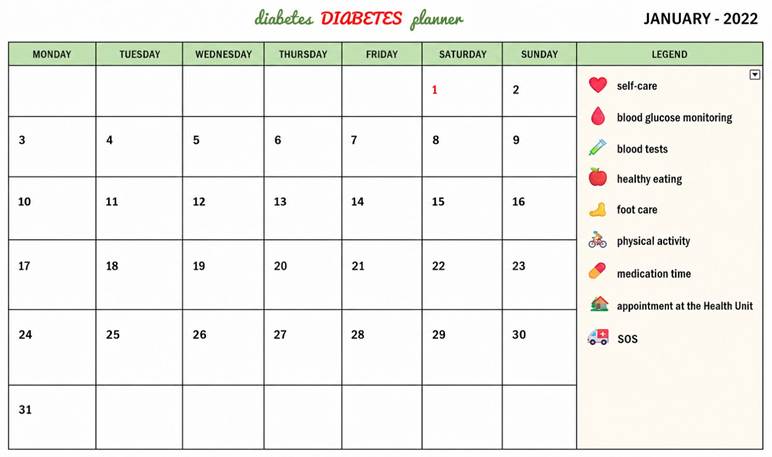
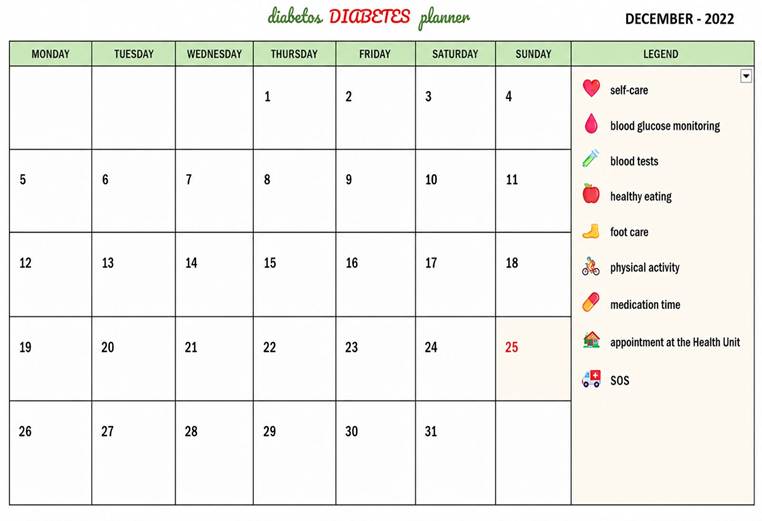
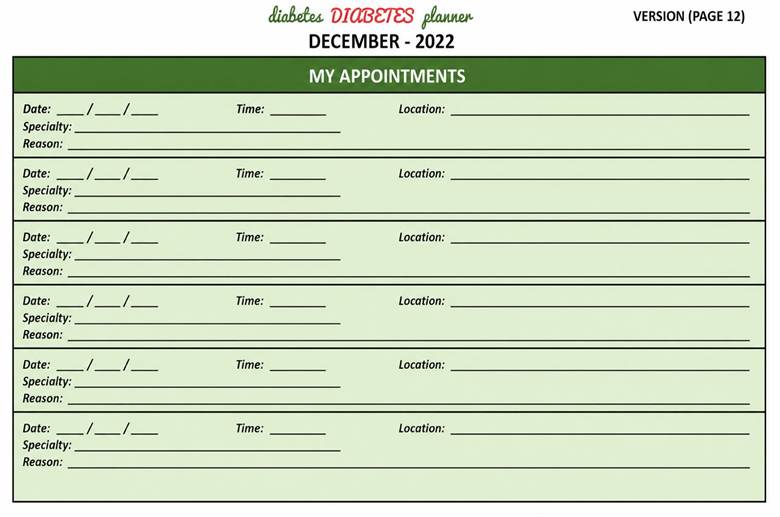
The planner was designed and finalized, comprising a total of 14 sheets, including the exterior (front and back covers) and the interior (textual elements covering the following topics: self-care, blood glucose monitoring, blood tests, healthy eating, foot care, physical activity, medication schedule, health center appointments, and emergency contacts). The planner is available in Portable Document Format (PDF) for printing on A4-sized (210 × 297 mm) coated paper.
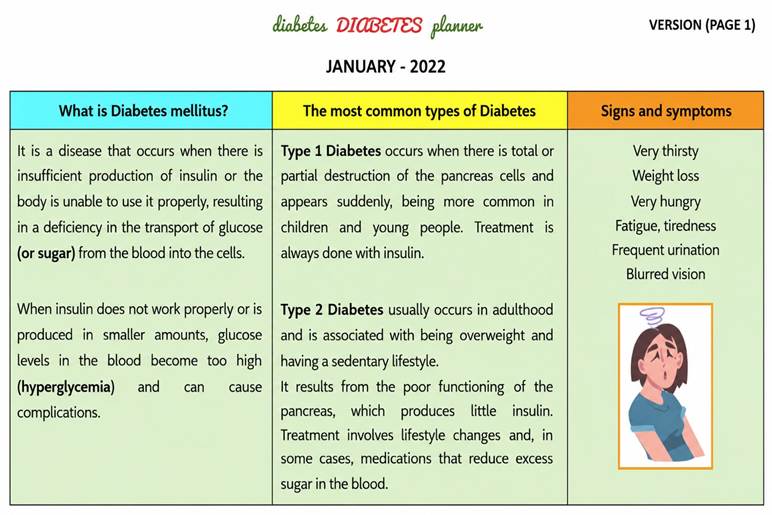
The planner’s narrative follows a person with DM attending a scheduled nursing consultation and introduces various topics within the scope of Primary Health Care (PHC), such as pathophysiology, prevention of acute and chronic complications, the importance of a healthy diet and physical activity, blood glucose monitoring, foot care, medication, and smoking, based on items from the "Diabetes Self-Care Activities Questionnaire." This instrument is the Brazilian-adapted and validated version of the Summary of Diabetes Self-Care Activities (SDSCA), a research tool that provides a reliable and valid questionnaire for assessing self-care adherence among people with diabetes.
Based on the above, the first version of the self-care planner for people with DM was developed. Figure 1 displays some pages of this resource.
Figure 1 - Representation of the pages of the planner calendar version. Fortaleza, Ceará, Brazil, 2022.
Source: Prepared by the authors.
The technology, in the form of a planner, was submitted for evaluation by thirteen expert judges. Regarding the judges' profiles, their mean age was 49 years; twelve (92.3%) were female and only one (7.7%) was male; all (100%) were nurses by training, with an average of 25 years since qualifying. The average length of professional experience in the field was 24 years, indicating extensive experience; however, the data ranged from a professional with six years of experience to one with 40 years. Regarding academic qualifications, seven (53.8%) held a doctorate, five (38.5%) a master's degree, and only one (7.7%) a specialization.
The items evaluated for content and their respective CVI values are detailed in Table 1.
Table 1 - Validation of the technology's appearance and content. Fortaleza, Ceará, Brazil, 2022.
|
Items |
IVC |
|
Technology objectives |
0,95 |
|
1. The information on self-care is consistent with the needs of people with diabetes mellitus. |
1,00 |
|
2. Provides patients with reliable information regarding self-care for individuals with diabetes mellitus. |
1,00 |
|
3. It reveals the purpose of nursing care for individuals with diabetes mellitus within the scope of Primary Health Care. |
0,92 |
|
4. It is feasible to promote changes in behavior and attitudes. |
0,84 |
|
5. It can circulate within the scientific community in the field of diabetes mellitus. |
1,00 |
|
Structure and presentation of the technology |
0,98 |
|
6. The tool is relevant. |
1,00 |
|
7. The number of items to be filled in is appropriate. |
1,00 |
|
8. The information is presented in a clear and objective manner. |
1,00 |
|
9. The information presented is scientifically correct. |
1,00 |
|
10. The terminology is appropriate for patients with diabetes and their caregivers. |
0,92 |
|
11. There is a logical sequence to the proposed content. |
1,00 |
|
12. The information is well-structured and in accordance with the guidelines set forth by the Ministry of Health. |
1,00 |
|
13. The messages are presented in a clear and objective manner. |
1,00 |
|
14. The illustrations are expressive and sufficient. |
0,92 |
|
15. They present compiled information on what diabetes self-care should entail. |
1,00 |
|
16. The size of the title and the topics is appropriate. |
0,92 |
|
17. The visual identity of the planner calendar is harmonious. |
1,00 |
|
Relevance of technology |
1,00 |
|
18. It enables the nurse to monitor the person with diabetes mellitus. |
1,00 |
|
19. The tool depicts key aspects regarding care for individuals with diabetes mellitus that are advocated by the Ministry of Health and require reinforcement. |
1,00 |
|
20. It addresses the topics necessary for the prevention of complications. |
1,00 |
|
21. It is suitable for use by primary health care nurses. |
1,00 |
|
22. The use of technology is relevant. |
1,00 |
|
IVCt |
0,97 |
IVC - Content Validity Index; IVCt – Total Content Validity Index.
Source: Prepared by the authors.
Compiling this meticulous and exhaustive stage based on the calculations of the individualized CVI scores yielded an S-CVI of 21.51 / 22 = 0.97. During the content and face validity assessment by the judges, the domains of "objectives," "structure," and "presentation and relevance of the technology" yielded aggregate CVI scores of 0.95, 0.98, and 1.00, respectively. However, it is important to note that within the "objectives" domain, the question "Is it feasible for promoting changes in behaviors and attitudes?" received a score of 0.84; while this is a satisfactory result, being above the 0.80 threshold, it is relatively low compared to the overall average.
The total CVI for the technology was 0.97, indicating an excellent level of agreement among the judges. This confirms the approval of the material and, consequently, the validation of the face and content validity of the educational technology developed and analyzed by the expert evaluators.
DISCUSSION
Regarding the articles analyzed to develop the self-care content for the planner, the findings indicated that this practice is associated with the quality of care received, individual factors, knowledge, and daily habits.
Adherence to self-care practices among people with diabetes mellitus is directly linked to the quality of care provided in Primary Health Care. Greater commitment to dietary habits, blood glucose monitoring, and medication use is observed among individuals receiving care from services characterized by better care coordination, organized scheduling, and the availability of adequate equipment (16).
The multifaceted nature of treatment requires overcoming obstacles and recognizing factors that facilitate care at the individual, social, and health system levels. Individual aspects perceived as limiting self-care include daily habits related to adopting a healthy diet and engaging in regular physical activity (17). This reinforces the fact that self-care is a multifactorial process influenced not only by an individual's characteristics but also by the quality of care received and the support provided by health services.
Active participation by health professionals is essential for preventing diabetic foot complications through continuous communication and the implementation of preventive measures, such as home visits, capillary blood glucose monitoring, and patient education. In this regard, an effective care pathway is crucial; this should include regular clinical foot examinations and diabetic foot risk stratification, thereby enabling appropriate follow-up and the targeting of educational initiatives focused on self-care (18,19).
Low adherence to recommended treatments is linked to insufficient knowledge regarding the chronic nature of the disease (20). In this context, educational materials serve as valuable resources that foster knowledge and understanding of the disease, promote health, and assist people with diabetes mellitus and their families in preventing complications, while also strengthening individual autonomy and confidence (7). Health education is a strategy that can help reduce the prevalence of complications in people with diabetes mellitus (DM), as it fosters tools that encourage autonomy in self-care. Educational practices offer benefits to people with DM, particularly within Primary Health Care, such as increased knowledge, the encouragement of reflection and lifestyle changes, the exchange of experiences, and improved glycemic control. While there are various ways to deliver this education, including educational groups, individual care (such as consultations or home visits), and telephone monitoring, group-based activities facilitate greater knowledge exchange and active participation (16).
Although healthy lifestyle habits, adherence to medication, and glycemic monitoring rely on the individual's active involvement, maintaining these behaviors is closely linked to access to expert guidance, longitudinal follow-up, and the establishment of a strong relationship with the healthcare team. In this context, ongoing educational strategies foster an understanding of the disease, strengthen autonomy, and enhance the patient's ability to make decisions regarding their own care, thereby positively impacting the prevention of chronic complications.
To this end, the educational calendar, designed in a planner format, aims to strengthen the autonomy of individuals with diabetes mellitus by encouraging the adoption of self-care practices. This strategy focuses on preventing or reducing disease-related complications through well-structured guidance that empowers users to take an active role in following the information presented in the material itself.
The planner enhances user participation in managing the condition, placing them at the center of their treatment. At the same time, the tool supports healthcare professionals by helping to identify treatment challenges and guiding the selection of appropriate interventions based on the questions or issues recorded (16).
In this context, nurses play a strategic role in implementing educational technologies, as their work extends beyond technical procedures to include developing interventions that foster sustainable behavioral changes. Using educational resources during nursing consultations promotes a more participatory approach, making it possible to identify individual needs, clarify doubts, and encourage self-care practices suited to each person's reality. Thus, technologies like the planner can improve the quality of the educational process by making follow-up care more systematic, personalized, and user-centered.
Throughout the educational process, the nurse acts as an educator, carrying out actions aimed at health promotion, prevention, protection, and rehabilitation. It is the professional's responsibility to provide guidance not only to individuals with diabetes mellitus but also to their families, raising awareness about daily practices that contribute to disease control (21).
Other technologies designed for diabetes self-care, such as telemedicine, enable healthcare professionals to conduct not only diagnostic or therapeutic consultations but also health education initiatives, regardless of the patient's location, thereby fostering self-care and better disease management. Furthermore, Continuous Glucose Monitoring (CGM) stands out; this device is applied to subcutaneous tissue to continuously record glucose levels and transmit the data to a smartphone app, enabling storage and analysis to support the monitoring and management of the health of individuals with diabetes (22,23).
The use of various technologies and theoretically grounded educational interventions focused on diabetes self-care gives nurses a significant role in enhancing their professional practice and contributes to the autonomy of those living with the disease. Whether through mobile apps, educational booklets, printed materials, or care protocols, educational technologies support the implementation of effective strategies and actions in patient care (24).
Given the increasing integration of educational technologies into the care of people with diabetes mellitus, evidence-based, low-cost, and user-friendly resources show potential for strengthening health education initiatives. In this context, the planner developed in this study serves as a tool that complements care practices; it can facilitate longitudinal monitoring, encourage the user to take an active role in their care, and support healthcare professionals in decision-making. Its use does not replace clinical follow-up but expands communication possibilities between the user and the care team, contributing to care that is more comprehensive, humanized, and centered on individual needs.
It is worth noting that validation by experts confirms the suitability of the educational technology's content and appearance but does not guarantee adherence, usability, or effectiveness in the daily lives of people with diabetes mellitus. This underscores the significance of the result for the item "Is it feasible for promoting changes in behaviors and attitudes?"— which yielded a Content Validity Index (CVI) of 0.84, and highlights the need for future research to evaluate the technology's practical application, specifically regarding its potential to foster behavioral changes and its acceptance by the target audience.
A limitation of the study is the small sample size of expert judges, although it fell within the range suggested for the validation of educational technologies; the absence of evaluation by the target audience, semantic validation, usability testing, and an implementation study; as well as the inability to involve technical experts in graphic design to validate the appearance of the TE.
FINAL CONSIDERATIONS
The study demonstrated that educational technologies aimed at fostering adherence to diabetes self-care can promote patient autonomy and emphasize essential daily practices—such as healthy eating, regular physical activity, blood glucose self-monitoring, medication adherence, daily foot care, and monitoring for signs of hypoglycemia and hyperglycemia, thereby contributing to an improved lifestyle. Furthermore, health education stands out as an effective strategy for encouraging self-care and reducing the incidence of complications in people with diabetes mellitus.
Throughout the study, the proposed objectives were achieved through a rigorous process of material development and expert evaluation. The research stages involved developing the educational technology's content, grounded in a narrative review of self-care and the prevention of diabetes complications within Primary Health Care. Regarding specific objectives, the technology was developed as an educational planner-style calendar, and its content and appearance were validated by experts, yielding a global Content Validity Index (CVI) of 0.97, which confirmed the tool's approval.
The proposed material has the potential to support self-care for people with diabetes mellitus, fostering behavioral changes, the adoption of a healthier lifestyle, and the prevention of disease-related complications. Therefore, further studies are recommended to evaluate the usability, ongoing validation, and impact of implementing this educational technology on the target population's self-care practices.
Finally, this study aimed to initiate a discussion on the development and validation of an educational technology—specifically a planner-style calendar—designed to support self-care for people with diabetes, thereby contributing to the advancement of research on innovative educational technologies within the context of Primary Health Care.
1. Brunner LS, Suddarth DS. Brunner & Suddarth: tratado de enfermagem médico-cirúrgica. 13. ed. Rio de Janeiro: Guanabara Koogan; 2016.
2. Sociedade Brasileira de Diabetes. Brasil já tem cerca de 20 milhões de pessoas com diabetes [Internet]. São Paulo: Sociedade Brasileira de Diabetes; 2025 [citado 2025 Jan 31]. Disponível em: https://diabetes.org.br/brasil-ja-tem-cerca-de-20-milhoes-de-pessoas-com-diabetes/.
3. Quinones BA, Geisler SA, Ramos S. Importância do autocuidado em pacientes com diabetes mellitus. Rev JRG Estud Acad [Internet]. 2023 [citado 2025 Jun 27];6(13):2057-65. doi: https://doi.org/10.55892/jrg.v6i13.816.
4. World Health Organization. Self-care for health and well-being [Internet]. Geneva: World Health Organization; 2024 [cited 2025 Dec 17]. Available from: https://www.who.int/news-room/fact-sheets/detail/self-care-health-interventions.
5. American Diabetes Association. Introduction: standards of medical care in diabetes: 2022. Diabetes Care [Internet]. 2012 Jan [citado 2025 Jun 27];45(Suppl 1):S1-S2. doi: https://doi.org/10.2337/dc22-SINT.
6. Macedo MML, Cortez DN, Santos JC, Reis IA, Torres HC. Adherence to self-care practices and empowerment of people with diabetes mellitus: a randomized clinical trial. Rev Esc Enferm USP [Internet]. 2017 [cited 2025 Dic 22];51:1-8. doi: 10.1590/S1980-220X2016050303278.
7. Torres HC, Paula DV. Avaliação da cartilha para orientação da prática do autocuidado em Diabetes Mellitus. Rev Enferm UERJ [Internet]. 2019 [citado 2025 Jun 27];27:1-6. doi: https://doi.org/10.12957/reuerj.2019.7722.
8. Pillay J, Armstrong MJ, Butalia S, Donovan LE, Sigal RJ, Vandermeer B, et al. Behavioral programs for type 2 diabetes mellitus: a systematic review and network meta-analysis. Ann Intern Med. 2015;163(11):848-60. doi:10.7326/M15-1400.
9. Polit DF, Beck CT. Fundamentos da pesquisa em enfermagem: avaliação de evidências para a prática de enfermagem. 9. ed. Porto Alegre: Artmed; 2019.
10. Lobiondo-Wood G, Haber J. Nursing research: methods and critical appraisal for evidence-based practice. 6th ed. St. Louis (MO): Mosby/Elsevier; 2006.
11. Fehring R. The Fehring Model. In: Carrol-Johnson R, Paquete M, editors. Classification of nursing diagnoses: proceedings of the tenth conference of the North American Nursing Diagnosis Association. Philadelphia: Lippincott; 1994. p. 55-62.
12. Universidade de Fortaleza. Ranking THE: Unifor é a melhor universidade entre públicas e privadas do Ceará e a melhor particular do N/NE [Internet]. Fortaleza: Universidade de Fortaleza; 2022 [citado 2025 Jun 27]. Disponível em: https://www.unifor.br/-/ranking-the-unifor-e-a-melhor-universidade-entre-publicas-e-privadas-do-ceara-e-a-melhor-particular-do-n/ne
13. LoBiondo-Wood G, Haber J. Nursing research: methods and critical appraisal for evidence-based practice. 6th ed. St. Louis: Mosby, Elsevier; 2006.
14. Dalmoro M, Vieira KM. Dilemas na construção de escalas tipo Likert: o número de itens e a disposição influenciam nos resultados? RGO [Internet]. 2013 [citado 2025 Dez 22];6(3 Spec No):161-174. doi: https://doi.org/10.22277/rgo.v6i3.1386.
15. Conselho Nacional de Saúde (Brasil). Resolução nº 466, de 12 de dezembro de 2012. Brasília: CNS; 2013 [citado 2025 Dic 23]. Disponível em: https://www.gov.br/conselho-nacional-de-saude/pt-br/atos-normativos/resolucoes/2012/resolucao-no-466.pdf/view.
16. Souza LO, Figueiredo WS, Machado MLT. As práticas de educação em diabetes vivenciadas no SUS: uma discussão da literatura com ênfase na atenção primária à saúde. Rev APS [Internet]. 2017 Jul-Set [citado 2025 Jun 27];20(3):423-33. doi: https://doi.org/10.34019/1809-8363.2017.v20.15801.
17. Suplici SER, Meirelles BHS, Silva DMGV, Boell JEW. Adesão ao autocuidado de pessoas com Diabetes Mellitus na Atenção Primária: estudo de método misto. Esc Anna Nery [Internet]. 2021 [citado 2025 Jun 27];25(5):1-9. doi: https://doi.org/10.1590/2177-9465-EAN-2021-0032.
18. Bernardo AV, Lô CLN, Lombardi FR, Silva SPZ. Avaliação do pé nos portadores de diabetes mellitus. Nursing [internet]. 2021 [citado 2025 Jun 27];24(278):5922-26. doi: https://doi.org/10.36489/nursing.2021v24i278p5922-5931.
19. Lira JAC, Nogueira LT, Oliveira BMA, Soares DR, Santos AMR, Araújo TME. Factors associated with the risk of diabetic foot in patients with diabetes mellitus in primary care. Rev Esc Enferm USP [Internet]. 2021 [citado 2025 Jun 27];55:1-10. doi: https://doi.org/10.1590/S1980-220X2020019503757.
20. Pucci VR, Cassola TP, Weiller TH, Blümke AC. O autocuidado em indivíduos com diabetes mellitus na atenção primária à saúde: compreensão sobre o papel da alimentação. Rev APS [Internet]. 2018 Jul-Set [citado 2025 Jun 27];21(3):418-27. doi: https://doi.org/10.34019/1809-8363.2018.v21.15946.
21. Amorim CS, Oliveira FC, Barbosa VT, Costa MCP, Santos SF, Silva MPDCS. Produção de um planner para assistência de enfermagem no tratamento diretamente observado. Rev Saúde Digit Tec Educ. [Internet]. 2019 Ago-Dic [citado 2025 Dic 22];4(2):13-25. doi: https://doi.org/10.36517/resdite.v4i2.41833
22. Peixoto GV, Silva RM. Estratégias educativas ao portador de diabetes mellitus: revisão sistemática. Rev Espaç Saúde [Internet]. 2011 Dez [citado 2025 Jun 27];13(1):74-81. doi: https://doi.org/10.22421/15177130-2011v13n1p74.
23. Damaceno L, Valente F, Duarte G, Castilho S. Ferramentas digitais em diabetes. In: Bertoluci MC, Forti AC, Almeida-Pititto B, Vancea D, Valente F, Silva JC Jr, et al. Diretriz da Sociedade Brasileira de Diabetes 2023: conectando pessoas [Internet]. São Paulo: SBD; 2023 [citado 2025 Jun 27]. Disponível em: https://doi.org/10.29327/5238993.2023-9.
24. Diabetes UK. Flash glucose monitors (freestyle libre) and continuous glucose monitors (CGM)
[Internet]. London: The British Diabetic Association; 2025 [citado 2020 Nov 30]. Disponível em: https://rb.gy/yw0g6t.
Funding and Acknowledgments:
No funding was obtained.
Conflict of Interest Statement:
None to declare.
Data Availability Statement:
No datasets were generated in this study. The information presented is described in the body of the article.
Authorship Criteria (Author Contributions):
Adriani Zaluski Izoton: Substantial contribution to editing, writing, critical review, and translation of the text;
Maria da Conceição Saboia Coelho: Contribution to the organization and creation of the instrument, as well as data acquisition, analysis, interpretation, and writing;
Mayenne Myrcea Quintino Pereira Valente: Contribution to the critical review and analysis of the instrument;
Samila Torquato Araújo: Contribution to the critical review and analysis of the instrument;
Léa Maria Moura Barroso Diógenes: Contribution to the creation and planning of the instrument, as well as writing and critical review;
Mariana Barros Alves Jacinto: Substantial contribution to editing, writing, and critical review;
Danielle Teixeira Queiroz: Contribution to the organization and creation of the instrument, as well as critical review and analysis of the instrument.
Scientific Editor: Ítalo Arão Pereira Ribeiro. ORCID: https://orcid.org/0000-0003-0778-1447
Rev Enferm Atual In Derme 2026;100(3): e026084