REVIEW ARTICLE
HUMANIZED CARE DURING CHILDBIRTH AS A STRATEGY FOR PREVENTING OBSTETRIC VIOLENCE: AN INTEGRATIVE REVIEW
ATENÇÃO HUMANIZADA AO PARTO COMO ESTRATÉGIA DE PREVENÇÃO DA VIOLÊNCIA OBSTÉTRICA: UMA REVISÃO INTEGRATIVA
ATENCIÓN HUMANIZADA AL PARTO COMO ESTRATEGIA DE PREVENCIÓN DE LA VIOLENCIA OBSTÉTRICA: UNA REVISIÓN INTEGRATIVA
https://doi.org/10.31011/reaid-2026-v.100-n.3-art.2782
1Maria Sinara Costa da Assunção
2Haissa Gabrielly Gomes da Silva
3Élida Mercedes de Cerqueira Carvalho
4Aline Borges de Araújo
5Cascia Luise de Santiago Ferreira Sá
6Vanessa Sousa Bastos
7Andreza da Silva Fontinele
8Maria Lemos da Costa
1Estudante de Enfermagem, Universidade Federal do Piauí (UFPI), Teresina, PI, Brazil. ORCID: https://orcid.org/0009-0009-9938-0923
2Estudante de Enfermagem, Universidade Federal do Piauí (UFPI), Teresina, PI, Brazil. ORCID: https://orcid.org/0009-0000-4000-4477
3Estudante de Enfermagem, Universidade Federal do Piauí (UFPI), Teresina, PI, Brazil. ORCID: https://orcid.org/0009-0007-7698-6776
4Enfermeira, Centro Universitário Estácio de Teresina. Teresina, PI, Brazil. ORCID: https://orcid.org/0000-0003-1815-3868
5Estudante de Letra- inglês, Universidade Federal do Piauí (UFPI), Teresina, PI, Brazil. ORCID: https://orcid.org/0009-0001-1116-6888
6Enfermeira, Mestranda em Enfermagem, Universidade Federal do Piauí (UFPI), Teresina, PI, Brazil. ORCID: https://orcid.org/0000-0002-3935-221X
7Mestre em Enfermagem, Universidade Federal do Piauí (UFPI), Teresina, PI, Brazil. ORCID: https://orcid.org/0000-0002-3239-357X
8Doutora em Enfermagem, Universidade Federal do Piauí (UFPI), Teresina, PI, Brazil. ORCID: https://orcid.org/0009-0006-3921-4462
Corresponding Author
Maria Sinara Costa da Assunção
Rua Fidalma Martins de Carvalho, 4355. Bairro Ininga, Teresina-PI – Brazil. 64048-480. E-mail: csinara18@gmail.com
Submission: 11-04-2026
Approval: 12-07-2026
ABSTRACT
Introduction: Obstetric violence constitutes a significant public health problem, characterized by the violation of women's rights during the pregnancy-puerperium cycle. In this context, humanized childbirth care emerges as a fundamental strategy to promote respectful, safe, and woman-centered care. Objective: To analyze how humanized childbirth care can act as a strategy for preventing obstetric violence. Methods: This is an integrative literature review, conducted in six methodological steps. The search was carried out in the Scopus, Web of Science, MEDLINE, LILACS, and IBECS databases, through the Virtual Health Library, using descriptors related to humanized childbirth, obstetric violence, and women's health. Articles published between 2021 and 2026, available in full in Portuguese, English, and Spanish, were included. The search identified 142 studies. After removing duplicates and applying the inclusion and exclusion criteria, nine studies comprised the final sample. Results: Studies have shown that the absence of humanized practices is associated with the occurrence of different forms of obstetric violence, such as verbal abuse, interventions without consent, restriction of a companion, and negligence in care. On the other hand, strategies such as effective communication, respect for autonomy, informed consent, the presence of a companion, and emotional support have proven fundamental in reducing these practices. Final Considerations: Humanized childbirth care is an important strategy for preventing obstetric violence, by promoting the reorganization of care models, strengthening female empowerment, and improving the quality of care provided to women.
Keywords: Humanizing Delivery. Obstetric Violence. Women's Health.
RESUMO
Introdução: A violência obstétrica configura um relevante problema de saúde pública, caracterizado pela violação de direitos das mulheres durante o ciclo gravídico-puerperal. Nesse contexto, a atenção humanizada ao parto surge como estratégia fundamental para promover uma assistência respeitosa, segura e centrada na mulher. Objetivo: Analisar como a atenção humanizada ao parto pode atuar como estratégia de prevenção da violência obstétrica. Métodos: Trata-se de uma revisão integrativa da literatura, conduzida em seis etapas metodológicas. A busca foi realizada nas bases de dados Scopus, Web of Science, MEDLINE, LILACS e IBECS, por meio da Biblioteca Virtual em Saúde, utilizando descritores relacionados ao parto humanizado, violência obstétrica e saúde da mulher. Foram incluídos artigos publicados entre 2021 e 2026, disponíveis na íntegra nos idiomas português, inglês e espanhol. A busca identificou 142 estudos. Após a remoção de duplicados e aplicação dos critérios de inclusão e exclusão, nove estudos compuseram a amostra final. Resultados: Os estudos evidenciaram que a ausência de práticas humanizadas está associada à ocorrência de diferentes formas de violência obstétrica, como abuso verbal, intervenções sem consentimento, restrição de acompanhante e negligência no cuidado. Por outro lado, estratégias como comunicação eficaz, respeito à autonomia, consentimento informado, presença de acompanhante e apoio emocional mostraram-se fundamentais para a redução dessas práticas. Considerações Finais: A atenção humanizada ao parto constitui importante estratégia para prevenir a violência obstétrica, ao promover a reorganização dos modelos assistenciais, fortalecer o protagonismo feminino e qualificar o cuidado prestado às mulheres.
Palavras-chave: Parto Humanizado. Violência Obstétrica. Saúde da Mulher.
RESUMEN
Introducción: La violencia obstétrica constituye un importante problema de salud pública, caracterizado por la vulneración de los derechos de las mujeres durante el ciclo gestacional-puerperal. En este contexto, la atención humanizada del parto surge como una estrategia fundamental para promover una atención respetuosa, segura y centrada en la mujer. Objetivo: Analizar cómo la atención humanizada del parto puede actuar como estrategia de prevención de la violencia obstétrica. Métodos: Se trata de una revisión bibliográfica integradora, realizada en seis pasos metodológicos. La búsqueda se realizó en las bases de datos Scopus, Web of Science, MEDLINE, LILACS e IBECS, a través de la Biblioteca Virtual en Salud, utilizando descriptores relacionados con el parto humanizado, la violencia obstétrica y la salud de la mujer. Se incluyeron artículos publicados entre 2021 y 2026, disponibles íntegramente en portugués, inglés y español. La búsqueda identificó 142 estudios. Tras la eliminación de duplicados y la aplicación de los criterios de inclusión y exclusión, nueve estudios constituyeron la muestra final. Resultados: Estudios han demostrado que la ausencia de prácticas humanizadas se asocia con la ocurrencia de diferentes formas de violencia obstétrica, como el abuso verbal, las intervenciones sin consentimiento, la restricción de la presencia de un acompañante y la negligencia en la atención. Por otro lado, estrategias como la comunicación efectiva, el respeto a la autonomía, el consentimiento informado, la presencia de un acompañante y el apoyo emocional han demostrado ser fundamentales para reducir estas prácticas. Consideraciones finales: La atención humanizada del parto es una estrategia importante para la prevención de la violencia obstétrica, al promover la reorganización de los modelos de atención, fortalecer el empoderamiento femenino y mejorar la calidad de la atención brindada a las mujeres.
Palabras clave: Parto Humanizado. Violencia Obstétrica. Salud de la Mujer.
INTRODUCTION
Violence is a complex and multifaceted social phenomenon, manifesting through physical, verbal, psychological, moral, and institutional aggression. Often, the negative effects of violence extend beyond the immediate moment, resulting in lasting consequences such as psychological trauma that affects not only physical integrity but also human autonomy and dignity. However, when violence infiltrates healthcare settings, it can transform a space intended for care into an environment of suffering and insecurity for women¹.
When directed at women, violence takes on an even more concerning dimension, as it is deeply rooted in historical structures of gender inequality that normalize practices violating women's autonomy, particularly during periods of heightened vulnerability, such as pregnancy, childbirth, and the postpartum period. Violence against women thus constitutes a public health issue associated with physical, emotional, and social harm, while also contributing to increased maternal morbidity and mortality².
In this context, obstetric violence stands out; it is defined as any action or omission that causes physical, psychological, or moral harm to a woman during childbirth care³. A study conducted in Brazil revealed that approximately one in four women reported experiencing some form of obstetric violence—including non-consensual interventions, verbal humiliation, denial of pain relief, and restrictions on having a companion present¹ demonstrating the prevalence of this issue in the country and underscoring the importance of research on the subject.
This persists despite advances in public policies focused on women's health, such as the 2011 launch of the Rede Cegonha (Stork Network)⁴ which proposed reorganizing childbirth care with a focus on humanization, and the 2017 implementation of the National Guidelines for Normal Childbirth Care⁵, which promote evidence-based practices and discourage unnecessary interventions during labor and delivery. Even with these advancements, obstetric violence remains a significant challenge within the healthcare system⁶. Evidence shows that the persistence of this problem is linked to the maintenance of traditional, hierarchical, and provider-centered models of care, at the expense of the woman's active role⁷.
The repercussions of obstetric violence extend beyond the moment of childbirth, potentially resulting in physical trauma, psychological distress, fear of future pregnancies, and a breakdown of the bond between the woman and health services. These negative experiences compromise the quality of care and transform childbirth, which should be a positive event, into an experience marked by pain and the violation of rights².
In this context, nursing plays a strategic role in childbirth care, as nurses directly support women during labor and delivery. Care provided by nurses can foster practices based on respect, attentive listening, and the strengthening of women's autonomy. However, institutional challenges—such as limitations on professional autonomy and resistance to changing care models—continue to hinder the consolidation of humanized care⁷.
Given this scenario, humanized childbirth care emerges as an effective strategy for preventing obstetric violence. This model recognizes the woman as the protagonist of the birthing process and values practices grounded in scientific evidence, such as freedom of movement and positioning, the presence of a support person, the use of non-pharmacological pain relief methods, and respect for the birth plan. Studies show that adopting these practices contributes to reducing unnecessary interventions, improving maternal satisfaction, and fostering safer, more positive childbirth experiences⁸.
In light of the above, this study aims to critically analyze how humanized childbirth care can serve as a strategy to prevent obstetric violence, highlighting its importance in transforming traditional care models and strengthening ethical, safe, and woman-centered care.
METHODS
This study is an integrative literature review. Six stages were followed for its development: identification of the topic and formulation of the research question; definition of inclusion and exclusion criteria; literature search; data categorization and extraction; critical evaluation of the included studies; and synthesis and presentation of the results⁹. The guiding question was formulated based on the PICO framework, defined as follows: P (Population): women during the pregnancy-puerperium cycle; I (Intervention): humanized childbirth care; C (Comparison): traditional or institutionalized care; O (Outcome): prevention of obstetric violence and improvement of care quality. Based on this, the following question was formulated: “How does humanized childbirth care contribute to the prevention of obstetric violence during the pregnancy-puerperium cycle?”
The search was conducted across the following databases: Scopus, Web of Science, Medical Literature Analysis and Retrieval System Online (MEDLINE) via PubMed (National Library of Medicine/National Institutes of Health), Latin American and Caribbean Health Sciences Literature (LILACS), and the Nursing Database (BDENF) via the Virtual Health Library (VHL). The search utilized Health Sciences Descriptors (DeCS)—Parto Humanizado (Humanized Childbirth), Violência Obstétrica (Obstetric Violence), and Saúde da Mulher (Women’s Health)—as well as their English equivalents from Medical Subject Headings (MeSH): Humanizing Delivery, Obstetric Violence, and Women’s Health.
Descriptors were combined using the Boolean operators “AND” and “OR,” as well as wildcard characters. The search was carried out between January and February 2026. Inclusion criteria comprised full-text scientific articles published between 2021 and 2026 in Portuguese, English, or Spanish that addressed humanized childbirth practices and their relationship to the prevention of obstetric violence. Exclusion criteria covered duplicate studies, articles that did not directly address the topic, theses, dissertations, editorials, letters to the editor, and non-scientific publications.
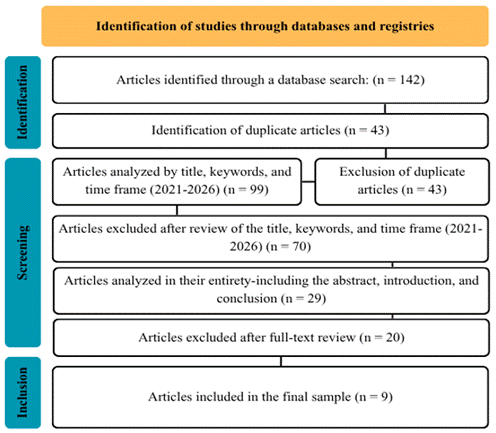
The identification and selection of studies were conducted in a sequential and organized manner. Initially, the database search yielded 142 publications, distributed across Scopus (n=16), LILACS and BDENF via BVS (n=71), Web of Science (n=10), and MEDLINE (n=45). Subsequently, the records were exported to the Rayyan platform, where duplicate entries were identified and 43 articles were excluded. This left 99 studies for the analysis of titles and assessment of eligibility based on inclusion criteria. Of these, 29 publications proceeded to the next stage, where abstracts—and subsequently full texts—were evaluated for thematic relevance, resulting in the inclusion of nine (09) studies in the final sample.
The articles selected for the study sample were evaluated by two independent reviewers based on established inclusion and exclusion criteria, following the recommendations of the Preferred Reporting Items for Systematic Reviews and Meta-Analyses (PRISMA 2020) guidelines, as shown in Figure 1.
Figure 1 - Flowchart of the study search and selection process according to PRISMA 2020.
Source: Prepared by the authors, 2026.
RESULTS AND DISCUSSION
The results of the studies included in the final sample are presented in Table 1 to facilitate the visualization and understanding of the key findings. The selected articles were characterized according to the following information: authors/year, country, objective, and results. An analysis of the publications' origins revealed that seven studies were conducted in Brazil (77.8%), one in Mexico (11.1%), and one in Tanzania (11.1%), as shown in the table.
Table 1 - Characterization of the studies included in the review.
|
Authors/Year |
Country |
Objective |
Results |
|
González; Rangel-Flores, 2024.
|
Mexico |
To evaluate institutionalized childbirth care during the first and second waves of the SARS-CoV-2 pandemic. |
The results highlighted weaknesses in safeguarding women's rights during institutionalized childbirth, particularly regarding autonomy, communication, and consent. Humanized care proved essential in preventing practices classified as obstetric violence, even in the context of a health crisis. |
|
Costa et al., 2025. |
Brazil |
To understand the protective measures related to obstetric violence outlined in Brazilian state legislation. |
The state laws analyzed recognize obstetric violence as a violation of women's rights and identify humanized childbirth care as a foundational element of protective measures. These legal provisions reinforce the transformation of traditional care models and the promotion of ethical, safe, and woman-centered care. |
|
Lacorte et al., 2024. |
Brazil |
To analyze the presence of a companion during labor and birth care amidst the COVID-19 pandemic. |
The study demonstrated that restricting or denying the presence of a companion during childbirth compromises women's autonomy, emotional security, and positive birth experience, creating situations that can be understood as obstetric violence. Ensuring the presence of a companion—as a practice of humanized childbirth care—proved fundamental to preventing obstetric violence. |
|
Bitencourt; Oliveira; Rennó, 2022. |
Brazil |
To understand the perception of obstetric violence among professionals involved in labor and delivery care. |
The professionals acknowledged the occurrence of violent practices, particularly verbal violence. The humanization of care was identified as an essential strategy for preventing obstetric violence and strengthening ethical and safe care. |
|
Nascimento et al., 2022. |
Brazil |
To understand the role of nurses in the prevention of obstetric violence during childbirth. |
The study findings demonstrate that nurses play a fundamental role in preventing obstetric violence during childbirth by adopting humanized care practices that prioritize dialogue, respect for women's autonomy, and a focus on the mother-baby dyad. It was evident that strengthening the nursing role, combined with training the multiprofessional team, contributes to improving the quality of care and promoting ethical, safe, and woman-centered care. |
|
Martins et al., 2022. |
Brazil |
To analyze reports of obstetric violence filed with the Federal Public Prosecutor's Office in Amazonas, in order to map the healthcare institutions involved, the practices perceived as violent by women, and the professional categories accused of perpetrating obstetric violence. |
The results reveal reports of obstetric violence in both public and private institutions. Although Brazil has regulations guiding humanized childbirth care, non-compliance with these guidelines was observed in health services—particularly among physicians and nurses, who perpetrate practices deemed violent, such as verbal abuse and humiliation, prohibition of a companion, neglect, abandonment, and interventions performed without explanation or consent. The findings reinforce that humanized childbirth care serves as a strategy to combat this type of violence. |
|
Assis; Meurer; Delvan, 2021. |
Brazil |
To analyze the repercussions of obstetric violence on women, understand the emotional impact on women who have experienced obstetric violence, and identify changes in their sexual lives and impacts on their experience of motherhood. |
The study revealed significant emotional impacts on women who experienced obstetric violence—present in all analyzed accounts—with a predominance of feelings of sadness and despair. Impairment in the mother-infant bond was observed, particularly due to the denial of immediate contact after birth, as well as breastfeeding difficulties linked to a lack of support and guidance and the provision of formula without maternal consent. A delayed recognition of obstetric violence was also identified, associated with a lack of awareness regarding women's rights and the normalization of suffering during childbirth. These findings indicate that the absence of humanized childbirth care practices contributes to emotional harm and the perpetuation of obstetric violence. |
|
Gonçalves et al., 2021. |
Brazil |
To analyze the attributes of care during normal childbirth related to satisfaction and dissatisfaction from the perspective of women in the postpartum period. |
The results showed that the satisfaction of postpartum women was associated with attributes of quality and humanization, related to the care experience, such as effective communication, respect and preservation of dignity, emotional support, qualified listening, promotion of the parturient's protagonism, comfortable environment and integration of the companion during the birth. On the other hand, dissatisfaction was related to inefficient communication, disrespect, lack of emotional support and weaknesses in material and human resources, generating suffering, frustration and a feeling of violation of rights. |
|
Sanga; Joho, 2023. |
Tanzania |
To assess the types of intrapartum violence and their determinants among postpartum women in the Dodoma region, Tanzania. |
The study identified a high prevalence of intrapartum violence, with more than half of the women reporting at least one form of violence during hospital-based childbirth. The most frequent forms included breaches of confidentiality, undignified care, verbal abuse, physical abuse, and the denial or neglect of care. Sociodemographic and institutional factors were found to be associated with the occurrence of intrapartum violence. |
Source: Prepared by the authors, 2026.
Analysis of the results highlights that humanized childbirth care is a key strategy for preventing violence, as it promotes care practices grounded in respect for women's autonomy, effective communication, informed consent, and the recognition of women as active participants during labor and birth. Studies indicate that the absence of such practices is directly linked to various forms of violence—including verbal abuse, unnecessary interventions, denial of rights, and undignified care—in both national and international contexts.
In this regard, the findings converge to show that traditional, hierarchical, and procedure-centered care models foster the perpetuation of obstetric violence. A striking example of this scenario was identified in a study conducted in Tanzania¹⁸, where over half of the women reported experiencing at least one form of intrapartum violence during hospital births; notable instances included breaches of confidentiality, undignified care, verbal and physical abuse, and the denial or neglect of care.
Similarly, in the Brazilian context, an analysis of complaints filed with the Federal Public Prosecutor's Office revealed recurring instances of verbal abuse, humiliation, abandonment, neglect, and interventions performed without explanation or consent—occurring in both public and private institutions¹⁵, thereby highlighting the systemic nature of this issue.
Conversely, studies examining the adoption of humanized practices have demonstrated that measures such as the presence of a companion, attentive listening, and respect for the laboring woman's decisions contribute significantly to reducing obstetric violence and fostering a more positive and safe childbirth experience¹², ¹⁷.
At the national level, studies have also revealed a discrepancy between legal advancements and actual care practices. Although legislation and public policies recognize obstetric violence as a violation of rights and identify humanized childbirth care as a fundamental pillar of care delivery, dehumanizing practices persist within health services¹¹,¹⁵. This scenario highlights that the mere existence of legal provisions does not guarantee a transformation in care; rather, the concrete incorporation of humanization into the routine delivery of care within healthcare settings is essential.
Furthermore, the interpretation of these findings suggests that humanized childbirth care serves as a strategy to prevent obstetric violence by promoting a reorganization of the power dynamics established within the obstetric setting. By recognizing the woman as an active subject, the protagonist of the birthing process, this model breaks away from authoritarian and interventionist practices, fostering relationships based on respect, trust, and shared responsibility for care. Moreover, prioritizing clear communication and informed consent helps reduce instances of abuse and negligence by ensuring that the interventions performed are understood and authorized by the women themselves.
In this context, the strategic role of nursing in preventing obstetric violence stands out. The findings demonstrate that nurses and nurse-midwives play a direct role in promoting humanized practices through dialogue, respect for the woman's choices, and a care approach centered on the mother-baby dyad¹⁴. Strengthening the nursing role, combined with training for the multidisciplinary team, has been associated with improved quality of care and a reduction in violent practices, underscoring the importance of these professionals in consolidating more ethical and safe models of care.
The repercussions of obstetric violence extend beyond the moment of childbirth, causing significant and lasting impacts that can lead to emotional trauma and affect the experience of motherhood. Women who have experienced such violence have reported intense feelings of sadness, despair, and psychological distress, as well as difficulties in establishing the mother-infant bond and challenges with breastfeeding, particularly when immediate postpartum contact was denied and professional support was lacking¹⁶.
Given this context, it is crucial to expand the discussion on educational initiatives as a structural strategy for preventing obstetric violence and consolidating humanized childbirth care. Studies included in this review indicate that the continuous training of multidisciplinary teams—especially regarding communication, informed consent, and respect for women's rights—is a key pathway to transforming care practices. As evidenced in the literature¹³, professionals' own perceptions regarding the occurrence of obstetric violence highlight the need for training processes that foster critical reflection on practices normalized within the daily routine of health services.
Furthermore, strengthening continuing health education—grounded in the National Guidelines for Normal Childbirth Care⁵, facilitates the adoption of evidence-based practices. These include encouraging women to take an active role in their care, allowing freedom of movement and positioning during labor, utilizing non-pharmacological pain relief methods, and ensuring the presence of a support person. Such educational efforts should not be limited to professionals but must also engage women through prenatal activities that address rights, birth planning, and the recognition of abusive situations, thereby fostering empowerment and reducing delayed recognition of obstetric violence¹⁶.
Regarding humanized childbirth care as a preventive strategy, findings demonstrate that its effective implementation reorganizes care delivery, shifting the focus from the procedure itself to the woman as a subject with rights. Effective communication, attentive listening, emotional support, and respect for dignity are directly linked to the satisfaction of women in the postpartum period and a positive childbirth experience¹⁷. Furthermore, guaranteeing the presence of a support person serves as a significant protective factor, helping to reduce authoritarian and abusive practices within the context of childbirth care¹².
Studies also indicate that prioritizing informed consent and shared decision-making helps reduce unnecessary interventions and minimize instances of verbal, physical, or institutional abuse. The importance of these strategies is underscored by the magnitude of obstetric violence observed in various settings, particularly given the high prevalence of intrapartum violence identified in a study conducted in Tanzania¹⁸.
Thus, the findings reinforce and highlight the importance of research on this topic. They also reveal that the humanization of childbirth is not merely a care guideline but a concrete strategy for preventing obstetric violence, yielding positive impacts on maternal satisfaction, care safety, and the reduction of emotional harm, while strengthening the bond between the woman, the newborn, and the healthcare team. Systematically incorporating educational initiatives alongside the reorganization of care models is essential for establishing ethical, safe, and truly woman-centered care, thereby addressing the objective of this study.
A limitation of this study is the small number of articles included in the final sample, as well as the chosen timeframe, which may have restricted the identification of relevant studies published earlier. Despite these limitations, the review synthesized current evidence regarding humanized childbirth care as a strategy to prevent obstetric violence, highlighting the need for further research to explore this topic in greater depth across different care settings.
CONCLUSION
Humanized childbirth care serves as a fundamental strategy for preventing obstetric violence by promoting care practices grounded in respect for women's autonomy, informed consent, effective communication, and the recognition of women as active participants in the labor and birth process. The findings of this review demonstrate that the absence of such practices perpetuates hierarchical care models centered on professional authority, thereby fostering various forms of violence within the obstetric context.
Furthermore, the pivotal role of nursing in establishing humanized care is highlighted through dialogue, attentive listening, health education, and advocacy for women's reproductive rights. Thus, integrating humanized practices into health services enhances the quality of care, promotes safer and more respectful childbirth experiences, and helps prevent obstetric violence.
REFERENCES
- Leite TH, Marques ES, Corrêa RG, Leal MC, Olegário BCD, Costa RM, et al. Epidemiologia da violência obstétrica: uma revisão narrativa do contexto brasileiro. Ciênc Saúde Colet. 2024;29(9):e12222023. https://doi.org/10.1590/1413-81232024299.12222023
- Matos MG, Magalhães AS, Féres-Carneiro T. Violência obstétrica e trauma no parto: o relato das mães. Psicol Cienc Prof. 2021;41:e219616. https://doi.org/10.1590/1982-3703003219616
- Fundação Oswaldo Cruz. Instituto Nacional de Saúde da Mulher, da Criança e do Adolescente Fernandes Figueira. Violência obstétrica: conceitos e evidências [Internet]. Rio de Janeiro: Fiocruz; 2023.
- Ministério da Saúde (BR). Rede Cegonha: guia para gestores [Internet]. Brasília: Ministério da Saúde; 2011. https://bvsms.saude.gov.br/bvs/publicacoes/rede_cegonha_guia_gestores.pdf
- Ministério da Saúde (BR). Diretrizes nacionais de assistência ao parto normal: versão resumida. Brasília: Ministério da Saúde; 2017.
- Martins IM, Macedo LC, Lima EM, Garcia NB, Khalaf DK. Atuação da enfermagem diante da violência obstétrica. REAS. 2023;23(8):e13581. https://acervomais.com.br/index.php/saude/article/view/13581
- Araújo EP, Rodrigues DP, Parente AT, Camacho ENPR, Alves VH, Almeida MS, et al. A percepção da violência obstétrica pelos enfermeiros residentes da enfermagem obstétrica na região norte. Rev Enferm Atual In Derme. 2025;99(Esp):e025010. https://www.revistaenfermagematual.com.br/revista/article/view/2167
- Alves BS, Côrtes LS, Caetano IF, Dusi NRT, Miranda ACG, Alves VS. O impacto do parto humanizado nas parturientes de um hospital público. New Trends Qual Res. 2021;8:270–75. https://publi.ludomedia.org/index.php/ntqr/article/view/415
- Botelho LLR, Cunha CCA, Macedo M. O método da revisão integrativa nos estudos organizacionais. Gest Soc. 2011;5(11):121–36.
- González KDR, Rangel-Flores YY. Experiencias de mujeres en la atención del parto institucional en tiempos de la primera y segunda ola de COVID en México. Ciênc Saúde Colet. 2024;29(8):e05502024. https://doi.org/10.1590/1413-81232024298.05502024
- Costa MS, Lobo NRA, Santos LS, Lima AC, Rodrigues MT, Lima LA. Violência obstétrica: medidas protetivas descritas nas legislações estaduais brasileiras. Arq Ciênc Saúde Unipar. 2025;29(1):33–51. https://www.revistas.unipar.br/index.php/saude/article/view/11191
- Lacorte VC, Coelho DF, Oliveira VS, Bueno K, Veleda AA. Presença de acompanhante no atendimento ao parto e nascimento durante a pandemia da COVID-19. Sex Salud Soc (Rio J). 2024;(40):e22214. https://doi.org/10.1590/1984-6487.sess.2024.40.e22214.a.pt
- Bitencourt AC, Oliveira SL, Rennó GM. Obstetric violence for professionals who assist in childbirth. Rev Bras Saude Mater Infant. 2022;22(4):943–51. https://doi.org/10.1590/1806-9304202200040012
- Moreira do Nascimento DE, Caetano Barbosa J, Barreto Isaías B, Holanda Nascimento RB, Martins Fernandes E, Tavares de Luna Neto R, et al. Vivências sobre violência obstétrica: boas práticas de enfermagem na assistência ao parto. Nursing (Ed Bras). 2022;25(291):8242–53. https://www.revistanursing.com.br/index.php/revistanursing/article/view/2662
- Martins RB, Vasconcelos MNG, Correa RG, Pontes MTCM. Análise das denúncias de violência obstétrica registradas no Ministério Público Federal do Amazonas, Brasil. Cad Saúde Colet. 2022;30(1):68–76. https://doi.org/10.1590/1414-462X202230010245
- Assis KG, Meurer F, Delvan JDS. Repercussões emocionais em mulheres que sofreram violência obstétrica. Psicol Argumento. 2020;39(103):135–57. https://doi.org/10.7213/psicolargum.39.103.AO07
- Gonçalves DS, Moura MAV, Pereira ALF, Queiroz ABA, Santos CA, Torquato HDM. Satisfação e insatisfação no parto normal sob o enfoque dos atributos da qualidade da assistência. Rev Enferm UERJ. 2021;29:e59021. https://www.e-publicacoes.uerj.br/enfermagemuerj/article/view/59021
- Sanga NE, Joho AA. Intrapartum violence during facility-based childbirth and its determinants: a cross-sectional study among postnatal women in Tanzania. Womens Health. 2023;19:17455057231189544. doi:10.1177/17455057231189544.
Funding statement:
The study received no funding.
Acknowledgments:
We thank the Federal University of Piauí (UFPI), Teresina, Piauí, Brazil, for the institutional support provided for this study.
Conflict of interest statement
None to declare.
Data availability statement
No datasets were generated in this study. The information presented is described in the body of the article.
Authorship criteria (author contributions)
1. Substantial contribution to the conception and/or planning of the study: Assunção MSC, Silva HGG, Carvalho EMC, Fontinele AS, Costa ML.
2. Data acquisition, analysis, and/or interpretation: Assunção MSC, Silva HGG, Carvalho EMC, Bastos VS, Araújo AB, Sá CLSF, Fontinele AS, Costa ML.
3. Drafting and/or critical revision and final approval of the published version: Assunção MSC, Silva HGG, Carvalho EMC, Bastos VS, Araújo AB, Sá CLSF, Fontinele AS, Costa ML.
Scientific Editor: Ítalo Arão Pereira Ribeiro. ORCID: https://orcid.org/0000-0003-0778-1447
Rev Enferm Atual In Derme 2026;100(3): e026076