CASE STUDY
EVOLUTION OF A CRANIAL WOUND IN AN OLDER PATIENT FOLLOWING A FALL: A CASE REPORT
EVOLUÇÃO DE LESÃO CRANIANA EM PACIENTE IDOSA PÓS-QUEDA: RELATO DE CASO
EVOLUCIÓN DE UNA LESIÓN CRANEAL EN UNA PACIENTE ADULTA MAYOR TRAS UNA CAÍDA: REPORTE DE CASO
https://doi.org/10.31011/reaid-2026-v.100-n.4-art.2899
1Luana Silvério da Cunha
2Caroline Foster Medeiros
3João Paulo Soares Fonseca
1Graduanda em Enfermagem Centro Universitário UninCor – UNINCOR – Três Corações, Minas Gerais, Brazil. Orcid: 0009-0001-7860-9698
2Mestre de Enfermagem Centro Universitário UninCor – UNINCOR – Três Corações, Minas Gerais, Brazil. Orcid: 0009-0002-6777-0213
3Doutor em Enfermagem Centro Universitário UninCor – UNINCOR – Três Corações, Minas Gerais, Brazil. Orcid: 0000-0003-4886-1718
Corresponding Author
Luana Silvério da Cunha
Rua Manoel Vicente, Centro, 338, Monsenhor Paulo, Minas Gerais Brazil, CEP: 37.405-000, 35-99851-5037, e-mail: luanasilverioluana@gmail.com.
Submission: 31-08-2026
Approval: 09-11-2026
ABSTRACT
Introduction: Aging increases vulnerability to falls and traumatic injuries, which can lead to wounds requiring continuous monitoring. In this context, home nursing care contributes to the continuity of care, prevention of complications, and monitoring of wound evolution. Objective: To describe home nursing care in the treatment of a traumatic cranial wound in an elderly person, emphasizing the systematic assessment of the lesion, the care provided, and the evolution of the healing process. Case report: A study conducted in home care in the southern region of Minas Gerais, Brazil. An 87-year-old patient with a history of post-trauma injury. The monitoring included systematic clinical assessment of the lesion regarding extent, wound bed, exudate, margins, and healing evolution, along with serial photographic records and tracking of clinical history. The study was approved by the Research Ethics Committee of the Vale do Rio Verde University. Home monitoring was carried out through visits, lesion assessment, photographic documentation, and dressing changes. Cleaning care was performed using polyhexamethylene biguanide solution, application of Kerlix Antimicrobial Dressing containing 0.2% polyhexamethylene biguanide, and guidance provided to the patient and family members. During follow-up, a progressive reduction in the injured area, an increase in granulation tissue, a decrease in erythema, and greater wound surface closure were observed. Conclusion: Home nursing care enabled continuous and systematic assessment of the lesion, contributing to the progress of the healing process and to the continuity of care for the elderly patient.
Keywords: Home Nursing; Wounds and Injuries; Wound Healing; Home Care Services.
RESUMO
Introdução: O envelhecimento aumenta a vulnerabilidade às quedas e às lesões traumáticas, podendo ocasionar feridas que necessitam do acompanhamento contínuo. Nesse contexto, a assistência domiciliar de enfermagem contribui para a continuidade do cuidado, prevenção de complicações e acompanhamento da evolução das feridas. Objetivo: Descrever o acompanhamento domiciliar de enfermagem no tratamento de uma ferida traumática craniana em pessoa idosa, enfatizando a avaliação sistemática da lesão, os cuidados realizados e a evolução do processo cicatricial. Relato de caso: Estudo desenvolvido no atendimento domiciliar na região do sul de Minas Gerais, Brasil. Paciente de 87 anos, com histórico de lesão após trauma. O acompanhamento incluiu avaliação clínica sistemática da lesão quanto à extensão, leito, exsudato, bordas e evolução cicatricial, realizados registros fotográficos seriados e acompanhamento da histórico clínico. O estudo foi aprovado por Comitê de Ética em Pesquisa da Universidade Vale do Rio Verde. O acompanhamento foi realizado no domicílio por meio de visitas, avaliação da lesão, registros fotográficos e realização de curativos. Foram realizados cuidados de limpeza com solução de polihexametilenobiguanida, utilização de cobertura Kerlix Antimicrobial Dressing contendo 0,2% de polihexametilenobiguanida e orientações à paciente e aos familiares. Durante o acompanhamento, observou-se redução progressiva da área lesionada, aumento do tecido de granulação, diminuição da vermelhidão e maior fechamento da superfície da ferida. Conclusão: O acompanhamento domiciliar de enfermagem possibilitou a avaliação contínua e sistematizada da lesão, contribuindo para a evolução do processo de cicatrização e para a continuidade da assistência à paciente idosa.
Palavras-chave: Enfermagem Domiciliar; Ferimentos e Lesões; Cicatrização; Serviços de Assistência Domiciliar.
RESUMEN
Introducción: El envejecimiento aumenta la vulnerabilidad a las caídas y a las lesiones traumáticas, pudiendo ocasionar heridas que necesitan de un seguimiento continuo. En este contexto, la atención domiciliaria de enfermería contribuye a la continuidad del cuidado, la prevención de complicaciones y el seguimiento de la evolución de las heridas. Objetivo: Describir el seguimiento domiciliario de enfermería en el tratamiento de una herida traumática craneal en una persona mayor, enfatizando la evaluación sistemática de la lesión, los cuidados realizados y la evolución del proceso de cicatrización. Relato de caso: Estudio desarrollado en la atención domiciliaria en la región del sur de Minas Gerais, Brasil. Paciente de 87 años, con historial de lesión tras trauma. El seguimiento incluyó la evaluación clínica sistemática de la lesión en cuanto a extensión, lecho, exudado, bordes y evolución de la cicatrización, realización de registros fotográficos seriados y seguimiento del historial clínico. El estudio fue aprobado por el Comité de Ética en Investigación de la Universidad Vale do Rio Verde. El seguimiento se realizó en el domicilio mediante visitas, evaluación de la lesión, registros fotográficos y realización de curaciones. Se realizaron cuidados de limpieza con solución de polihexametilenbiguanida, uso de cobertura Kerlix Antimicrobial Dressing que contiene 0,2% de polihexametilenbiguanida y orientaciones a la paciente y a los familiares. Durante el seguimiento, se observó una reducción progresiva del área lesionada, aumento del tejido de granulación, disminución del enrojecimiento y mayor cierre de la superficie de la herida. Conclusión: El seguimiento domiciliario de enfermería posibilitó la evaluación continua y sistematizada de la lesión, contribuyendo a la evolución del proceso de cicatrización y a la continuidad de la atención a la paciente mayor.
Palabras clave: Enfermería Domiciliaria; Heridas y Lesiones; Cicatrización de Heridas; Servicios de Atención Domiciliaria.
INTRODUCTION
Population aging is a global phenomenon associated with an increased incidence of falls among older adults. These events represent a significant public health issue, as they can lead to various types of injuries including head injuries that compromise mobility, autonomy, and quality of life. Falls in older adults are linked to both intrinsic factors, such as impaired balance, reduced muscle strength, and sensory changes, and extrinsic factors related to the environment. Consequently, fall prevention and the appropriate management of injuries resulting from such events are essential for maintaining the health and functionality of older individuals(1,2,3).
Physiological changes associated with aging can affect skin integrity and the tissue repair process. Reduced skin elasticity, alterations in vascularization, and a diminished capacity for regeneration can increase the skin's vulnerability to injury and contribute to slower healing. Furthermore, clinical conditions and factors such as chronic diseases, nutritional deficiencies, and infections can negatively interfere with tissue repair, increasing the risk of complications(4-5).
Traumatic wounds in older adults require systematic assessment and monitoring, taking into account the characteristics of the injury and the patient's clinical status. Evaluating the extent, depth, tissue type, presence of exudate, and signs of infection allows for the tracking of changes in the wound and guides the selection of appropriate care and dressings. In this sense, continuous assessment is essential for identifying the progression of the injury and enabling adjustments to the interventions being performed(6-7).
Nursing care plays a significant role in wound management, encompassing systematic assessment, the application of dressings, documentation of progress, and the provision of guidance to patients and their families. Individualized care planning allows for consideration of both the wound's characteristics and the specific needs of the older adult, fostering continuity of care and the early identification of potential complications(8-9).
In this context, home-based follow-up serves as a relevant strategy for ensuring continuity of care, particularly for older adults who require regular monitoring. Care provided in the home setting allows for the observation of wound progression over time, the delivery of necessary treatments, the provision of guidance to patients and their families, and the support of ongoing therapy. Studies highlight the importance of home-based care in managing wounds and promoting individualized, continuous support(10-11). This study is justified by the importance of presenting the experience of providing home-based care to an elderly patient with a cranial wound resulting from a fall, documenting the initial state of the injury, the nursing care provided, and the changes observed throughout the healing process. This report may contribute to a better understanding of the significance of systematic assessment and the continuity of nursing care in a home setting, particularly given the specific factors associated with aging and tissue repair.
In this context, the objective of this study was to describe the home-based nursing care provided for a traumatic cranial wound in an elderly individual, with an emphasis on the systematic assessment of the injury, the care delivered, and the progression of the healing process.
METHODS
This is a case report, structured to include clinical identification, a timeline, diagnostic assessment, therapeutic intervention, clinical progression, and outcomes, in accordance with the CARE Guidelines.
A case study serves as a methodological strategy that enables an in-depth analysis of a contemporary phenomenon within its real-world context. This approach is particularly well-suited for situations where the boundaries between the subject of investigation and the environment in which it unfolds are not clearly defined, thereby facilitating a detailed understanding of processes, interactions, practices, and experiences(12).
The case study allowed for a detailed analysis of the clinical situation within its real-world context, making it possible to link the nursing care provided to the observed progression of the wound(13-14).
The research was conducted in a home-care setting in a small municipality in the southern region of the state of Minas Gerais. Care was provided privately at the patient’s home, ensuring both confidentiality and the participant's comfort. Clinical monitoring took place from May to August 2026, with care sessions and dressing changes performed every three days. Throughout the monitoring period, serial clinical and photographic records were maintained; six photographs that best represent the progression of the wound were selected for presentation in this study.
Data collection was carried out through semi-structured interviews, covering information related to the patient’s medical history (anamnesis) and a general physical examination. The initial assessment and the monitoring of the wound’s progression were conducted by the lead researcher, under the supervision of an advisor who is a specialist in enterostomal therapy. The characteristics of the lesion and the treatment approaches were discussed at each dressing change, taking into account the clinical progression of the wound.
For wound care, the wound was cleansed with a polyhexamethylene biguanide (PHMB) solution, following a pre-established protocol. This was combined with a primary dressing gauze impregnated with PHMB and a secondary dressing consisting of sterile gauze. The healing process was monitored through subsequent evaluations based on observational analysis of the wound’s characteristics and the application of the TIMERS framework, which encompasses the domains of Tissue, Inflammation/Infection, Moisture Balance, Edge, Repair/Regeneration, and Social Factors. Additionally, serial photographic records were taken to document the evolution of the lesion throughout the treatment.
The data were analyzed using descriptive and interpretive methods, incorporating the information obtained from reports and descriptions, expert assessment in enterostomal therapy, serial photographic records, and the results of complementary examinations. The interpretation was performed chronologically, considering the clinical progression of the wound, the therapeutic interventions implemented, and the observed findings.
Ethical standards for research involving human subjects were upheld, with approval granted by the Research Ethics Committee of the UninCor University Center (opinion no. 8,528,700; CAAE no. ...). 98957026.3.0000.0295. Prior to participation, an Informed Consent Form (ICF) was obtained, which included formal authorization for the use of clinical images documenting the progression of the lesion during the follow-up period.
The patient, identified by the initials A.M., an 87-year-old single, retired woman, was evaluated at the request of her family, who sought care to assess her general health status, the necessary level of care, and an existing wound.
According to information provided by the patient and her family, the wound originated following a fall from a standing position in a public space. At the time, the patient experienced a drop in blood pressure and fell onto the sidewalk. Bystanders contacted emergency services, and the patient was taken to the local hospital, where she remained hospitalized for nine days.
During the assessment, a significant decline in her general condition was observed, characterized by generalized weakness, fatigue, and a marked reduction in functional capacity. Diagnostic imaging and laboratory tests performed during her hospitalization showed no abnormalities, remaining within normal ranges. The patient experienced difficulty eating, was unable to walk independently, and struggled even to stand up.
Examination of the wound located on the cranium, between the parietal and occipital regions—revealed an open lesion accompanied by hyperemia, pain, edema, and the presence of yellowish discharge. Given the need for specialized care, the patient was referred for a systematic evaluation, including the planning and monitoring of nursing care in her home.
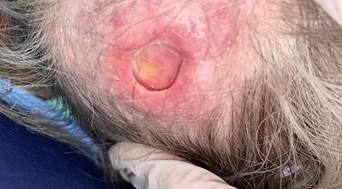
The initial clinical assessment, conducted via physical inspection, identified a deep traumatic wound with detached edges and signs of infection. The perilesional skin remained intact, while the wound itself presented with regular, raised edges and areas of detachment. The wound bed consisted of approximately 80% granulation tissue and 20% devitalized tissue. Clinical findings suggestive of the presence of a biofilm which was difficult to remove were identified, including friable granulation tissue and a moderate amount of purulent-appearing exudate. The patient reported severe pain during the procedures. The characteristics of the wound observed during the initial assessment are presented in Figure 1.
Figure 01 - Initial care provided after trauma, Três Corações, MG, Brazil, 2026
Source: Researchers, 2026.
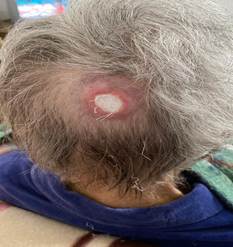
In the second record, made on May 18, 2026, the lesion was observed protected by a Kerlix AMD dressing containing 0.2% PHMB (Figure 2).
Figure 2 – Dressing used in the monitoring of the lesion. Três Corações, Minas Gerais, Brazil, 2026.
 |
Source: Researchers, 2026.
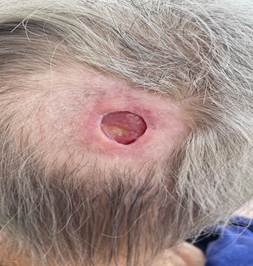
On June 15, 2026, the lesion remained open, exhibiting reddish edges and the presence of tissue within the wound (Figure 3).
Figure 3 – Open lesion, with reddish edges and the presence of tissue in the wound bed. Três Corações, Minas Gerais, Brazil, 2026.
Source: Researchers, 2026.
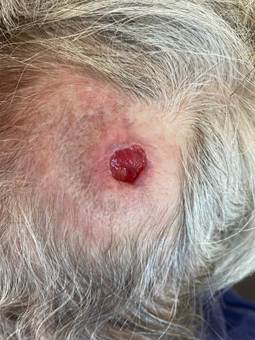
The record from July 6, 2026, showed a greater presence of granulation tissue in the wound bed, with the previously open area appearing more filled in (Figure 4).
Figure 4 – Progression of the lesion, with a greater presence of granulation tissue in the wound bed. Três Corações, Minas Gerais, Brazil, 2026.
Source: Researchers, 2026.
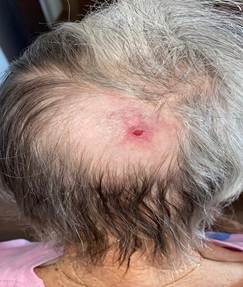
On July 27, 2026, a reduction in the size of the lesion, less tissue exposure, and a decrease in redness around the lesion were observed (Figure 5).
Figure 5 – Reduction in the size of the lesion, with less tissue exposure and decreased redness in the surrounding area. Três Corações, Minas Gerais, Brazil, 2026.
Source: Researchers, 2026.
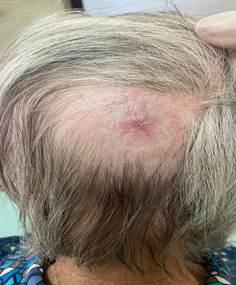
In the most recent follow-up assessment, conducted on August 17, 2026, a favorable progression of the healing process was observed, characterized by a significant reduction in the size of the lesion, continued closure of the wound surface, a decrease in perilesional hyperemia, and a reduction in exudate, resulting in a drier appearance of the wound. These findings indicate progress in the tissue repair process when compared to previous evaluations (Figure 6).
Figure 6 – Significant reduction in the open wound area, with greater surface closure and less redness in the surrounding tissue. Três Corações, Minas Gerais, Brazil, 2026.
Source: Researchers, 2026.
Throughout the follow-up period, a progressive evolution of the lesion was observed, haracterized by a reduction in the size of the affected area, an increase in granulation tissue, a decrease in hyperemia and exudate, and the progressive closure of the wound surface. The key stages in the clinical progression and nursing care provided are presented in Chart 1.
Chart 1 – Timeline of the patient’s clinical progression and nursing care, Três Corações, Minas Gerais, Brazil, 2026.
|
Period/Date |
Clínical Event |
Conduct/Result |
|
May 2026 |
Initial assessment after falling from a height. An open traumatic injury was identified in the cranial region, with hyperemia, pain, edema, yellowish secretion, regular and elevated edges and areas of detachment. Bed with approximately 80% granulation tissue and 20% devitalized tissue. |
Systematized assessment of the wound and initiation of nursing care. Cleansing with PHMB and application of gauze impregnated with PHMB.
|
|
Figure 2 |
Wound protected with a Kerlix AMD dressing containing 0.2% PHMB. |
Maintenance of coverage and continuity of follow-up.
|
|
Figure 3 |
The lesion remained open, with reddish edges and the presence of tissue inside the wound. |
Continuation of the dressing protocol and monitoring of progress. |
|
Figure 4 |
Greater presence of granulation tissue in the wound bed, with the previously open area appearing more filled in. |
Continuity of nursing care and maintenance of the dressing protocol. |
|
Figure 5 |
Reduction in the size of the injured area, less tissue exposure, and decreased redness around the injury. |
Maintenance of care and home-based follow-up. |
|
Figure 6 |
Significant reduction in the injured area, progressive closure of the surface, decrease in perilesional hyperemia, and reduction in exudate. |
Favorable progression of the healing process, with the lesion appearing drier. |
Source: Prepared by the authors, 2026.
DISCUSSION
The clinical progression observed during home-based follow-up showed a favorable response of the wound throughout the study period. The initial assessment revealed approximately 20% devitalized tissue and 80% granulation tissue, along with a moderate amount of purulent-appearing exudate, hyperemia, edema, and severe pain. Subsequent records showed a progressive increase in granulation tissue, a reduction in the size of the lesion, and a decrease in hyperemia; by the final record, there was greater closure of the wound surface and a reduction in exudate. This sequence of changes is consistent with the progression of the physiological process of tissue repair, which encompasses the phases of hemostasis, inflammation, proliferation, and remodeling(16).
In the assessment recorded on June 15, 2026, the lesion remained open, with reddish edges and tissue present within the wound bed. By July 6, there was an increase in granulation tissue, and the wound bed appeared more filled. Subsequently, on July 27, a reduction in the size of the lesion was noted, with less exposed tissue and decreased redness surrounding the wound. In the final record, taken on August 17, there was a significant reduction in the open area, greater surface closure, decreased perilesional hyperemia, and a reduction in exudate all indicating a favorable progression of the healing process.
The observed progression is significant given the patient's age, as aging can be associated with reduced blood perfusion, alterations in collagen production, and changes in the inflammatory response factors that may delay wound healing(4). Furthermore, various clinical, nutritional, and local factors can influence wound recovery(5). In this context, systematic monitoring made it possible to identify changes in the lesion over time, allowing for the observation of granulation tissue progression and a gradual reduction in the size of the affected area.
Throughout the monitoring period, a Kerlix AMD dressing containing 0.2% PHMB was used. The selection of dressings should always take into account the characteristics of the lesion, the wound bed, the presence of exudate, and the specific treatment goals(6-17). In this case, ongoing monitoring allowed for the observation of how the lesion responded to the interventions, particularly regarding a reduction in exudate, a decrease in hyperemia, and the progressive closure of the wound surface.
Nursing care contributed to systematic assessment, the documentation of the wound’s progression, and the consistent application of cleaning and protective measures. Home-based monitoring also provided an opportunity to educate the patient and her family, thereby supporting the continuity of care within her daily environment(8-11).
FINAL CONSIDERATIONS
This study aimed to present the home-based wound care provided by a nurse to an elderly patient with a traumatic wound on the cranial region following a fall. Throughout the follow-up period, it was possible to observe and document the progression of the injury through clinical assessment, wound dressing procedures, photographic records, and guidance provided to the patient and her family.
The findings showed a favorable progression of the wound during the study period, characterized by a progressive reduction in the open area, increased filling of the wound bed, and gradual closure of the surface. The care provided included wound cleansing, application of a Kerlix AMD dressing (containing 0.2% PHMB), systematic monitoring, and instructions regarding wound care.
Home-based follow-up ensured continuity of care and systematic monitoring of changes in the wound, allowing for the documentation of its progression over the study period. Nursing intervention also enabled the provision of individualized care tailored to the specific characteristics observed during the follow-up.
Although a favorable progression was observed, the healing cannot be attributed exclusively to the dressing used or the nursing intervention, as this was a case study involving a single participant and no comparison group. The outcome may be related to various individual, clinical, and environmental factors, which limits the generalizability of the results.
A limitation of this study is that it involved only one participant and a single wound, which precludes the generalization of the findings to other elderly individuals or different types of wounds. Furthermore, the analysis was based on clinical observations and photographic records collected during the follow-up period.
Future studies involving a larger number of participants and diverse clinical conditions are recommended, as well as research aimed at analyzing different follow-up strategies and dressing types used in the home-based wound care of elderly individuals.
REFERENCES
1. Montero-Odasso M, van der Velde N, Martin FC, Petrovic M, Tan MP, Ryg J. et al. World guidelines for falls prevention and management for older adults: a global initiative. Age and Ageing [Internet]. 2022 [2026 Ago. 15]; 51;9:1–11. Doi: 10.1093/ageing/afac205.
2. Phelan EA, Batterham RL, Calannaet S, Davies M, Van Gaal LF, Lingvay I. et al. Falls prevention in community-dwelling older adults. New England Journal of Medicine [Internet], 2021 [2026 Ago. 15]; 384;8:734–743. Doi: 10.1056/NEJMcp2002183.
3. World Health Organization. Step safely: strategies for preventing and managing falls across the life course [Internet]. Geneva: World Health Organization; 2021 [2026 Ago. 25]. Disponível em: https://www.who.int/rubrications/i/item/978924002191-4.
4. Thomas DR. Age‑related changes in wound healing. Drugs Aging [Internet]. 2021 [2026 Ago. 22];18;8:607–620. Doi: 10.2165/00002512‑200118080‑00005.
5. Barbosa T, Bastos EH. Cicatrização de feridas: fundamentos, práticas baseadas em evidências e avanços tecnológicos. Braz J Implantology Health Sciences [Internet]. 2024 [2026 Ago. 24];6;11:3658–3662. Doi: 10.36557/2674‑8169.2024v6n11p3658‑3662.
6. Bishop A. Wound assessment and dressing selection: an overview. British J Nursing [Internet]. 2021 [2026 Ago. 02];30;5:S12‑S20, Doi: 10.12968/bjon.2021.30.5.S12.
7. Nagle SM, Dignan MB, Perez K. Wound assessment. In: Statpearls. Treasure Island (FL): StatPearls Publishing [Internet]. 2023 [2026 Ago. 31]; Disponível em:https://www.ncbi.nlm.nih.gov/books/NBK482198/.
8. Mohr HSS et al. Nursing care for people with wounds in primary health care: challenges and strengths. ESTIMA, Braz J Enterostomal Ther. [Internet]. 2024 [2026 Ago. 24];22:e1437Doi: 10.30886/estima.v22.1437_IN.
9. Lee YN, Chang SO. How experienced wound care nurses conceptualize what to do in pressure injury management. BMC Nursing [Internet]. 2023 [2026 Ago. 23]; 22;1:189. Doi: 10.1186/s12912‑023‑01364‑z.
10. Sousa FSL, Von Randowet RM, Silva MSA, Benvind E, Monteiro MESE, Silva SBC. A relevância dos cuidados de ferimentos no âmbito domiciliar: uma perspectiva da enfermagem na atenção primária de saúde. Rev Cient Enfermagem [Internet]. 2024 [2026 Ago. 19];14;42:798–807. Doi: 10.24276/rrecien2024.14.42.798.
11. Huang Y, Zhang L, LI Yi, Wang X, Chen H, Liu J. Effects of home-based chronic wound care training for patients and caregivers: a systematic review. Inter Wound J [Internet]. 2023 [2026 Ago. 19];20;9:3802–3820. Doi: 10.1111/iwj.14219.
12. Yin RK. Estudo de caso: planejamento e métodos. 5. ed. Porto Alegre: Bookman; 2015.
13. Abreu DD. et al. Estudo de caso: uma metodologia eficaz para a formação de residentes multidisciplinares. Rev Recien [Internet]. 2025 [2026 Ago. 23]; 15;3:165-172. Doi: 10.24276/rrecien2025.15.43.165.
14. Cunha C. Estudo de caso na investigação em enfermagem de saúde pública. New Trends in Qualitative Research [Internet]. 2023 [2026 Ago. 24]; 18:e823. Doi: https://doi.org/10.36367/ntqr.18.2023.e823
15. Schultz GS, Chin GA, Moldawer L, Diegelmann RF. Principles of wound healing. In: Fitridge R, Thompson M. (ed.). Mechanisms of Vascular Disease: A Reference Book for Vascular Specialists. Adelaide (AU): University of Adelaide Press. [Internet], 2011 [2026 Ago. 24]; 18:423-450. Doi: 10.1017/UPO9781922064004.024.
16. Chen X, Bobo L, Zhao J. Characteristics and clinical application of commonly used wound dressings. Chinese J Medical Instrumentation [Internet]. 2022 [2026 Ago. 01]; 46;5:529-533. Doi: 10.3969/j.issn.1671‑7104.2022.05.011
Funding and Acknowledgments
We thank the patient and her family members for their voluntary participation in this research, for the trust placed in the team, and for their authorization to use and disclose the data for scientific purposes. We also extend our gratitude to the members of the final course project examination committee for their valuable contributions, suggestions, and insights offered during the evaluation process, all of which were essential to the improvement and refinement of this work.
We thank the UninCor University Center, located in the municipality of Três Corações, Minas Gerais, Brazil, for its support of this research.
Declaration of Conflict of Interests
The authors declare that they have no conflicts of interest, whether financial, personal, academic, institutional, or of any other nature, that could have influenced the conduct, analysis, or publication of this study.
Author Contributions
Cunha LS: Conception and design of the study, conduct of the research, data organization, and drafting of the manuscript;
Medeiros, CF: Co-supervision of the study, monitoring of the research process, critical review of the content, and contributions to the improvement of the manuscript;
Fonseca, JPS: Supervision of the study, oversight of the research stages, critical review of the scientific content, and contribution to the development and final version of the manuscript.
Use of Artificial Intelligence
During the preparation of this article, artificial intelligence tools were used to support text revision, improve the writing, and translate portions of the manuscript. The authors remain responsible for the content, the interpretation of the data, the references used, and the final version of the manuscript.
Data availability statement
No datasets were generated in this study. The information presented is described within the body of the article.
Scientific Editor: Ítalo Arão Pereira Ribeiro. ORCID: https://orcid.org/0000-0003-0778-1447
Rev Enferm Atual In Derme 2026;100(4): e026117